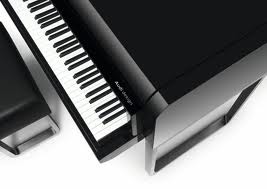
 Daily Piano Sheets is a web site for those who wants to access popular sheet music easily,
letting them download the sheet music for free for trial purposes.
It's completely free to download and try the listed sheet music, but you have to delete the files after 24 hours of trial period.
Don't forget, if you like the piece of music you have just learned playing,
treat the artist with respect, and go buy the original sheet music.
Daily Piano Sheets is a web site for those who wants to access popular sheet music easily,
letting them download the sheet music for free for trial purposes.
It's completely free to download and try the listed sheet music, but you have to delete the files after 24 hours of trial period.
Don't forget, if you like the piece of music you have just learned playing,
treat the artist with respect, and go buy the original sheet music.
Latest Sheet Music
Hoagy" Carmichael
Hoagland Howard "Hoagy" Carmichael was an American singer, songwriter, and actor. American composer and author Alec Wilder described Carmichael as the "most talented, inventive, sophisticated and jazz-oriented of all the great craftsmen" of pop songs in the first half of the 20th century.
Dream Theater
Dream Theater is an American progressive metal band formed in 1985 under the name Majesty by John Petrucci, John Myung, and Mike Portnoy while they attended Berklee College of Music in Massachusetts, before they dropped out to support the band. Though a number of lineup changes followed, the three original members remain today along with James LaBrie and Jordan Rudess.
Dream Theater has become a successful progressive metal band. Although the band has had one successful hit ("Pull Me Under" in 1992, which received extensive MTV rotation), they have remained relatively out of the mainstream.
The band is well known for the technical proficiency of its instrumentalists, who have won many awards from music instruction magazines. Dream Theater's members have collaborated with many other notable musicians. Guitarist John Petrucci has been named as the third player on the G3 tour six times, more than any other invited guitarist, following in the footsteps of Eric Johnson and Robert Fripp. Drummer Mike Portnoy has won 23 awards from Modern Drummer Magazine and is also the second youngest person (at the age of 37) to be inducted into the Rock Drummer Hall of Fame.
The band's highest selling album is the gold selling Images and Words (1992), which reached #61 on the Billboard 200 charts. Both the 1994 release Awake and their 2002 release Six Degrees of Inner Turbulence also entered the charts at #32 and #46 respectively and received mostly positive reviews. Six Degrees of Inner Turbulence also led to Dream Theater becoming the initial band reviewed in the Music Section of Entertainment Weekly during its opening week of release, despite the magazine generally preferring more mainstream music. In 2007, Systematic Chaos entered US Billboard 200 at #19. Dream Theater has sold over two million albums in the U.S., and over 8 million records worldwide. The band's tenth studio album, Black Clouds & Silver Linings, was released on June 23, 2009. It entered the US Billboard 200 at #6 and Eurochart Hot 100 at #1, marking their highest entry on either chart. Currently the musician and writer Jose Aranda is writing a doctoral thesis book about Dream Theater and the meaning of music.
Dream Theater has become a successful progressive metal band. Although the band has had one successful hit ("Pull Me Under" in 1992, which received extensive MTV rotation), they have remained relatively out of the mainstream.
The band is well known for the technical proficiency of its instrumentalists, who have won many awards from music instruction magazines. Dream Theater's members have collaborated with many other notable musicians. Guitarist John Petrucci has been named as the third player on the G3 tour six times, more than any other invited guitarist, following in the footsteps of Eric Johnson and Robert Fripp. Drummer Mike Portnoy has won 23 awards from Modern Drummer Magazine and is also the second youngest person (at the age of 37) to be inducted into the Rock Drummer Hall of Fame.
The band's highest selling album is the gold selling Images and Words (1992), which reached #61 on the Billboard 200 charts. Both the 1994 release Awake and their 2002 release Six Degrees of Inner Turbulence also entered the charts at #32 and #46 respectively and received mostly positive reviews. Six Degrees of Inner Turbulence also led to Dream Theater becoming the initial band reviewed in the Music Section of Entertainment Weekly during its opening week of release, despite the magazine generally preferring more mainstream music. In 2007, Systematic Chaos entered US Billboard 200 at #19. Dream Theater has sold over two million albums in the U.S., and over 8 million records worldwide. The band's tenth studio album, Black Clouds & Silver Linings, was released on June 23, 2009. It entered the US Billboard 200 at #6 and Eurochart Hot 100 at #1, marking their highest entry on either chart. Currently the musician and writer Jose Aranda is writing a doctoral thesis book about Dream Theater and the meaning of music.
Adele
Adele Laurie Blue Adkins (born 5 May 1988 in Enfield, North London), She is the first recipient of the Brit Awards Critics' Choice, which was given to artists who, at the time, had yet to release an album. She debuted at number one with her Mercury Prize nominated debut album 19 in the UK album chart and has since then been certified platinum with sales over 500,000 copies.
Freddie Mercury
Freddie Mercury (born Farrokh Bulsara, 5 September 1946 – 24 November 1991), was a British musician, best known as the lead vocalist of the rock band Queen. As a performer, he was known for his powerful vocals and flamboyant performances. As a songwriter, he composed many hits, including "Bohemian Rhapsody", "Killer Queen", "Somebody to Love", "Don't Stop Me Now", "Crazy Little Thing Called Love", "Barcelona", and "We Are the Champions". Led by Mercury, Queen had sold more than 300 million albums internationally by 2009.
In addition to his work with Queen, he also led a solo career and was occasionally a producer and guest musician (piano or vocals) for other artists. Mercury, who was a Parsi and grew up in India, has been referred to as "Britain's first Asian rock star". He died of bronchopneumonia induced by AIDS on 24 November 1991, only one day after publicly acknowledging he had the disease. In 2006, Time Asia named him as one of the most influential Asian heroes of the past 60 years, and he continues to be voted as one of the greatest singers in the history of popular music. In 2005, a poll organised by Blender and MTV2 saw Mercury voted the greatest male singer of all time (and second-greatest singer overall after Mariah Carey). In 2009, a Classic Rock poll saw him voted the greatest rock singer of all time. In 2008, Rolling Stone ranked him number 18 on their list of the 100 greatest singers of all time, reflecting the magazine's editorial opinion.
In addition to his work with Queen, he also led a solo career and was occasionally a producer and guest musician (piano or vocals) for other artists. Mercury, who was a Parsi and grew up in India, has been referred to as "Britain's first Asian rock star". He died of bronchopneumonia induced by AIDS on 24 November 1991, only one day after publicly acknowledging he had the disease. In 2006, Time Asia named him as one of the most influential Asian heroes of the past 60 years, and he continues to be voted as one of the greatest singers in the history of popular music. In 2005, a poll organised by Blender and MTV2 saw Mercury voted the greatest male singer of all time (and second-greatest singer overall after Mariah Carey). In 2009, a Classic Rock poll saw him voted the greatest rock singer of all time. In 2008, Rolling Stone ranked him number 18 on their list of the 100 greatest singers of all time, reflecting the magazine's editorial opinion.
Mozart
Wolfgang Amadeus Mozart, full name Johann Chrysostom Wolfgang Amadeus Mozart (27 January 1756 â 5 December 1791) was a prolific and influential composer of the Classical era. His over 600 compositions include works widely acknowledged as pinnacles of symphonic, concertante, chamber, piano, operatic, and choral music. Mozart is among the most enduringly popular of classical composers, and many of his works are part of the standard concert repertoire.
Mozart's music, like Haydn's, stands as an archetypal example of the Classical style. His works spanned the period during which that style transformed from one exemplified by the style galant to one that began to incorporate some of the contrapuntal complexities of the late Baroque, complexities against which the galant style had been a reaction. Mozart's own stylistic development closely paralleled the development of the classical style as a whole. In addition, he was a versatile composer and wrote in almost every major genre, including symphony, opera, the solo concerto, chamber music including string quartet and string quintet, and the piano sonata. While none of these genres were new, the piano concerto was almost single-handedly developed and popularized by Mozart. He also wrote a great deal of religious music, including masses; and he composed many dances, divertimenti, serenades, and other forms of light entertainment.
The central traits of the classical style can be identified in Mozart's music. Clarity, balance, and transparency are hallmarks of his work.
Mozart's music, like Haydn's, stands as an archetypal example of the Classical style. His works spanned the period during which that style transformed from one exemplified by the style galant to one that began to incorporate some of the contrapuntal complexities of the late Baroque, complexities against which the galant style had been a reaction. Mozart's own stylistic development closely paralleled the development of the classical style as a whole. In addition, he was a versatile composer and wrote in almost every major genre, including symphony, opera, the solo concerto, chamber music including string quartet and string quintet, and the piano sonata. While none of these genres were new, the piano concerto was almost single-handedly developed and popularized by Mozart. He also wrote a great deal of religious music, including masses; and he composed many dances, divertimenti, serenades, and other forms of light entertainment.
The central traits of the classical style can be identified in Mozart's music. Clarity, balance, and transparency are hallmarks of his work.
Josef Wagner
Josef Franz Wagner (20 March 1856 – 5 June 1908) was an Austrian military bandmaster and composer. He is sometimes referred to as "The Austrian March King".
He is best known for his 1893 march "Unter dem Doppeladler" (Op. 159) or "Under the Double Eagle", referring to the double eagle in the coat of arms of Austria-Hungary. The march became a favourite part of the repertoire of American composer and bandleader John Philip Sousa, whose band recorded it three times. The piece was the official regimental march of Austrian Artillery Regiment Number 2 until its dissolution in 2007.
The tune was parodied in the Benny Goodman recording "Benjie's Bubble" and was also used for the well-known Monty Python's Flying Circus animation segment "Conrad Poohs And His Dancing Teeth".
"Under the Double Eagle" is well known in country music, having been recorded by a number of guitar and banjo players, several of them identified with the bluegrass style.
Wagner is also known for the march "Tiroler Holzhackerbuab'n" (Op. 356), or "Tyrolean Lumberjacks". In 1895, his only opera, Der Herzbub, premiered in Vienna.
He is best known for his 1893 march "Unter dem Doppeladler" (Op. 159) or "Under the Double Eagle", referring to the double eagle in the coat of arms of Austria-Hungary. The march became a favourite part of the repertoire of American composer and bandleader John Philip Sousa, whose band recorded it three times. The piece was the official regimental march of Austrian Artillery Regiment Number 2 until its dissolution in 2007.
The tune was parodied in the Benny Goodman recording "Benjie's Bubble" and was also used for the well-known Monty Python's Flying Circus animation segment "Conrad Poohs And His Dancing Teeth".
"Under the Double Eagle" is well known in country music, having been recorded by a number of guitar and banjo players, several of them identified with the bluegrass style.
Wagner is also known for the march "Tiroler Holzhackerbuab'n" (Op. 356), or "Tyrolean Lumberjacks". In 1895, his only opera, Der Herzbub, premiered in Vienna.
Michael Jackson
Michael Joseph Jackson (August 29, 1958 – June 25, 2009) was an American singer, dancer and entertainer. Referred to as the King of Pop, he is the most commercially successful entertainer of all time, and one of the most influential. His contributions to music, dance and fashion, along with a much publicized personal life, made him a global figure in popular culture for over four decades.
Alongside his brothers, he made his debut as lead singer and youngest member of The Jackson 5 in 1964. He began his solo career in 1971. His 1982 album Thriller remains the best-selling album ever, with Off the Wall (1979), Bad (1987), Dangerous (1991) and HIStory (1995) also among the world's best-selling albums. He is widely credited with having transformed the music video from a promotional tool into an art form with videos for his songs such as "Billie Jean", "Beat It" and "Thriller" making him the first African American artist to amass a strong crossover following on MTV. With stage performances and music videos, Jackson popularized a number of physically complicated dance techniques, such as the robot and the moonwalk. His distinctive musical sound, vocal style, and choreography, is credited with stretching across and breaking down cultural, racial, economic, generational, and global barriers that has inspired countless pop, rock, R&B and hip hop artists.
One of the few artists to have been inducted into the Rock and Roll Hall of Fame twice, his other achievements feature multiple Guinness World Records—including the "Most Successful Entertainer of All Time"—15 Grammy Awards (including the "Living Legend Award" and the "Lifetime Achievement Award"), 26 American Music Awards (24 only as a solo artist, including one for "Artist of the Century")—more than any artist—, 17 number one singles in the US (including the four as a member of the Jackson 5), and estimated sales of up to 750 million records worldwide making him the world's best selling artist in history.
Jackson's personal relationships and life generated controversy for years. His changing appearance was noticed from the late 1970s onwards, with changes to his nose and to the color of his skin drawing media publicity. He was accused of child sexual abuse in 1993 though no charges were brought, and in 2005 he was tried and acquitted when the jury ruled him not guilty on all charges. He married twice, first in 1994 and again in 1996, and brought up three children, one born to a surrogate mother. While preparing for the This Is It concert tour in 2009, Jackson died at the age of 50 after suffering from cardiac arrest. He reportedly had been administered drugs such as propofol and lorazepam, and his death was ruled a homicide by the Los Angeles County coroner. His death triggered an outpouring of grief from around the world with his globally live broadcast memorial service attracting an audience of up to one billion people; as well as a huge surge in his album sales, resulting in him becoming the best selling artist of 2009 with sales in excess of 8.2 million in the United States where he became the first artist ever to have 4 of the top 20 best-selling albums in a single year, and 29 million albums globally, where he had an unprecedented 8 of the top 25 best-selling albums worldwide.
Alongside his brothers, he made his debut as lead singer and youngest member of The Jackson 5 in 1964. He began his solo career in 1971. His 1982 album Thriller remains the best-selling album ever, with Off the Wall (1979), Bad (1987), Dangerous (1991) and HIStory (1995) also among the world's best-selling albums. He is widely credited with having transformed the music video from a promotional tool into an art form with videos for his songs such as "Billie Jean", "Beat It" and "Thriller" making him the first African American artist to amass a strong crossover following on MTV. With stage performances and music videos, Jackson popularized a number of physically complicated dance techniques, such as the robot and the moonwalk. His distinctive musical sound, vocal style, and choreography, is credited with stretching across and breaking down cultural, racial, economic, generational, and global barriers that has inspired countless pop, rock, R&B and hip hop artists.
One of the few artists to have been inducted into the Rock and Roll Hall of Fame twice, his other achievements feature multiple Guinness World Records—including the "Most Successful Entertainer of All Time"—15 Grammy Awards (including the "Living Legend Award" and the "Lifetime Achievement Award"), 26 American Music Awards (24 only as a solo artist, including one for "Artist of the Century")—more than any artist—, 17 number one singles in the US (including the four as a member of the Jackson 5), and estimated sales of up to 750 million records worldwide making him the world's best selling artist in history.
Jackson's personal relationships and life generated controversy for years. His changing appearance was noticed from the late 1970s onwards, with changes to his nose and to the color of his skin drawing media publicity. He was accused of child sexual abuse in 1993 though no charges were brought, and in 2005 he was tried and acquitted when the jury ruled him not guilty on all charges. He married twice, first in 1994 and again in 1996, and brought up three children, one born to a surrogate mother. While preparing for the This Is It concert tour in 2009, Jackson died at the age of 50 after suffering from cardiac arrest. He reportedly had been administered drugs such as propofol and lorazepam, and his death was ruled a homicide by the Los Angeles County coroner. His death triggered an outpouring of grief from around the world with his globally live broadcast memorial service attracting an audience of up to one billion people; as well as a huge surge in his album sales, resulting in him becoming the best selling artist of 2009 with sales in excess of 8.2 million in the United States where he became the first artist ever to have 4 of the top 20 best-selling albums in a single year, and 29 million albums globally, where he had an unprecedented 8 of the top 25 best-selling albums worldwide.
Philip Glass
Philip Glass (born January 31, 1937) is a three-time Academy Award-nominated American classical music composer. He is considered one of the most influential composers of the late-20th century and is widely acknowledged as a composer who has brought art music to the American public (along with precursors such as Richard Strauss, Kurt Weill and Leonard Bernstein).
His music is described as minimalist, from which he distanced himself in being a composer of "music with repetitive structures". Although his early, mature music is minimalist, he has evolved stylistically. Currently, he describes himself as a "Classicist", trained in harmony and counterpoint and studied Johann Sebastian Bach, Ludwig van Beethoven, and Franz Schubert.
Glass is a prolific composer: he has written ensemble works, operas, eight symphonies, eight concertos, film scores, and solo works. Glass counts many visual artists, writers, musicians, and directors among his friends, including Richard Serra, Chuck Close, Doris Lessing, Allen Ginsberg, Errol Morris, Robert Wilson, JoAnne Akalaitis, John Moran, actors Bill Treacher and Peter Dean, Godfrey Reggio, Ravi Shankar, Linda Ronstadt, Paul Simon, David Bowie, Patti Smith, the conductor Dennis Russell Davies, and electronic musician Aphex Twin, who have all collaborated with him. Among recent collaborators are Glass's fellow New Yorkers Leonard Cohen, and Woody Allen. He composed an opera for the opening of Expo '98.
His music is described as minimalist, from which he distanced himself in being a composer of "music with repetitive structures". Although his early, mature music is minimalist, he has evolved stylistically. Currently, he describes himself as a "Classicist", trained in harmony and counterpoint and studied Johann Sebastian Bach, Ludwig van Beethoven, and Franz Schubert.
Glass is a prolific composer: he has written ensemble works, operas, eight symphonies, eight concertos, film scores, and solo works. Glass counts many visual artists, writers, musicians, and directors among his friends, including Richard Serra, Chuck Close, Doris Lessing, Allen Ginsberg, Errol Morris, Robert Wilson, JoAnne Akalaitis, John Moran, actors Bill Treacher and Peter Dean, Godfrey Reggio, Ravi Shankar, Linda Ronstadt, Paul Simon, David Bowie, Patti Smith, the conductor Dennis Russell Davies, and electronic musician Aphex Twin, who have all collaborated with him. Among recent collaborators are Glass's fellow New Yorkers Leonard Cohen, and Woody Allen. He composed an opera for the opening of Expo '98.
Gabriel Faure
Gabriel Urbain Fauré (12 May 1845 – 4 November 1924) was a French composer, organist, pianist, and teacher. He was the foremost French composer of his generation, and his musical style influenced many 20th century composers. His harmonic and melodic language affected how harmony was later taught.
Guang Liang
Michael Wong (Chinese: 王光良; pinyin: Wáng Guāngliáng), born August 30, 1970, is a Malaysian Chinese singer and composer. Wong began his singing career in a duo with Victor Wong. The pair had attained notable success in Taiwan, but in a mutual agreement the two split in 2000. Wong has released five solo albums, the third being his breakthrough album Fairy Tale. He also enjoys success as an actor in Chinese dramas and movies.
Vinicius de Moraes
Marcus Vinicius da Cruz e Mello Moraes, also known as Vinicius de Moraes and nicknamed O Poetinha, was a Brazilian poet, lyricist, essayist, and playwright. He served as a diplomat, composed bossa nova music, and recorded several albums.
Chopin
Frédéric Chopin (1 March 1810 – 17 October 1849) was a Polish composer and virtuoso pianist of the Romantic period. He is widely regarded as the greatest Polish composer, and ranks as one of music's greatest tone poets.
He was born in the village of Żelazowa Wola, in the Duchy of Warsaw, to a Polish mother and French-expatriate father, and in his early life was regarded as a child-prodigy pianist. In November 1830, at the age of 20, Chopin went abroad; following the suppression of the Polish November Uprising of 1830–31, he became one of many expatriates of the Polish "Great Emigration."
In Paris, he made a comfortable living as a composer and piano teacher, while giving few public performances. A Polish patriot,
Chopin's extant compositions were written primarily for the piano as a solo instrument. Though technically demanding, Chopin's style emphasizes nuance and expressive depth rather than virtuosity. Chopin invented musical forms such as the ballade and was responsible for major innovations in forms such as the piano sonata, waltz, nocturne, étude, impromptu and prelude. His works are mainstays of Romanticism in 19th-century classical music.
He was born in the village of Żelazowa Wola, in the Duchy of Warsaw, to a Polish mother and French-expatriate father, and in his early life was regarded as a child-prodigy pianist. In November 1830, at the age of 20, Chopin went abroad; following the suppression of the Polish November Uprising of 1830–31, he became one of many expatriates of the Polish "Great Emigration."
In Paris, he made a comfortable living as a composer and piano teacher, while giving few public performances. A Polish patriot,
Chopin's extant compositions were written primarily for the piano as a solo instrument. Though technically demanding, Chopin's style emphasizes nuance and expressive depth rather than virtuosity. Chopin invented musical forms such as the ballade and was responsible for major innovations in forms such as the piano sonata, waltz, nocturne, étude, impromptu and prelude. His works are mainstays of Romanticism in 19th-century classical music.
Yukie Nishimura
Yukie Nishimura (西村 由紀江 Nishimura Yukie?, born May 8, 1967 in Toyonaka, Osaka) is a prolific Japanese pianist.
Her piano play is popular with polite expressions. Her works are sometimes heard on television. She studied at the Toho Gakuen School of Music.
Her piano play is popular with polite expressions. Her works are sometimes heard on television. She studied at the Toho Gakuen School of Music.
Mary Poppins
Mary Poppins is an award-winning Disney Theatrical musical based on the similarly-titled series of children's books and the hit Disney 1964 film. The West End production opened in December 2004 and received two Olivier Awards, one for Best Actress in a Musical and the other for Best Theatre Choreography. The musical features the film's music and lyrics by the Academy Award winning Sherman Brothers, along with additional music and lyrics by George Stiles and Anthony Drewe. The book was written by Julian Fellowes. The musical was directed by Richard Eyre and co-directed by Matthew Bourne, who also acted as co-choreographer with Stephen Mear. A Broadway production with a near-identical creative team opened in November 2006, with only minor changes from the West End version.
The stage musical is a fusion of various elements from the film and the books. Some elements from the Mary Poppins series of children's books that had been omitted from the film were restored, such as the walking statue and the ladders rising to the stars. Others were removed, such as the scene in which Uncle Albert gets caught on the ceiling, laughing.
The stage musical is a fusion of various elements from the film and the books. Some elements from the Mary Poppins series of children's books that had been omitted from the film were restored, such as the walking statue and the ladders rising to the stars. Others were removed, such as the scene in which Uncle Albert gets caught on the ceiling, laughing.
Queen
Queen were an English rock band formed in 1970 in London by guitarist Brian May, lead vocalist Freddie Mercury, and drummer Roger Taylor, with bass guitarist John Deacon completing the lineup the following year. While it is uncertain how many albums the band has sold, estimations range from 130 million to over 300 million albums worldwide.
The band is noted for their musical diversity, multi-layered arrangements, vocal harmonies, and incorporation of audience participation into their live performances. Their 1985 Live Aid performance was voted the best live rock performance of all time in an industry poll.
Queen had moderate success in the early 1970s, with the albums Queen and Queen II, but it was with the release of Sheer Heart Attack in 1974 and A Night at the Opera the following year that the band gained international success. They have released fifteen studio albums, five live albums, and numerous compilation albums. Eighteen of these have reached number one on charts around the world.
Following Mercury's death in 1991 and Deacon's retirement later in the decade, May and Taylor have performed infrequently under the Queen name. Since 2005 they have been collaborating with Paul Rodgers, under the moniker Queen + Paul Rodgers.
The band is noted for their musical diversity, multi-layered arrangements, vocal harmonies, and incorporation of audience participation into their live performances. Their 1985 Live Aid performance was voted the best live rock performance of all time in an industry poll.
Queen had moderate success in the early 1970s, with the albums Queen and Queen II, but it was with the release of Sheer Heart Attack in 1974 and A Night at the Opera the following year that the band gained international success. They have released fifteen studio albums, five live albums, and numerous compilation albums. Eighteen of these have reached number one on charts around the world.
Following Mercury's death in 1991 and Deacon's retirement later in the decade, May and Taylor have performed infrequently under the Queen name. Since 2005 they have been collaborating with Paul Rodgers, under the moniker Queen + Paul Rodgers.
Harold Arlen
Harold Arlen (February 15, 1905 – April 23, 1986) was an American composer of popular music. Having written over 500 songs, a number of which have become known the world over. In addition to being the composer of The Wizard of Oz, Arlen is a highly regarded contributor to the Great American Songbook. His 1938 song "Over the Rainbow” was voted the twentieth century's No. 1 song by the Recording Industry Association of America (RIAA) and the National Endowment for the Arts (NEA).
George Gershwin
George Gershwin (September 26, 1898 – July 11, 1937) was an American composer. He wrote most of his vocal and theatrical works in collaboration with his elder brother, lyricist Ira Gershwin. George Gershwin composed songs both for Broadway and for the classical concert hall. He also wrote popular songs with success.
Many of his compositions have been used on television and in numerous films, and many became jazz standards. The jazz singer Ella Fitzgerald recorded many of the Gershwins' songs on her 1959 Gershwin Songbook (arranged by Nelson Riddle). Countless singers and musicians have recorded Gershwin songs, including Fred Astaire, Louis Armstrong, Al Jolson, Bobby Darin, Art Tatum, Bing Crosby, Janis Joplin, John Coltrane, Frank Sinatra, Billie Holiday, Sam Cooke, Miles Davis, Herbie Hancock, Madonna, Judy Garland, Julie Andrews, Barbra Streisand, Marni Nixon, Natalie Cole, Patti Austin, Nina Simone, Maureen McGovern, John Fahey, The Residents, Than & Sam, Sublime, and Sting. A residential building is named after him on the Stony Brook University campus.
Many of his compositions have been used on television and in numerous films, and many became jazz standards. The jazz singer Ella Fitzgerald recorded many of the Gershwins' songs on her 1959 Gershwin Songbook (arranged by Nelson Riddle). Countless singers and musicians have recorded Gershwin songs, including Fred Astaire, Louis Armstrong, Al Jolson, Bobby Darin, Art Tatum, Bing Crosby, Janis Joplin, John Coltrane, Frank Sinatra, Billie Holiday, Sam Cooke, Miles Davis, Herbie Hancock, Madonna, Judy Garland, Julie Andrews, Barbra Streisand, Marni Nixon, Natalie Cole, Patti Austin, Nina Simone, Maureen McGovern, John Fahey, The Residents, Than & Sam, Sublime, and Sting. A residential building is named after him on the Stony Brook University campus.
Artur Hamilton
Arthur Hamilton Stern (born October 22, 1926), known professionally as Arthur Hamilton, is an American songwriter. He is best known for writing the song "Cry Me a River", first published in 1953, and recorded by Julie London and numerous other artists.
jesus adrian romero
Jesús Adrián Romero is a Mexican author, Latin Christian music singer, composer, and pastor from Hermosillo, Sonora, Mexico. With more than 25 years of experience, Jesus Adrián is considered one of the most representative and highest exponents of this genre in Spanish language and also as one of the greatest ministers that have risen in recent times.Romero is the founder and president of Vástago Producciones, a record label dedicated to the production and distribution of music with a Christian message. Vástago Producciones also organizes and promotes concerts with Latin Christian music.
Beethoven
Ludwig van Beethoven (16 December 1770 - 26 March 1827) was a German composer and pianist. He was a crucial figure in the transitional period between the Classical and Romantic eras in Western classical music, and remains one of the most respected and influential composers of all time.
Born in Bonn, then in the Electorate of Cologne (now in modern-day Germany), he moved to Vienna in his early twenties and settled there, studying with Joseph Haydn and quickly gaining a reputation as a virtuoso pianist. Beethoven's hearing gradually deteriorated beginning in his twenties, yet he continued to compose masterpieces, and to conduct and perform, even after he was completely deaf.
Born in Bonn, then in the Electorate of Cologne (now in modern-day Germany), he moved to Vienna in his early twenties and settled there, studying with Joseph Haydn and quickly gaining a reputation as a virtuoso pianist. Beethoven's hearing gradually deteriorated beginning in his twenties, yet he continued to compose masterpieces, and to conduct and perform, even after he was completely deaf.
Keith Jarrett
Keith Jarrett (born May 8, 1945 in Allentown, Pennsylvania) is an American pianist and composer.
His career started with Art Blakey, Charles Lloyd and Miles Davis. Since the early 1970s he has enjoyed a great deal of success in both classical music and jazz, as a group leader and a solo performer. His improvisation technique combines not only jazz, but also other forms of music, especially classical, gospel, blues and ethnic folk music.
In 2003 he received the Polar Music Prize, being the first (and to this day only) recipient not sharing the prize with anyone else.
His career started with Art Blakey, Charles Lloyd and Miles Davis. Since the early 1970s he has enjoyed a great deal of success in both classical music and jazz, as a group leader and a solo performer. His improvisation technique combines not only jazz, but also other forms of music, especially classical, gospel, blues and ethnic folk music.
In 2003 he received the Polar Music Prize, being the first (and to this day only) recipient not sharing the prize with anyone else.
Richard Wagner
Wilhelm Richard Wagner (pronounced /ˈvɑːɡnər/, German pronunciation: ; 22 May 1813 – 13 February 1883) was a German composer, conductor, theatre director and essayist, primarily known for his operas (or "music dramas", as they were later called). Wagner's compositions, particularly those of his later period, are notable for their complex texture, rich harmonies and orchestration, and the elaborate use of leitmotifs: musical themes associated with individual characters, places, ideas or plot elements. Unlike most other opera composers, Wagner wrote both the music and libretto for every one of his stage works. Famous extracts from his operas include the "Ride of the Valkyries" and the Bridal Chorus from Lohengrin, popularly known as the wedding march "Here Comes the Bride".
Initially establishing his reputation as a composer of works such as The Flying Dutchman and Tannhäuser which were in the romantic traditions of Weber and Meyerbeer, Wagner transformed operatic thought through his concept of the Gesamtkunstwerk ("total work of art"). This would achieve the synthesis of all the poetic, visual, musical and dramatic arts, and was announced in a series of essays between 1849 and 1852. Wagner realised this concept most fully in the first half of the monumental four-opera cycle Der Ring des Nibelungen. However, his thoughts on the relative importance of music and drama were to change again and he reintroduced some traditional operatic forms into his last few stage works including Die Meistersinger von Nürnberg.
Wagner pioneered advances in musical language, such as extreme chromaticism and quickly shifting tonal centres, which greatly influenced the development of European classical music. His Tristan und Isolde is sometimes described as marking the start of modern music. Wagner's influence spread beyond music into philosophy, literature, the visual arts and theatre. He had his own opera house built, the Bayreuth Festspielhaus, which contained many novel design features. It was here that the Ring and Parsifal received their premieres and where his most important stage works continue to be performed today in an annual festival run by his descendants. Wagner's views on conducting were also highly influential. His extensive writings on music, drama and politics have all attracted extensive comment; not least for their frequently antisemitic content.
Wagner achieved all of this despite a life characterised, until his last decades, by political exile, turbulent love affairs, poverty and repeated flight from his creditors. His pugnacious personality and often outspoken views on music, politics and society made him a controversial figure during his life. He has remained one to this day. The impact of his his ideas can be traced in many of the arts throughout the twentieth century.
Initially establishing his reputation as a composer of works such as The Flying Dutchman and Tannhäuser which were in the romantic traditions of Weber and Meyerbeer, Wagner transformed operatic thought through his concept of the Gesamtkunstwerk ("total work of art"). This would achieve the synthesis of all the poetic, visual, musical and dramatic arts, and was announced in a series of essays between 1849 and 1852. Wagner realised this concept most fully in the first half of the monumental four-opera cycle Der Ring des Nibelungen. However, his thoughts on the relative importance of music and drama were to change again and he reintroduced some traditional operatic forms into his last few stage works including Die Meistersinger von Nürnberg.
Wagner pioneered advances in musical language, such as extreme chromaticism and quickly shifting tonal centres, which greatly influenced the development of European classical music. His Tristan und Isolde is sometimes described as marking the start of modern music. Wagner's influence spread beyond music into philosophy, literature, the visual arts and theatre. He had his own opera house built, the Bayreuth Festspielhaus, which contained many novel design features. It was here that the Ring and Parsifal received their premieres and where his most important stage works continue to be performed today in an annual festival run by his descendants. Wagner's views on conducting were also highly influential. His extensive writings on music, drama and politics have all attracted extensive comment; not least for their frequently antisemitic content.
Wagner achieved all of this despite a life characterised, until his last decades, by political exile, turbulent love affairs, poverty and repeated flight from his creditors. His pugnacious personality and often outspoken views on music, politics and society made him a controversial figure during his life. He has remained one to this day. The impact of his his ideas can be traced in many of the arts throughout the twentieth century.
Manuel de Falla
Manuel de Falla y Matheu (November 23, 1876 – November 14, 1946) was a Spanish Andalusian composer of classical music. With Isaac Albéniz and Enrique Granados he is one of Spain's most important musicians of the first half of the 20th century.
Saint Saens
Charles-Camille Saint-Saëns (9 October 1835 – 16 December 1921) was a French composer, organist, conductor, and pianist, known especially for The Carnival of the Animals, Danse Macabre, Samson and Delilah, Havanaise, Introduction and Rondo capriccioso, and his Symphony No. 3 (Organ Symphony).
Aaron Zigman
Aaron Zigman is a classically-trained American composer, producer, arranger, songwriter, and musician who has scored music for films, including The Notebook, The Company Men, Bridge to Terabithia, John ..
Emerson Lake and Palmer
Emerson, Lake & Palmer, also known as ELP, are an English progressive rock supergroup. They found success in the 1970s and sold over forty million albums and headlined large stadium concerts. The band consists of Keith Emerson (keyboards), Greg Lake (bass guitar, vocals, guitar) and Carl Palmer (drums, percussion). They are one of the most commercially successful progressive rock bands and from the outset focused on combining classical pieces with rock music.
Dave Brubeck
David Warren Brubeck (born December 6, 1920 in Concord, California), better known as Dave Brubeck, is an American jazz pianist. Regarded as a genius in his field, he has written a number of jazz standards, including "In Your Own Sweet Way" and "The Duke". Brubeck's style ranges from refined to bombastic, reflecting his mother's attempts at classical training and his improvisational skills. Much of his music employs unusual time signatures.
His long-time musical partner, alto saxophonist Paul Desmond, wrote the Dave Brubeck Quartet's most famous piece, "Take Five", which is in 5/4 time and has endured as a jazz classic. Brubeck experimented with time signatures through much of his career, recording "Pick Up Sticks" in 6/4, "Unsquare Dance" in 7/4, and "Blue Rondo à la Turk" in 9/8. He also provided music for the TV animated miniseries "This Is America, Charlie Brown".
His long-time musical partner, alto saxophonist Paul Desmond, wrote the Dave Brubeck Quartet's most famous piece, "Take Five", which is in 5/4 time and has endured as a jazz classic. Brubeck experimented with time signatures through much of his career, recording "Pick Up Sticks" in 6/4, "Unsquare Dance" in 7/4, and "Blue Rondo à la Turk" in 9/8. He also provided music for the TV animated miniseries "This Is America, Charlie Brown".
The Little Mermaid
The Little Mermaid is a 1989 animated feature produced by Walt Disney Feature Animation with pencil test began on September 23, 1988 and first released on November 17, 1989 by Walt Disney Pictures with the first Wallace and Gromit short film, A Grand Day Out. The twenty-eighth animated feature in the Disney animated features canon, the film is based on the Hans Christian Andersen fairy tale "The Little Mermaid." During its initial release, it grossed over $84 million in the United States and an additional $99 million internationally.
The film is given credit for breathing life back into the animated feature film genre after a string of critical and commercial failures that had dated to the early 1980s. It also marked the start of the era known as Disney Renaissance.
A stage adaptation of the film with a book by Doug Wright and additional songs by Alan Menken and new lyricist Glenn Slater opened in Denver in July 2007 and began performances on Broadway.
The Little Mermaid: An Original Walt Disney Records Soundtrack is the soundtrack to Disney's 1989 animated feature The Little Mermaid. It contains the songs from the film written by Alan Menken and Howard Ashman, as well as the film's score composed by Alan Menken. The album received the Academy Award for Best Original Score and the Golden Globe Award for Best Original Score.
In October 2006, a new two-disc special edition version of the soundtrack was released to correspond with the two-disc Platinum Edition DVD release of The Little Mermaid. The first disc remains identical to the original release, yet with remastered audio, while the newly added second disc is composed of various newly recorded version of the film's songs by different artists, such as Ashley Tisdale, Raven-Symoné, The Jonas Brothers, and Jessica Simpson. It also includeds two videos, as well as new cover art.
The film is given credit for breathing life back into the animated feature film genre after a string of critical and commercial failures that had dated to the early 1980s. It also marked the start of the era known as Disney Renaissance.
A stage adaptation of the film with a book by Doug Wright and additional songs by Alan Menken and new lyricist Glenn Slater opened in Denver in July 2007 and began performances on Broadway.
The Little Mermaid: An Original Walt Disney Records Soundtrack is the soundtrack to Disney's 1989 animated feature The Little Mermaid. It contains the songs from the film written by Alan Menken and Howard Ashman, as well as the film's score composed by Alan Menken. The album received the Academy Award for Best Original Score and the Golden Globe Award for Best Original Score.
In October 2006, a new two-disc special edition version of the soundtrack was released to correspond with the two-disc Platinum Edition DVD release of The Little Mermaid. The first disc remains identical to the original release, yet with remastered audio, while the newly added second disc is composed of various newly recorded version of the film's songs by different artists, such as Ashley Tisdale, Raven-Symoné, The Jonas Brothers, and Jessica Simpson. It also includeds two videos, as well as new cover art.
The Cranberries
The Cranberries are an Irish rock band who formed in Limerick in 1989. The band consists of vocalist Dolores O'Riordan, guitarist Noel Hogan, bassist Mike Hogan and drummer Fergal Lawler. Although widely associated with alternative rock, the band's sound also incorporates indie pop, post-punk, Irish folk and pop rock elements.
The Cranberries rose to international fame in the 1990s with their debut album, Everybody Else Is Doing It, So Why Can't We?, which became a commercial success. The group was one of the most successful rock acts of the '90s and sold over 40 million albums worldwide. The band has achieved four top 20 albums on the Billboard 200 chart (Everybody Else Is Doing It, So Why Can't We?; No Need to Argue; To the Faithful Departed and Bury the Hatchet) and eight top 20 singles on the Modern Rock Tracks chart ("Linger", "Dreams", "Zombie", "Ode to My Family", "Ridiculous Thoughts", "Salvation", "Free to Decide" and "Promises").
In early 2010, after a six-year hiatus, The Cranberries reunited and began a North American tour, followed by shows in Latin America and Europe. The band recorded their sixth album Roses in May 2011, and released it on 27 February 2012.
The Cranberries rose to international fame in the 1990s with their debut album, Everybody Else Is Doing It, So Why Can't We?, which became a commercial success. The group was one of the most successful rock acts of the '90s and sold over 40 million albums worldwide. The band has achieved four top 20 albums on the Billboard 200 chart (Everybody Else Is Doing It, So Why Can't We?; No Need to Argue; To the Faithful Departed and Bury the Hatchet) and eight top 20 singles on the Modern Rock Tracks chart ("Linger", "Dreams", "Zombie", "Ode to My Family", "Ridiculous Thoughts", "Salvation", "Free to Decide" and "Promises").
In early 2010, after a six-year hiatus, The Cranberries reunited and began a North American tour, followed by shows in Latin America and Europe. The band recorded their sixth album Roses in May 2011, and released it on 27 February 2012.
John Ottman
John Ottman (born July 6, 1964) is an American film composer and editor. He is best known for collaborating with director Bryan Singer, composing and/or editing many of his films, including Public Access (1993), The Usual Suspects (1995), Superman Returns (2006), Valkyrie (2008) and Jack the Giant Slayer (2013), as well as the X-Men film series. For his work on Singer's 2018 Queen biopic Bohemian Rhapsody, Ottman won the Academy Award for Best Film Editing.
Georges Bizet
Georges Bizet (25 October 1838 – 3 June 1875) was a French composer and pianist of the Romantic era. He is best known for the opera Carmen.
Bizet was born at 26 rue de la Tour d'Auvergne in the 9th arrondissement of Paris in 1838. He was registered with the legal name Alexandre César Léopold Bizet, but he was baptised on 16 March 1840 with the first name Georges, and he was always known thereafter as Georges Bizet. His father Adolphe Armand Bizet (1810-86) was an amateur singer and composer, and his mother, Aimée Léopoldine Joséphine née Delsarte (1814-61), was the sister of the famous singing teacher François Delsarte.
He entered the Paris Conservatory of Music on 9 October 1848, a fortnight before his tenth birthday. His teachers there were Pierre Zimmermann (fugue and counterpoint; often assisted by his son-in-law Charles Gounod), Antoine François Marmontel (piano), François Benoist (organ) and, on Zimmermann's death, Fromental Halévy, whose daughter he himself later married. He won first prizes for organ and fugue in 1855 and completed his earliest compositions.
His first symphony, the Symphony in C, was written in November 1855, when he was seventeen, evidently as a student assignment. It was unknown to the world until 1933, when it was discovered in the archives of the Paris Conservatory library. Upon its first performance in 1935, it was immediately hailed as a junior masterwork and a welcome addition to the early Romantic period repertoire. The symphony bears a stylistic resemblance to the first symphony of Gounod, first played earlier in the same year, and which Bizet had arranged for two pianos although present-day listeners may discern a similarity to music of Franz Schubert, whose work was little known in France at the time the symphony was written.
In 1857, a setting of the one-act operetta Le docteur Miracle won him a share in a prize offered by Jacques Offenbach. He also won the music composition scholarship of the Prix de Rome, the conditions of which required him to study in Rome for three years. There, his talent developed as he wrote such works as the opera buffa Don Procopio (1858-59). There he also composed his only major sacred work, Te Deum (1858), which he submitted to the Prix Rodrigues competition, a contest for Prix de Rome winners only. Bizet failed to win the Prix Rodrigues, and the Te Deum score remained unpublished until 1971. He made two attempts to write another symphony in 1859, but destroyed the manuscripts in December of that year. Apart from this period in Rome, Bizet lived in the Paris area all his life.
Shortly after leaving Rome in July 1860, but while still touring in Italy, he had the idea of writing a symphony in which each of the four movements would be a musical evocation of a different Italian city – Rome, Venice, Florence and Naples. On hearing of his mother's serious illness he cut short his Italian travels and returned to Paris in September 1860; she died a year later. The Scherzo of the symphony was completed by November 1861, but it was not until 1866 that the first version of the whole symphony was written. He subjected it to a number of revisions through to 1871, but died before ever producing what he considered the definitive version. For this reason, the work is sometimes described as "unfinished", but this is an inaccurate description as it was fully scored. It was published in 1880 as the Roma Symphony.
Bizet was born at 26 rue de la Tour d'Auvergne in the 9th arrondissement of Paris in 1838. He was registered with the legal name Alexandre César Léopold Bizet, but he was baptised on 16 March 1840 with the first name Georges, and he was always known thereafter as Georges Bizet. His father Adolphe Armand Bizet (1810-86) was an amateur singer and composer, and his mother, Aimée Léopoldine Joséphine née Delsarte (1814-61), was the sister of the famous singing teacher François Delsarte.
He entered the Paris Conservatory of Music on 9 October 1848, a fortnight before his tenth birthday. His teachers there were Pierre Zimmermann (fugue and counterpoint; often assisted by his son-in-law Charles Gounod), Antoine François Marmontel (piano), François Benoist (organ) and, on Zimmermann's death, Fromental Halévy, whose daughter he himself later married. He won first prizes for organ and fugue in 1855 and completed his earliest compositions.
His first symphony, the Symphony in C, was written in November 1855, when he was seventeen, evidently as a student assignment. It was unknown to the world until 1933, when it was discovered in the archives of the Paris Conservatory library. Upon its first performance in 1935, it was immediately hailed as a junior masterwork and a welcome addition to the early Romantic period repertoire. The symphony bears a stylistic resemblance to the first symphony of Gounod, first played earlier in the same year, and which Bizet had arranged for two pianos although present-day listeners may discern a similarity to music of Franz Schubert, whose work was little known in France at the time the symphony was written.
In 1857, a setting of the one-act operetta Le docteur Miracle won him a share in a prize offered by Jacques Offenbach. He also won the music composition scholarship of the Prix de Rome, the conditions of which required him to study in Rome for three years. There, his talent developed as he wrote such works as the opera buffa Don Procopio (1858-59). There he also composed his only major sacred work, Te Deum (1858), which he submitted to the Prix Rodrigues competition, a contest for Prix de Rome winners only. Bizet failed to win the Prix Rodrigues, and the Te Deum score remained unpublished until 1971. He made two attempts to write another symphony in 1859, but destroyed the manuscripts in December of that year. Apart from this period in Rome, Bizet lived in the Paris area all his life.
Shortly after leaving Rome in July 1860, but while still touring in Italy, he had the idea of writing a symphony in which each of the four movements would be a musical evocation of a different Italian city – Rome, Venice, Florence and Naples. On hearing of his mother's serious illness he cut short his Italian travels and returned to Paris in September 1860; she died a year later. The Scherzo of the symphony was completed by November 1861, but it was not until 1866 that the first version of the whole symphony was written. He subjected it to a number of revisions through to 1871, but died before ever producing what he considered the definitive version. For this reason, the work is sometimes described as "unfinished", but this is an inaccurate description as it was fully scored. It was published in 1880 as the Roma Symphony.
Hatsune Miku
Hatsune Miku (Japanese: 初音 ミク) is the name of a Vocaloid software voicebank developed by Crypton Future Media and its official moe anthropomorph, a 16-year-old girl with long, turquoise twintails. She uses Yamaha Corporation's Vocaloid 2, Vocaloid 3, and Vocaloid 4 singing synthesizing technologies. She also uses Crypton Future Media's Piapro Studio, a singing synthesizer VSTi Plugin. She was the second Vocaloid sold using the Vocaloid 2 engine and the first Japanese Vocaloid to use the Japanese version of the Vocaloid 2 engine. Her voice is modeled from Japanese voice actress Saki Fujita. Miku's personification has been marketed as a virtual idol and has performed at concerts onstage as an animated projection (rear cast projection on a specially coated glass screen).
The name of the character comes from merging the Japanese words for first (初 hatsu), sound (音 ne), and future (ミク miku), thus meaning "the first sound of the future", referring to her position as the first of Crypton's "Character Vocal Series".
The name of the character comes from merging the Japanese words for first (初 hatsu), sound (音 ne), and future (ミク miku), thus meaning "the first sound of the future", referring to her position as the first of Crypton's "Character Vocal Series".
Christina Aguilera
Christina María Aguilera (born December 18, 1980) is an American R&B/pop singer and songwriter. She was signed to RCA Records after recording "Reflection" A Latin pop album, Mi Reflejo, and several collaborations followed which garnered Aguilera worldwide success, but she was displeased with the lack of input in her music and image.
After parting from her management, Aguilera took creative control over her second studio album Stripped (2002), Aguilera's third studio album Back to Basics (2006), included elements of soul, jazz, and blues music, and was released to positive critical reception.
Aguilera is currently in the studio working on her forthcoming album. Aguilera's work has earned her numerous awards including five Grammy Awards amongst eighteen nominations. She has become one of the most successful recording artists of the decade, racking up sales of more than 37 million albums worldwide.
After parting from her management, Aguilera took creative control over her second studio album Stripped (2002), Aguilera's third studio album Back to Basics (2006), included elements of soul, jazz, and blues music, and was released to positive critical reception.
Aguilera is currently in the studio working on her forthcoming album. Aguilera's work has earned her numerous awards including five Grammy Awards amongst eighteen nominations. She has become one of the most successful recording artists of the decade, racking up sales of more than 37 million albums worldwide.
Yann Tiersen
Guillaume Yann Tiersen (born 23 June 1970) is a French musician and composer known internationally for composing the score to the Jean-Pierre Jeunet movie Amélie. His music is recognized by its use of a large variety of instruments in relatively minimalist compositions, often with a touch of either European classical music or French folk music, using primarily the piano, accordion or violin together with instruments like the melodica, xylophone, toy piano, ondes martenot, harpsichord and typewriter. His musical style is reminiscent of Frédéric Chopin, Erik Satie, Philip Glass and Michael Nyman.
Carl Orff
Carl Orff (July 10, 1895 – March 29, 1982) was a 20th-century German composer, best known for his cantata Carmina Burana (1937). In addition to his career as a composer, Orff developed an influential method of music education for children.
Orff is most known for Carmina Burana (1937), a "scenic cantata". It is the first of a trilogy that also includes Catulli Carmina and Trionfo di Afrodite. Carmina Burana reflected his interest in medieval German poetry. Together the trilogy is called Trionfi, or "Triumphs". The composer described it as the celebration of the triumph of the human spirit through sexual and holistic balance. The work was based on thirteenth-century poetry found in a manuscript dubbed the Codex latinus monacensis found in the Benedictine monastery of Benediktbeuern in 1803 and written by the Goliards; this collection is also known as Carmina Burana. While "modern" in some of his compositional techniques, Orff was able to capture the spirit of the medieval period in this trilogy, with infectious rhythms and easy tonalities. The medieval poems, written in Latin and an early form of German, are often racy, but without descending into smut. "Fortuna Imperatrix Mundi", commonly known as "O Fortuna", from Carmina Burana is often used to denote primal forces, for example in the Oliver Stone movie The Doors.. The work's association with fascism also led Pier Paolo Pasolini to use the movement "Veris Leta Facies" to accompany the concluding scenes of torture and murder in his final film Salò, or the 120 Days of Sodom.
With the success of Carmina Burana, Orff disowned all of his previous works except for Catulli Carmina and the Entrata (an orchestration of "The Bells" by William Byrd (1539–1623)), which were rewritten until acceptable by Orff. As an historical aside, Carmina Burana is probably the most famous piece of music composed and premiered in Nazi Germany. Carmina Burana was in fact so popular that Orff received a commission in Frankfurt to compose incidental music for A Midsummer Night's Dream, which was supposed to replace the banned music by Mendelssohn. After the war, he claimed not to be satisfied with the music and reworked it into the final version that was first performed in 1964.
Orff is most known for Carmina Burana (1937), a "scenic cantata". It is the first of a trilogy that also includes Catulli Carmina and Trionfo di Afrodite. Carmina Burana reflected his interest in medieval German poetry. Together the trilogy is called Trionfi, or "Triumphs". The composer described it as the celebration of the triumph of the human spirit through sexual and holistic balance. The work was based on thirteenth-century poetry found in a manuscript dubbed the Codex latinus monacensis found in the Benedictine monastery of Benediktbeuern in 1803 and written by the Goliards; this collection is also known as Carmina Burana. While "modern" in some of his compositional techniques, Orff was able to capture the spirit of the medieval period in this trilogy, with infectious rhythms and easy tonalities. The medieval poems, written in Latin and an early form of German, are often racy, but without descending into smut. "Fortuna Imperatrix Mundi", commonly known as "O Fortuna", from Carmina Burana is often used to denote primal forces, for example in the Oliver Stone movie The Doors.. The work's association with fascism also led Pier Paolo Pasolini to use the movement "Veris Leta Facies" to accompany the concluding scenes of torture and murder in his final film Salò, or the 120 Days of Sodom.
With the success of Carmina Burana, Orff disowned all of his previous works except for Catulli Carmina and the Entrata (an orchestration of "The Bells" by William Byrd (1539–1623)), which were rewritten until acceptable by Orff. As an historical aside, Carmina Burana is probably the most famous piece of music composed and premiered in Nazi Germany. Carmina Burana was in fact so popular that Orff received a commission in Frankfurt to compose incidental music for A Midsummer Night's Dream, which was supposed to replace the banned music by Mendelssohn. After the war, he claimed not to be satisfied with the music and reworked it into the final version that was first performed in 1964.
Stevie Wonder
Stevie Wonder (born Stevland Hardaway Judkins on May 13, 1950, name later changed to Stevland Hardaway Morris) is an American singer-songwriter, multi-instrumentalist, and record producer. A prominent figure in popular music during the latter half of the 20th century , Wonder has recorded more than thirty top ten hits, won 26 Grammy Awards (a record for a solo artist), plus one for lifetime achievement, won an Academy Award for Best Song and been inducted into both the Rock and Roll and Songwriters halls of fame. He has also been awarded the Polar Music Prize.
Blind from infancy, Wonder signed with Motown Records as a pre-adolescent at age twelve, and continues to perform and record for the label to this day. He has nine U.S. number-one hits to his name (on the pop Charts, 20 U.S. R&B number one hits), and album sales totaling more than 150 million units. Wonder has recorded several critically acclaimed albums and hit singles, and writes and produces songs for many of his label mates and outside artists as well. Wonder plays the piano, synthesizer, harmonica, congas, drums, bongos, organ, melodica, and clavinet. In his early career, he was best known for his harmonica work, but today he is better known for his keyboard skills and vocals.
Blind from infancy, Wonder signed with Motown Records as a pre-adolescent at age twelve, and continues to perform and record for the label to this day. He has nine U.S. number-one hits to his name (on the pop Charts, 20 U.S. R&B number one hits), and album sales totaling more than 150 million units. Wonder has recorded several critically acclaimed albums and hit singles, and writes and produces songs for many of his label mates and outside artists as well. Wonder plays the piano, synthesizer, harmonica, congas, drums, bongos, organ, melodica, and clavinet. In his early career, he was best known for his harmonica work, but today he is better known for his keyboard skills and vocals.
Rodgers and Hammerstein
Richard Rodgers (1902 – 1979) and Oscar Hammerstein II (1895 – 1960) were a well-known American songwriting duo, usually referred to as Rodgers and Hammerstein. They created a string of popular Broadway musicals in the 1940s and 1950s during what is considered the golden age of the medium. With Rodgers composing the music and Hammerstein adding the lyrics, five of their shows, Oklahoma!, Carousel, South Pacific, The King and I, and The Sound of Music, were outstanding successes. In all, among the many accolades that their shows (and their film versions) garnered were thirty-four Tony Awards, fifteen Academy Awards, the Pulitzer Prize, and two Grammys.
Brahms
Johannes Brahms (May 7, 1833 â April 3, 1897) was a German composer of the Romantic period. He was born in Hamburg and in his later years he settled in Vienna, Austria.
Brahms maintained a Classical sense of form and order in his works â in contrast to the opulence of the music of many of his contemporaries. Thus many admirers (though not necessarily Brahms himself) saw him as the champion of traditional forms and "pure music," as opposed to the New German embrace of program music.
Brahms venerated Beethoven: in the composer's home, a marble bust of Beethoven looked down on the spot where he composed, and some passages in his works are reminiscent of Beethoven's style. The main theme of the finale of Brahms's First Symphony is reminiscent of the main theme of the finale of Beethoven's Ninth, and when this resemblance was pointed out to Brahms he replied that any ass â jeder Esel â could see that.
Ein deutsches Requiem was partially inspired by his mother's death in 1865, but also incorporates material from a Symphony he started in 1854, but abandoned following Schumann's suicide attempt. He once wrote that the Requiem "belonged to Schumann". The first movement of this abandoned Symphony was re-worked as the first movement of the First Piano Concerto.
Brahms also loved the Classical composers Mozart and Haydn. He collected first editions and autographs of their works, and edited performing editions. He also studied the music of pre-classical composers, including Giovanni Gabrieli, Johann Adolph Hasse, Heinrich Schütz and especially Johann Sebastian Bach. His friends included leading musicologists, and with Friedrich Chrysander he edited an edition of the works of François Couperin. He looked to older music for inspiration in the arts of strict counterpoint; the themes of some of his works are modelled on Baroque sources, such as Bach's The Art of Fugue in the fugal finale of Cello Sonata No. 1, or the same composer's Cantata No. 150 in the passacaglia theme of the Fourth Symphony's finale.
Brahms maintained a Classical sense of form and order in his works â in contrast to the opulence of the music of many of his contemporaries. Thus many admirers (though not necessarily Brahms himself) saw him as the champion of traditional forms and "pure music," as opposed to the New German embrace of program music.
Brahms venerated Beethoven: in the composer's home, a marble bust of Beethoven looked down on the spot where he composed, and some passages in his works are reminiscent of Beethoven's style. The main theme of the finale of Brahms's First Symphony is reminiscent of the main theme of the finale of Beethoven's Ninth, and when this resemblance was pointed out to Brahms he replied that any ass â jeder Esel â could see that.
Ein deutsches Requiem was partially inspired by his mother's death in 1865, but also incorporates material from a Symphony he started in 1854, but abandoned following Schumann's suicide attempt. He once wrote that the Requiem "belonged to Schumann". The first movement of this abandoned Symphony was re-worked as the first movement of the First Piano Concerto.
Brahms also loved the Classical composers Mozart and Haydn. He collected first editions and autographs of their works, and edited performing editions. He also studied the music of pre-classical composers, including Giovanni Gabrieli, Johann Adolph Hasse, Heinrich Schütz and especially Johann Sebastian Bach. His friends included leading musicologists, and with Friedrich Chrysander he edited an edition of the works of François Couperin. He looked to older music for inspiration in the arts of strict counterpoint; the themes of some of his works are modelled on Baroque sources, such as Bach's The Art of Fugue in the fugal finale of Cello Sonata No. 1, or the same composer's Cantata No. 150 in the passacaglia theme of the Fourth Symphony's finale.
Motoi Sakuraba
Motoi Sakuraba (桜庭 統, Sakuraba Motoi, born August 5, 1965) is a Japanese composer and keyboardist known for his numerous musical contributions in video games, anime series, television dramas, and progressive rock albums. Some of his notable works include the Tales, Star Ocean, Mario Golf, Mario Tennis, Golden Sun, and Dark Souls series.Sakuraba was born in Akita Prefecture, Japan. While attending Meiji University, Sakuraba began to take music composition seriously, and eventually formed the progressive rock band "Clashed Ice" in 1984, consisting of him on keyboards and Genta Kudo on drums and vocals.
Little Women
Little Women is a musical with a book by Allan Knee, lyrics by Mindi Dickstein, and music by Jason Howland.
Based on Louisa May Alcott's classic 1869 semi-autobiographical novel, it focuses on the four March sisters - feisty, tomboyish, aspiring author Jo, romantic Meg, pretentious Amy, and kind-hearted Beth - and their beloved Marmee, at home in Concord, Massachusetts while the family patriarch is away serving as a Union Army chaplain during the Civil War. Intercut with the vignettes in which their lives unfold are several recreations of the melodramatic short stories Jo writes in her attic studio.
After 55 previews, the Broadway production, directed by Susan H. Schulman, opened on January 23, 2005 at the Virginia Theatre where, hampered by reviews ranging from lukewarm to abrasive, it closed after 137 performances.
The cast included Sutton Foster, Maureen McGovern, Janet Carroll, Jenny Powers, Megan McGinnis, Amy McAlexander, Danny Gurwin, Autumn Hurlburt and John Hickok.
Based on Louisa May Alcott's classic 1869 semi-autobiographical novel, it focuses on the four March sisters - feisty, tomboyish, aspiring author Jo, romantic Meg, pretentious Amy, and kind-hearted Beth - and their beloved Marmee, at home in Concord, Massachusetts while the family patriarch is away serving as a Union Army chaplain during the Civil War. Intercut with the vignettes in which their lives unfold are several recreations of the melodramatic short stories Jo writes in her attic studio.
After 55 previews, the Broadway production, directed by Susan H. Schulman, opened on January 23, 2005 at the Virginia Theatre where, hampered by reviews ranging from lukewarm to abrasive, it closed after 137 performances.
The cast included Sutton Foster, Maureen McGovern, Janet Carroll, Jenny Powers, Megan McGinnis, Amy McAlexander, Danny Gurwin, Autumn Hurlburt and John Hickok.
Bruce Springsteen
Bruce Frederick Joseph Springsteen (born September 23, 1949) is an influential American songwriter, singer and guitarist. He has recorded and toured with the E Street Band. Springsteen is widely known for his brand of heartland rock infused with pop hooks, poetic lyrics, and Americana sentiments centered around his native New Jersey. His eloquence in expressing ordinary, everyday problems has earned him numerous awards, including eighteen Grammy Awards and an Academy Award, along with a notoriously dedicated and devoted global fan base. His most famous albums, Born to Run and Born in the U.S.A., epitomize his penchant for finding grandeur in the struggles of daily life. He has sold over 65 million albums in the U.S.
Springsteen's lyrics often concern men and women struggling to make ends meet. He has gradually become identified with progressive politics. Springsteen is also noted for his support of various relief and rebuilding efforts in New Jersey and elsewhere, and for his response to the September 11, 2001 attacks, on which his album The Rising reflects.
Springsteen's recordings have tended to alternate between commercially accessible rock albums and somber folk-oriented works. Much of his iconic status stems from the concerts and marathon shows in which he and the E Street Band present intense ballads, rousing anthems, and party rock and roll songs, amongst which Springsteen intersperses long, whimsical or deeply emotional stories.
Springsteen has long had the nickname "The Boss", a term which he was initially reported to hate but now seems to have come to terms with, as he sometimes jokingly refers to himself as such on stage. The nickname originated when a young Springsteen, playing club gigs with a band in the 1960s, took on the task of collecting the band's nightly pay and distributing it amongst his bandmates.
Springsteen's lyrics often concern men and women struggling to make ends meet. He has gradually become identified with progressive politics. Springsteen is also noted for his support of various relief and rebuilding efforts in New Jersey and elsewhere, and for his response to the September 11, 2001 attacks, on which his album The Rising reflects.
Springsteen's recordings have tended to alternate between commercially accessible rock albums and somber folk-oriented works. Much of his iconic status stems from the concerts and marathon shows in which he and the E Street Band present intense ballads, rousing anthems, and party rock and roll songs, amongst which Springsteen intersperses long, whimsical or deeply emotional stories.
Springsteen has long had the nickname "The Boss", a term which he was initially reported to hate but now seems to have come to terms with, as he sometimes jokingly refers to himself as such on stage. The nickname originated when a young Springsteen, playing club gigs with a band in the 1960s, took on the task of collecting the band's nightly pay and distributing it amongst his bandmates.
Coldplay
Coldplay are a rock band formed in London, England in 1997. The group comprises vocalist/pianist/guitarist Chris Martin, lead guitarist Jonny Buckland, bassist Guy Berryman, and drummer/multi-instrumentalist Will Champion. Coldplay have sold 34.6 million albums, and are also known for their hit singles, such as "Yellow", "The Scientist", "Speed of Sound", "Fix You", "Viva la Vida" and the Grammy Award-winning "Clocks".
Coldplay achieved worldwide fame with the release of their single "Yellow", followed by their debut album, Parachutes (2000), which was nominated for the Mercury Prize. Its follow-up, A Rush of Blood to the Head (2002) won multiple awards such as NME's Album of the Year and was later included on Rolling Stone magazine's 500 Greatest Albums of All Time list, ranking at #473. Their next release, X&Y (2005), received a slightly less enthusiastic yet still generally positive reception. The band's fourth studio album, Viva la Vida or Death and All His Friends (2008), was produced by Brian Eno and released again to largely favourable reviews. All of Coldplay's albums have enjoyed great commercial success.
Coldplay's early material was compared to acts such as Jeff Buckley, U2, and Travis. Coldplay have been an active supporter of various social and political causes, such as Oxfam's Make Trade Fair campaign and Amnesty International. The group have also performed at various charity projects such as Band Aid 20, Live 8, and the Teenage Cancer Trust.
Coldplay achieved worldwide fame with the release of their single "Yellow", followed by their debut album, Parachutes (2000), which was nominated for the Mercury Prize. Its follow-up, A Rush of Blood to the Head (2002) won multiple awards such as NME's Album of the Year and was later included on Rolling Stone magazine's 500 Greatest Albums of All Time list, ranking at #473. Their next release, X&Y (2005), received a slightly less enthusiastic yet still generally positive reception. The band's fourth studio album, Viva la Vida or Death and All His Friends (2008), was produced by Brian Eno and released again to largely favourable reviews. All of Coldplay's albums have enjoyed great commercial success.
Coldplay's early material was compared to acts such as Jeff Buckley, U2, and Travis. Coldplay have been an active supporter of various social and political causes, such as Oxfam's Make Trade Fair campaign and Amnesty International. The group have also performed at various charity projects such as Band Aid 20, Live 8, and the Teenage Cancer Trust.
Samuel Barber
Samuel Osborne Barber II (March 9, 1910 – January 23, 1981) was an American composer of orchestral, opera, choral, and piano music. He is one of the most celebrated composers of the 20th century: music critic Donal Henahan stated that "Probably no other American composer has ever enjoyed such early, such persistent and such long-lasting acclaim."
His Adagio for Strings (1936) has earned a permanent place in the concert repertory of orchestras. He was awarded the Pulitzer Prize for Music twice: for his opera Vanessa (1956–57) and for the Concerto for Piano and Orchestra (1962). Also widely performed is his Knoxville: Summer of 1915 (1947), a setting for soprano and orchestra of a prose text by James Agee. At the time of his death, nearly all of his compositions had been recorded.
His Adagio for Strings (1936) has earned a permanent place in the concert repertory of orchestras. He was awarded the Pulitzer Prize for Music twice: for his opera Vanessa (1956–57) and for the Concerto for Piano and Orchestra (1962). Also widely performed is his Knoxville: Summer of 1915 (1947), a setting for soprano and orchestra of a prose text by James Agee. At the time of his death, nearly all of his compositions had been recorded.
The Addams Family
The Addams Family is a 1991 black comedy film based on the characters, from the cartoon of the same name, created by cartoonist Charles Addams, featuring songs and a video from rap artist MC Hammer ("Addams Groove").
The movie was originally developed by Orion Pictures (which at the time owned the rights to the television series on which the movie was based). However, due to the studio's financial problems, Paramount Pictures began co-producing the film and ended up releasing the movie in the U.S., with Orion retaining the international rights (these rights are now owned by Metro-Goldwyn-Mayer through their 1997 purchase of Orion). The 1993 sequel, Addams Family Values, was distributed worldwide by Paramount.
The Addamses are a family of wealthy and eccentric individuals who live together in a Second Empire mansion and share a common interest in the bizarre and the macabre. The characters first appeared in cartoons in The New Yorker magazine in the 1930s, and later gained popularity in the defunct TV series, The Addams Family. The film centers on the day to day life of the family, and the return of Gomez Addams's long-lost brother Fester, played by Christopher Lloyd. The film also stars Raúl Juliá, Anjelica Huston, and Christina Ricci.
The movie was originally developed by Orion Pictures (which at the time owned the rights to the television series on which the movie was based). However, due to the studio's financial problems, Paramount Pictures began co-producing the film and ended up releasing the movie in the U.S., with Orion retaining the international rights (these rights are now owned by Metro-Goldwyn-Mayer through their 1997 purchase of Orion). The 1993 sequel, Addams Family Values, was distributed worldwide by Paramount.
The Addamses are a family of wealthy and eccentric individuals who live together in a Second Empire mansion and share a common interest in the bizarre and the macabre. The characters first appeared in cartoons in The New Yorker magazine in the 1930s, and later gained popularity in the defunct TV series, The Addams Family. The film centers on the day to day life of the family, and the return of Gomez Addams's long-lost brother Fester, played by Christopher Lloyd. The film also stars Raúl Juliá, Anjelica Huston, and Christina Ricci.
10cc
10cc are an English art rock band who achieved their greatest commercial success in the 1970s. Initially comprising four musicians — Graham Gouldman, Eric Stewart, Kevin Godley and Lol Creme — who had written and recorded together for some three years, before assuming the “10cc” name in 1972.
Two strong song-writing teams, a commercial team and an artistic team, injected sharp wit to lyrically-dextrous songs. The commercial team (Stewart and Gouldman) were straight pop-song-writers, who created the band’s most accessible songs; the artistic team (Godley and Creme) were the experimental half of 10cc, featuring an Art School sensibility and cinematic writing. Each man was a multi-instrumentalist, singer, writer, and producer, and each could perform as the lead singer.
Two strong song-writing teams, a commercial team and an artistic team, injected sharp wit to lyrically-dextrous songs. The commercial team (Stewart and Gouldman) were straight pop-song-writers, who created the band’s most accessible songs; the artistic team (Godley and Creme) were the experimental half of 10cc, featuring an Art School sensibility and cinematic writing. Each man was a multi-instrumentalist, singer, writer, and producer, and each could perform as the lead singer.
Jekyll and Hyde musical
Jekyll & Hyde is a musical horror-drama loosely based on the novella Strange Case of Dr Jekyll and Mr Hyde by Robert Louis Stevenson. Originally conceived for the stage by Frank Wildhorn and Steve Cuden, it features music by Frank Wildhorn, a book by Leslie Bricusse and lyrics by Wildhorn, Bricusse and Cuden. After a world premiere run in Houston, Texas, the musical embarked on a national tour of the United States prior to its Broadway debut in 1997. Many international productions in various languages have since been staged including two subsequent North American tours, two tours in the United Kingdom, a concert version, a re-vamped US tour in 2012 ahead of a 2013 Broadway revival and an Australian concert version in 2019.
J. S. Bach
Johann Sebastian Bach (21 March 1685, O.S.31 March 1685, N.S. – 28 July 1750, N.S.) was a German composer, organist, harpsichordist, violist, and violinist whose sacred and secular works for choir, orchestra, and solo instruments drew together the strands of the Baroque period and brought it to its ultimate maturity. Although he did not introduce new forms, he enriched the prevailing German style with a robust contrapuntal technique, an unrivalled control of harmonic and motivic organisation, and the adaptation of rhythms, forms and textures from abroad, particularly from Italy and France.
Revered for their intellectual depth, technical command and artistic beauty, Bach's works include the Brandenburg Concertos, the Goldberg Variations, the Partitas, The Well-Tempered Clavier, the Mass in B minor, the St Matthew Passion, the St John Passion, the Magnificat, A Musical Offering, The Art of Fugue, the English and French Suites, the Sonatas and Partitas for solo violin, the Cello Suites, more than 200 surviving cantatas, and a similar number of organ works, including the famous Toccata and Fugue in D minor and Passacaglia and Fugue in C minor, as well as the Great Eighteen Chorale Preludes and Organ Mass.
Bach's abilities as an organist were highly respected throughout Europe during his lifetime, although he was not widely recognised as a great composer until a revival of interest and performances of his music in the first half of the 19th century. He is now generally regarded as one of the main composers of the Baroque style, and as one of the greatest composers of all time.
Revered for their intellectual depth, technical command and artistic beauty, Bach's works include the Brandenburg Concertos, the Goldberg Variations, the Partitas, The Well-Tempered Clavier, the Mass in B minor, the St Matthew Passion, the St John Passion, the Magnificat, A Musical Offering, The Art of Fugue, the English and French Suites, the Sonatas and Partitas for solo violin, the Cello Suites, more than 200 surviving cantatas, and a similar number of organ works, including the famous Toccata and Fugue in D minor and Passacaglia and Fugue in C minor, as well as the Great Eighteen Chorale Preludes and Organ Mass.
Bach's abilities as an organist were highly respected throughout Europe during his lifetime, although he was not widely recognised as a great composer until a revival of interest and performances of his music in the first half of the 19th century. He is now generally regarded as one of the main composers of the Baroque style, and as one of the greatest composers of all time.
Tran Thien Thanh
Tran Thien Thanh (June 12, 1942 – May 13, 2005) was one of the most famous Vietnamese musicians of the pre-1975 period. Some of his other pseudonyms are Anh Chuong (his son's name), Tran. Thien Thanh Toan (his brother, died in battle), Thanh Tran Tran Thi (name of the second daughter). He is also a singer with the stage name Nhat Truong and is considered as one of the four most famous male voices of golden music ("golden four pillars").
Bach
Johann Sebastian Bach (31 March 1685 – 28 July 1750) was a German composer and organist whose sacred and secular works for choir, orchestra, and solo instruments drew together the strands of the Baroque period and brought it to its ultimate maturity. Although he introduced no new forms, he enriched the prevailing German style with a robust contrapuntal technique, an unrivalled control of harmonic and motivic organisation in composition for diverse musical forces, and the adaptation of rhythms and textures from abroad, particularly Italy and France.
Revered for their intellectual depth and technical and artistic beauty, Bach's works include the Brandenburg concertos; the Goldberg Variations; the English Suites, French Suites, Partitas, and Well-Tempered Clavier; the Mass in B Minor; the St. Matthew Passion; the St. John Passion; The Musical Offering; The Art of Fugue; the Sonatas and Partitas for violin solo; the Cello Suites; more than 200 surviving cantatas; and a similar number of organ works, including the celebrated Toccata and Fugue in D Minor.
While Bach's fame as an organist was great during his lifetime, he was not particularly well-known as a composer. His adherence to Baroque forms and contrapuntal style was considered "old-fashioned" by his contemporaries, especially late in his career when the musical fashion tended towards Rococo and later Classical styles. A revival of interest and performances of his music began early in the 19th century, and he is now widely considered to be one of the greatest composers in the Western tradition.
Revered for their intellectual depth and technical and artistic beauty, Bach's works include the Brandenburg concertos; the Goldberg Variations; the English Suites, French Suites, Partitas, and Well-Tempered Clavier; the Mass in B Minor; the St. Matthew Passion; the St. John Passion; The Musical Offering; The Art of Fugue; the Sonatas and Partitas for violin solo; the Cello Suites; more than 200 surviving cantatas; and a similar number of organ works, including the celebrated Toccata and Fugue in D Minor.
While Bach's fame as an organist was great during his lifetime, he was not particularly well-known as a composer. His adherence to Baroque forms and contrapuntal style was considered "old-fashioned" by his contemporaries, especially late in his career when the musical fashion tended towards Rococo and later Classical styles. A revival of interest and performances of his music began early in the 19th century, and he is now widely considered to be one of the greatest composers in the Western tradition.
Bette Midler
Bette Davis Midler (born December 1, 1945) is an American singer, actress and comedian, also known to her fans as The Divine Miss M. She is named after the actress Bette Davis although Davis pronounced her first name in two syllables, and Midler uses one (/bɛt/). During her career, she has won four Grammy Awards, four Golden Globes, three Emmy Awards, and a Tony Award, and has been nominated for two Academy Awards. She is currently performing a new concert show, The Showgirl Must Go On, live five nights a week as one of the current headliners at Caesars Palace in Las Vegas (together with Cher and Elton John).
Elliot Yamin
Efraym Elliott Yamin is an American singer known for his hit single "Wait for You" and for placing third on the fifth season of American Idol. His self-titled album, released March 20, 2007, debuted at number one on the Billboard Independent Albums chart and at number three on the Billboard 200
Schumann
Robert Schumann, sometimes given as Robert Alexander Schumann, (June 8, 1810 – July 29, 1856) was a German composer, aesthete and influential music critic. He is one of the most famous Romantic composers of the 19th century.
He had hoped to pursue a career as a virtuoso pianist, having been assured by his teacher Friedrich Wieck that he could become the finest pianist in Europe after only a few years of study with him. However, a hand injury prevented those hopes from being realized, and he decided to focus his musical energies on composition. Schumann's published compositions were, until 1840, all for the piano; he later composed works for piano and orchestra, many lieder (songs for voice and piano), four symphonies, an opera, and other orchestral, choral and chamber works. His writings about music appeared mostly in the Neue Zeitschrift für Musik ("The New Journal for Music"), a Leipzig-based publication that he jointly founded.
In 1840, after a long and acrimonious legal battle with his piano instructor Friedrich Wieck, Schumann married Wieck's daughter, pianist Clara Wieck, a considerable figure of the Romantic period in her own right. Clara Wieck showcased many works by her husband as well. For the last two years of his life, after an attempted suicide, Schumann was confined to a mental institution.
He had hoped to pursue a career as a virtuoso pianist, having been assured by his teacher Friedrich Wieck that he could become the finest pianist in Europe after only a few years of study with him. However, a hand injury prevented those hopes from being realized, and he decided to focus his musical energies on composition. Schumann's published compositions were, until 1840, all for the piano; he later composed works for piano and orchestra, many lieder (songs for voice and piano), four symphonies, an opera, and other orchestral, choral and chamber works. His writings about music appeared mostly in the Neue Zeitschrift für Musik ("The New Journal for Music"), a Leipzig-based publication that he jointly founded.
In 1840, after a long and acrimonious legal battle with his piano instructor Friedrich Wieck, Schumann married Wieck's daughter, pianist Clara Wieck, a considerable figure of the Romantic period in her own right. Clara Wieck showcased many works by her husband as well. For the last two years of his life, after an attempted suicide, Schumann was confined to a mental institution.
Gary Valenciano
Edgardo Jose Martin Santiago Valenciano (born August 6, 1964) , better known as Gary Valenciano or Gary V., is a Filipino musician. His energetic dance moves also garnered him the nickname "Mr. Pure Energy." He has released 26 albums, and won the Awit Award for "Best Male Performer" 11 times. In 1998, he became UNICEF Philippines first national Ambassador.
Ernesto Lecuona
Ernesto Lecuona y Casado (Spanish pronunciation: ; August 6, 1895 – November 29, 1963) was a Cuban composer and pianist of worldwide fame. He composed over six hundred pieces, mostly in the Cuban vein, and was a pianist of exceptional skill. His father was Canarian and his mother was Cuban.
Paul Yandell
Paul Yandell (September 6, 1935 – November 21, 2011) was an American guitar player from Mayfield, Kentucky. Yandell played fingerstyle, a style he learned to play from his neighbors, influenced by Chet Atkins and Merle Travis. In 1955 he was hired by The Louvin Brothers and performed and recorded with them. From 1959 to 1961 he served in the US Army and on his return was a touring musician with Kitty Wells, Johnnie Wright, George Hamilton IV, and Jerry Reed.
Vanessa Anne Hudgens
Vanessa Anne Hudgens (/ˈhʌdʒəns/; born December 14, 1988) is an American actress, singer, and producer. After making her feature film debut in Thirteen (2003), Hudgens rose to fame portraying Gabriella Montez in the High School Musical film series (2006–2008), which brought her significant mainstream success. The success of the first film led Hudgens to acquire a recording contract with Hollywood Records, with whom she released two studio albums, V (2006) and Identified (2008).