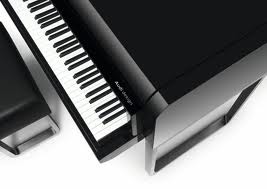
 Daily Piano Sheets is a web site for those who wants to access popular sheet music easily,
letting them download the sheet music for free for trial purposes.
It's completely free to download and try the listed sheet music, but you have to delete the files after 24 hours of trial period.
Don't forget, if you like the piece of music you have just learned playing,
treat the artist with respect, and go buy the original sheet music.
Daily Piano Sheets is a web site for those who wants to access popular sheet music easily,
letting them download the sheet music for free for trial purposes.
It's completely free to download and try the listed sheet music, but you have to delete the files after 24 hours of trial period.
Don't forget, if you like the piece of music you have just learned playing,
treat the artist with respect, and go buy the original sheet music.
Latest Sheet Music
David Nevue
David Nevue is a solo piano composer and a pianist. He is the founder of Whisperings: Solo Piano Radio, an online radio station, as well as The Music Biz Academy, an educational web site for independent musicians. He is the author of the book, How to Promote Your Music Successfully on the Internet.
Europe
Europe is a Swedish hard rock band formed in Upplands Väsby in 1979 under the name Force by vocalist Joey Tempest and guitarist John Norum. Although widely associated with glam metal, the band's sound incorporates heavy metal and hard rock elements. Since its formation, Europe has released eight studio albums, three live albums, three compilations and eight videos.
Europe rose to international fame in the 1980s with its third album The Final Countdown (1986), which became a high commercial success and sold over three million copies in the United States. Europe was one of the most successful rock acts of the 80s and sold over four million albums in the United States alone and over 16 million albums worldwide. The band has achieved two top 20 albums on the Billboard 200 chart (The Final Countdown and Out of This World) and two top 10 singles on the Billboard Hot 100 chart ("The Final Countdown" and "Carrie").
Europe went on hiatus in 1992, reunited temporarily for a one-off performance in Stockholm on New Year's Eve 1999 and announced an official reunion in 2003. Since then Europe has released three albums, Start from the Dark (2004), Secret Society (2006) and Last Look at Eden, which was released on September 9, 2009.
Europe rose to international fame in the 1980s with its third album The Final Countdown (1986), which became a high commercial success and sold over three million copies in the United States. Europe was one of the most successful rock acts of the 80s and sold over four million albums in the United States alone and over 16 million albums worldwide. The band has achieved two top 20 albums on the Billboard 200 chart (The Final Countdown and Out of This World) and two top 10 singles on the Billboard Hot 100 chart ("The Final Countdown" and "Carrie").
Europe went on hiatus in 1992, reunited temporarily for a one-off performance in Stockholm on New Year's Eve 1999 and announced an official reunion in 2003. Since then Europe has released three albums, Start from the Dark (2004), Secret Society (2006) and Last Look at Eden, which was released on September 9, 2009.
James Blunt
James Blunt (born James Hillier Blount, February 22, 1974) is an English singer-songwriter whose debut album, Back to Bedlam, and single releases — especially the number one hit "You're Beautiful" — brought him to fame in 2005. His style is a mix of pop, rock and folk. Along with vocals, James Blunt performs a variety of instruments, including piano and guitar. He is signed to Linda Perry's independent American label Custard Records. Blunt won two BRIT Awards and two Ivor Novello Awards, and was nominated for five Grammy Awards in 2006. Blunt subsequently released his second album, All The Lost Souls, in 2007; this album was certified gold within its first week of release. The first single from his second album, "1973", was Blunt's first Global Number 1 in October 2007, beating "You're Beautiful" which peaked at Number 2 in the United World Chart.
Prior to embarking on a career in music, Blunt was an officer in the Life Guards, a reconnaissance regiment of the British Army, and served under NATO in Kosovo during the conflict in 1999. While posted to Kosovo, Blunt was introduced to the work of Médecins sans Frontières (MSF) (Doctors Without Borders), a humanitarian aid group best known for its emergency medical care in conflict-torn regions. Since then, Blunt has supported MSF by holding meet-and-greet auctions at many of his concerts.
Blunt's primary residence is now on the Spanish island of Ibiza, where he wrote many of the songs on his second album.
Prior to embarking on a career in music, Blunt was an officer in the Life Guards, a reconnaissance regiment of the British Army, and served under NATO in Kosovo during the conflict in 1999. While posted to Kosovo, Blunt was introduced to the work of Médecins sans Frontières (MSF) (Doctors Without Borders), a humanitarian aid group best known for its emergency medical care in conflict-torn regions. Since then, Blunt has supported MSF by holding meet-and-greet auctions at many of his concerts.
Blunt's primary residence is now on the Spanish island of Ibiza, where he wrote many of the songs on his second album.
Brian Crain
Since 1996 Brian Crain has been composing, recording and distributing music through his own record company, Crain Records, Inc.Date of birth: Hollywood, Los Angeles, California, USA Education: San Diego State University
Works with: NUB MUSIC, BrianCrain.com Records, Crain Records, Lifestyle Music Group
Works with: NUB MUSIC, BrianCrain.com Records, Crain Records, Lifestyle Music Group
Dario Marianelli
Dario Marianelli (born June 21, 1963 in Pisa, Italy) is a composer of piano, orchestral, and film music. He has composed the soundtracks for The Brothers Grimm (2005), Pride & Prejudice (2005), and Atonement (2007), the last two for which he received Oscar nominations for Best Achievement in Music Written for Motion Pictures, Original Score. He has won Best Original Score for the score of Atonement at the 80th Academy Awards and Golden Globe Award for Best Original Score. He has collaborated with Joe Wright three times, on Pride & Prejudice, Atonement, and The Soloist.
peter washington
Peter Washington (born in Los Angeles on August 28, 1964) is a jazz double bassist. He played with the Westchester Community Symphony at the age of 14. Later he played electric bass in rock bands. He attended the University of California, Berkeley, where he majored in English Literature, and performed with the San Francisco Youth Symphony and the UC Symphony Orchestra. His growing interest in jazz led him to play with John Handy, Bobby Hutcherson, Harold Land, Frank Morgan, Ernestine Anderson, Chris Connor and other Bay Area luminaries.
Scott Colley
Scott Colley (born November 24, 1963) is an American jazz double bassist and composer. He has performed in bands led by Herbie Hancock, Jim Hall, Andrew Hill, Michael Brecker, Chris Potter, Pat Metheny, Carmen McRae, Edward Simon, Adam Rogers, Brian Blade, David Binney, Antonio Sanchez, Kenny Werner.
Koen Dejonghe
Koen Dejonghe has held a position at the conservatory in Antwerp since 1986, teaching practical harmony and improvisation. He currently also gives classes in accompaniment, instrumental ensemble performance and harmony and counterpoint at the music academies of Sint-Niklaas and Antwerp.
Edgar Allan Poe
Edgar Allan Poe was an American writer, poet, editor, and literary critic. Poe is best known for his poetry and short stories, particularly his tales of mystery and the macabre. He is widely regarded as a central figure of Romanticism in the United States, and of American literature.
Jo Yeong
Jo Yeong-wook is a South Korean film music supervisor. He is arguably most widely known for his collaborations with director Park Chan-wook.
Galt MacDermot
Arthur Terence Galt MacDermot was a Canadian-American composer, pianist and writer of musical theatre. He won a Grammy Award for the song "African Waltz" in 1960. His most successful musicals were Hair and Two Gentlemen of Verona.
Rachmaninoff
Sergei Vasilievich Rachmaninoff (1 April 1873 - 28 March 1943) was a Russian composer, pianist, and conductor. He was one of the finest pianists of his day and, as a composer, the last great representative of Russian late Romanticism in classical music. Early influences of Tchaikovsky, Rimsky-Korsakov and other Russian composers gave way to a thoroughly personal idiom which included a pronounced lyricism, expressive breadth, structural ingenuity and a tonal palette of rich, distinctive orchestral colors.
Understandably, the piano figures prominently in Rachmaninoff's compositional output, either as a solo instrument or as part of an ensemble. He made it a point, however, to use his own skills as a performer to explore fully the expressive possibilities of the instrument. Even in his earliest works, he revealed a sure grasp of idiomatic piano writing and a striking gift for melody. In some of his early orchestral pieces he showed the first signs of a talent for tone painting, which he would perfect in The Isle of the Dead, and he began to show a similar penchant for vocal writing in two early sets of songs, Opp. 4 and 8. Rachmaninoff's masterpiece, however, is his choral symphony The Bells, in which all of his talents are fused and unified.
Rachmaninoff sometimes felt threatened by the success of modernists such as Scriabin and Prokofiev and wondered whether to cease composing even before he left Russia. His musical philosophy was rooted in the Russian spiritual tradition, where the role of the artist was to create beauty and to speak the truth from the depths of his heart. In his last major interview, in 1941, he admitted his music, like Russian music, was a product of his temperament. He said, on another occasion, "The new kind of music seems to create not from the heart but from the head. Its composers think rather than feel. They have not the capacity to make their works exalt—they meditate, protest, analyze, reason, calculate and brood, but they do not exalt."
Understandably, the piano figures prominently in Rachmaninoff's compositional output, either as a solo instrument or as part of an ensemble. He made it a point, however, to use his own skills as a performer to explore fully the expressive possibilities of the instrument. Even in his earliest works, he revealed a sure grasp of idiomatic piano writing and a striking gift for melody. In some of his early orchestral pieces he showed the first signs of a talent for tone painting, which he would perfect in The Isle of the Dead, and he began to show a similar penchant for vocal writing in two early sets of songs, Opp. 4 and 8. Rachmaninoff's masterpiece, however, is his choral symphony The Bells, in which all of his talents are fused and unified.
Rachmaninoff sometimes felt threatened by the success of modernists such as Scriabin and Prokofiev and wondered whether to cease composing even before he left Russia. His musical philosophy was rooted in the Russian spiritual tradition, where the role of the artist was to create beauty and to speak the truth from the depths of his heart. In his last major interview, in 1941, he admitted his music, like Russian music, was a product of his temperament. He said, on another occasion, "The new kind of music seems to create not from the heart but from the head. Its composers think rather than feel. They have not the capacity to make their works exalt—they meditate, protest, analyze, reason, calculate and brood, but they do not exalt."
Charles Mingus
Charles Mingus Jr. (April 22, 1922 – January 5, 1979) was an American jazz double bassist, pianist, composer and bandleader. A major proponent of collective improvisation, he is considered to be one of the greatest jazz musicians and composers in history, with a career spanning three decades and collaborations with other jazz legends such as Louis Armstrong, Duke Ellington, Charlie Parker, Dizzy Gillespie, Dannie Richmond, and Herbie Hancock.
Mingus' compositions continue to be played by contemporary musicians ranging from the repertory bands Mingus Big Band, Mingus Dynasty, and Mingus Orchestra, to the high school students who play the charts and compete in the Charles Mingus High School Competition. In 1993, the Library of Congress acquired Mingus's collected papers—including scores, sound recordings, correspondence and photos—in what they described as "the most important acquisition of a manuscript collection relating to jazz in the Library's history"
Mingus' compositions continue to be played by contemporary musicians ranging from the repertory bands Mingus Big Band, Mingus Dynasty, and Mingus Orchestra, to the high school students who play the charts and compete in the Charles Mingus High School Competition. In 1993, the Library of Congress acquired Mingus's collected papers—including scores, sound recordings, correspondence and photos—in what they described as "the most important acquisition of a manuscript collection relating to jazz in the Library's history"
Alanis Morissette
Alanis Nadine Morissette (born June 1, 1974) is a Canadian-born singer-songwriter, record producer, and actress. She has won 12 Juno Awards and seven Grammy Awards, and has sold over 55 million albums worldwide. Morissette began her career in Canada, and as a teenager recorded two dance-pop albums, Alanis and Now Is the Time, under MCA Records. Her international debut album was the rock-influenced Jagged Little Pill, which remains the best-selling debut album by a female artist in the U.S., and the highest selling debut album worldwide in music history, selling 30 million records worlwide. According to RIAA and United World Charts, Alanis is the biggest selling female rock artist in music. Her following album, Supposed Former Infatuation Junkie, was released in 1998 and was a success as well. Morissette took up producing duties for her subsequent albums, which include Under Rug Swept, So-Called Chaos and latest release Flavors of Entanglement. In February 2005, Morissette became a naturalized citizen of the United States while maintaining her Canadian citizenship.
Castlevania
Castlevania: Lords of Shadow 2 is an action-adventure game, the sequel to the 2010 game Castlevania: Lords of Shadow, and part of the Castlevania franchise. The game was developed by MercurySteam and published by Konami. It was released late February 2014 in both North America and Europe and in March 2014 in Australia. Lords of Shadow 2 was released on September 4, 2014 in Japan. A downloadable chapter has also been released in March from the same year.
Leopoldo Federico
Leopoldo Federico (12 January 1927 – 28 December 2014) was an Argentine bandoneon player, arranger, director and composer. He was also one of the session musicians who Jefferson Airplane hired to play on "Hey Federico" and Joey Covington's "Thunk".Born in the district of Once in the city of Buenos Aires, Argentina, Federico was one of the most outstanding bandoneonists in the history of tango and was a member of a number of the major orchestras of the 1940s and 50s including those of Juan Carlos Cobián, Alfredo Gobbi, Víctor D'Amario, Osmar Maderna, Héctor Stamponi, Mariano Mores, Carlos di Sarli, Horacio Salgán and Aníbal Troilo.
Bach
Johann Sebastian Bach (31 March 1685 – 28 July 1750) was a German composer and organist whose sacred and secular works for choir, orchestra, and solo instruments drew together the strands of the Baroque period and brought it to its ultimate maturity. Although he introduced no new forms, he enriched the prevailing German style with a robust contrapuntal technique, an unrivalled control of harmonic and motivic organisation in composition for diverse musical forces, and the adaptation of rhythms and textures from abroad, particularly Italy and France.
Revered for their intellectual depth and technical and artistic beauty, Bach's works include the Brandenburg concertos; the Goldberg Variations; the English Suites, French Suites, Partitas, and Well-Tempered Clavier; the Mass in B Minor; the St. Matthew Passion; the St. John Passion; The Musical Offering; The Art of Fugue; the Sonatas and Partitas for violin solo; the Cello Suites; more than 200 surviving cantatas; and a similar number of organ works, including the celebrated Toccata and Fugue in D Minor.
While Bach's fame as an organist was great during his lifetime, he was not particularly well-known as a composer. His adherence to Baroque forms and contrapuntal style was considered "old-fashioned" by his contemporaries, especially late in his career when the musical fashion tended towards Rococo and later Classical styles. A revival of interest and performances of his music began early in the 19th century, and he is now widely considered to be one of the greatest composers in the Western tradition.
Revered for their intellectual depth and technical and artistic beauty, Bach's works include the Brandenburg concertos; the Goldberg Variations; the English Suites, French Suites, Partitas, and Well-Tempered Clavier; the Mass in B Minor; the St. Matthew Passion; the St. John Passion; The Musical Offering; The Art of Fugue; the Sonatas and Partitas for violin solo; the Cello Suites; more than 200 surviving cantatas; and a similar number of organ works, including the celebrated Toccata and Fugue in D Minor.
While Bach's fame as an organist was great during his lifetime, he was not particularly well-known as a composer. His adherence to Baroque forms and contrapuntal style was considered "old-fashioned" by his contemporaries, especially late in his career when the musical fashion tended towards Rococo and later Classical styles. A revival of interest and performances of his music began early in the 19th century, and he is now widely considered to be one of the greatest composers in the Western tradition.
Mozart
Wolfgang Amadeus Mozart, full name Johann Chrysostom Wolfgang Amadeus Mozart (27 January 1756 â 5 December 1791) was a prolific and influential composer of the Classical era. His over 600 compositions include works widely acknowledged as pinnacles of symphonic, concertante, chamber, piano, operatic, and choral music. Mozart is among the most enduringly popular of classical composers, and many of his works are part of the standard concert repertoire.
Mozart's music, like Haydn's, stands as an archetypal example of the Classical style. His works spanned the period during which that style transformed from one exemplified by the style galant to one that began to incorporate some of the contrapuntal complexities of the late Baroque, complexities against which the galant style had been a reaction. Mozart's own stylistic development closely paralleled the development of the classical style as a whole. In addition, he was a versatile composer and wrote in almost every major genre, including symphony, opera, the solo concerto, chamber music including string quartet and string quintet, and the piano sonata. While none of these genres were new, the piano concerto was almost single-handedly developed and popularized by Mozart. He also wrote a great deal of religious music, including masses; and he composed many dances, divertimenti, serenades, and other forms of light entertainment.
The central traits of the classical style can be identified in Mozart's music. Clarity, balance, and transparency are hallmarks of his work.
Mozart's music, like Haydn's, stands as an archetypal example of the Classical style. His works spanned the period during which that style transformed from one exemplified by the style galant to one that began to incorporate some of the contrapuntal complexities of the late Baroque, complexities against which the galant style had been a reaction. Mozart's own stylistic development closely paralleled the development of the classical style as a whole. In addition, he was a versatile composer and wrote in almost every major genre, including symphony, opera, the solo concerto, chamber music including string quartet and string quintet, and the piano sonata. While none of these genres were new, the piano concerto was almost single-handedly developed and popularized by Mozart. He also wrote a great deal of religious music, including masses; and he composed many dances, divertimenti, serenades, and other forms of light entertainment.
The central traits of the classical style can be identified in Mozart's music. Clarity, balance, and transparency are hallmarks of his work.
Roc O' Connor
One of the founding members of the St. Louis Jesuits, Father Roc O'Connor is a gifted theologian and composer who has been writing music for the liturgy since 1974.
Red Garland
William McKinley "Red" Garland, Jr. was an American modern jazz pianist. Known for his work as a bandleader and during the 1950s with Miles Davis, Garland helped popularize the block chord style of piano playing
Debussy
Achille-Claude Debussy (August 22, 1862 – March 25, 1918) was a French composer. Along with Maurice Ravel, he is considered one of the most prominent figures working within the field of Impressionist music, though he himself intensely disliked the term when applied to his compositions. Debussy was not only among the most important of all French composers but also was a central figure in all European music at the turn of the twentieth century.
Debussy's music virtually defines the transition from late-Romantic music to twentieth century modernist music. In French literary circles, the style of this period was known as Symbolism, a movement that directly inspired Debussy both as a composer and as an active cultural participant.
Debussy's music virtually defines the transition from late-Romantic music to twentieth century modernist music. In French literary circles, the style of this period was known as Symbolism, a movement that directly inspired Debussy both as a composer and as an active cultural participant.
Judy Garland
Judy Garland (June 10, 1922 – June 22, 1969) was an American actress and singer. Through a career that spanned 45 of her 47 years, Garland attained international stardom as an actress in musical and dramatic roles, as a recording artist, and on the concert stage. Respected for her versatility, she received a Juvenile Academy Award, won a Golden Globe Award, received the Cecil B. DeMille Award for her work in films, as well as Grammy Awards and a Special Tony Award. She had a contralto singing range.
After appearing in vaudeville with her sisters, Garland was signed to Metro-Goldwyn-Mayer as a teenager. There she made more than two dozen films, including nine with Mickey Rooney and the 1939 film with which she would be most identified, The Wizard of Oz. After 15 years, Garland was released from the studio but gained renewed success through record-breaking concert appearances, including a critically acclaimed Carnegie Hall concert, a well-regarded but short-lived television series and a return to acting beginning with a critically acclaimed performance in A Star Is Born.
Despite her professional triumphs, Garland battled personal problems throughout her life. Insecure about her appearance, her feelings were compounded by film executives who told her she was unattractive and overweight. Plied with drugs to control her weight and increase her productivity, Garland endured a decades-long struggle with prescription drug addiction. Garland was plagued by financial instability, often owing hundreds of thousands of dollars in back taxes. She married five times, with her first four marriages ending in divorce. She also attempted suicide on a number of occasions. Garland died of an accidental drug overdose at the age of 47, leaving children Liza Minnelli, Lorna Luft, and Joey Luft.
In 1997, Garland was posthumously awarded a Grammy Lifetime Achievement Award. Several of her recordings have been inducted into the Grammy Hall of Fame. In 1999, the American Film Institute placed her among the ten greatest female stars in the history of American cinema.
After appearing in vaudeville with her sisters, Garland was signed to Metro-Goldwyn-Mayer as a teenager. There she made more than two dozen films, including nine with Mickey Rooney and the 1939 film with which she would be most identified, The Wizard of Oz. After 15 years, Garland was released from the studio but gained renewed success through record-breaking concert appearances, including a critically acclaimed Carnegie Hall concert, a well-regarded but short-lived television series and a return to acting beginning with a critically acclaimed performance in A Star Is Born.
Despite her professional triumphs, Garland battled personal problems throughout her life. Insecure about her appearance, her feelings were compounded by film executives who told her she was unattractive and overweight. Plied with drugs to control her weight and increase her productivity, Garland endured a decades-long struggle with prescription drug addiction. Garland was plagued by financial instability, often owing hundreds of thousands of dollars in back taxes. She married five times, with her first four marriages ending in divorce. She also attempted suicide on a number of occasions. Garland died of an accidental drug overdose at the age of 47, leaving children Liza Minnelli, Lorna Luft, and Joey Luft.
In 1997, Garland was posthumously awarded a Grammy Lifetime Achievement Award. Several of her recordings have been inducted into the Grammy Hall of Fame. In 1999, the American Film Institute placed her among the ten greatest female stars in the history of American cinema.
Amy Sand
Amy Sand Musical artist Born: Taiwan Songs One Day One Day · 2006 You Still Love Me Unchanging Love · 2018
After the Rain Unchanging Love · 2018
After the Rain Unchanging Love · 2018
Traditional
Joseph M. LaCalle
José María Lacalle García, known in Anglo America as Joseph M. Lacalle was a clarinetist, composer, conductor and music critic. He is best known for composing the song "Amapola". His surname is misspelled LaCalle in some sources.
Homer Newton Bartlett
Homer Newton Bartlett Musical composer Born: December 28, 1845 Died: April 3, 1920.
Eric Whitacre
Eric Edward Whitacre (born January 2, 1970) is an American composer, conductor, and speaker known for his choral, orchestral, and wind ensemble music. In March 2016, he was appointed as Los Angeles Master Chorale's first artist-in-residence at the Walt Disney Concert Hall.
Daft Punk
Daft Punk is an electronic music duo consisting of French musicians Guy-Manuel de Homem-Christo (born February 8, 1974) and Thomas Bangalter (born January 3, 1975). Daft Punk reached significant popularity in the late 1990s house movement in France and met with continued success in the years following, combining elements of house with synthpop. The duo is also credited with producing songs that are considered essential in the French house scene. They were managed from 1996 to 2008 by Pedro Winter (Busy P), the head of Ed Banger Records. Early in the group's career, the band members were strongly influenced by groups such as The Beach Boys and The Rolling Stones. Bangalter and de Homem-Christo were originally in a band called Darlin', which disbanded after a short period of time, leaving the two to experiment musically on their own.
The duo became Daft Punk, and released their critically acclaimed debut album Homework in 1997. The 2001 release Discovery was even more successful, driven by the club singles "One More Time", "Digital Love" and "Harder, Better, Faster, Stronger". In March 2005, the duo released the album Human After All to mixed reviews. However, the singles "Robot Rock" and "Technologic" achieved success in the United Kingdom. Daft Punk toured throughout 2006 and 2007 and released the live album Alive 2007, which won a Grammy award for Best Electronic/Dance Album. The duo composed the score of the film Tron: Legacy and in 2010 released the soundtrack album of the film. Daft Punk are noted for their elaborate live shows, in which visual elements and effects are incorporated with the music. The group is also known for its emphasis on visual and story components associated with their musical productions, as well as for wearing disguises, most notably, ornate robot costumes in public and while performing.
The duo became Daft Punk, and released their critically acclaimed debut album Homework in 1997. The 2001 release Discovery was even more successful, driven by the club singles "One More Time", "Digital Love" and "Harder, Better, Faster, Stronger". In March 2005, the duo released the album Human After All to mixed reviews. However, the singles "Robot Rock" and "Technologic" achieved success in the United Kingdom. Daft Punk toured throughout 2006 and 2007 and released the live album Alive 2007, which won a Grammy award for Best Electronic/Dance Album. The duo composed the score of the film Tron: Legacy and in 2010 released the soundtrack album of the film. Daft Punk are noted for their elaborate live shows, in which visual elements and effects are incorporated with the music. The group is also known for its emphasis on visual and story components associated with their musical productions, as well as for wearing disguises, most notably, ornate robot costumes in public and while performing.
K-ON
K-On! (Japanese: けいおん!, Hepburn: Keion!) is a Japanese four-panel manga written and illustrated by Kakifly. It was serialized in Houbunsha's monthly seinen manga magazine Manga Time Kirara between the May 2007 and October 2010 issues. It was also serialized in Houbunsha's magazine Manga Time Kirara Carat. The manga relaunched from April 2011 to June 2012 with two separate storylines published in Manga Time Kirara and Manga Time Kirara Carat. The manga is licensed in North America by Yen Press. A spin-off manga about a different band of high school girls, K-On! Shuffle, began serialization in July 2018.
Barry Mann
Barry Mann is an American songwriter and musician, and part of a successful songwriting partnership with his wife, Cynthia Weil. He has written or co-written 53 hits in the UK and 98 in the US.
Ben Landis
Ben Landis Musical artist Born: February 3, 1986 (age 35 years) Record label: Ben Landis Songs Matt's Theme Adventures in Pixels · 2012 Chickens Adventures in Pixels · 2012 Defeat Dinosaurus Adventures in Pixels · 2012
Jars of Clay
Jars of Clay is a Christian rock band from Nashville, Tennessee. The members met at Greenville College in Greenville, Illinois. Jars of Clay consists of Dan Haseltine on vocals, Charlie Lowell on piano and keyboards, Stephen Mason on lead guitars and Matthew Odmark on rhythm guitars.
Joseph Barnby
Sir Joseph Barnby (12 August 1838 – 28 January 1896) was an English composer and conductor.Barnby was born at York, as a son of Thomas Barnby, who was an organist. Joseph was a chorister at York Minster from the age of seven, was educated at the Royal Academy of Music under Cipriani Potter and Charles Lucas, and was appointed in 1862 organist of St Andrew's, Wells Street, London, where he raised the services to a high degree of excellence. It was at St Andrew's that in 1864, Barnby and the choir performed two anthems by Alice Mary Smith; this is believed to be the first time that liturgical music composed by a woman was performed in the Church of England.
Nasos lambrianides
Nasos Lambrianides musician participated in the Eurovision song contest with her songwriter and arranger group.
Irving Berlin
Irving Berlin (May 11, 1888 – September 22, 1989) was a Russian-born American composer and lyricist, and one of the most prolific American songwriters in history. Berlin was one of the few Tin Pan Alley/Broadway songwriters who wrote both lyrics and music for his songs. Although he never learned to read music beyond a rudimentary level, with the help of various uncredited musical assistants or collaborators, he eventually composed over 3,000 songs, many of which (e.g. "God Bless America", "White Christmas", "Anything You Can Do", "There's No Business Like Show Business") left an indelible mark on music and culture worldwide. He composed seventeen film scores and twenty-one Broadway scores.
Hillsong United
The Hillsong United band is an Australian rock and worship band, a part of Hillsong Church's youth ministry Hillsong United. Their music is a contemporary style of praise and worship tempered with mainstream rock.
Current members of the Hillsong United band include Jonathon Douglass (J.D.), Jadwin "Jad" Gillies, Holly Watson, Annie Garratt, Bec Gillies, and Michelle Fragar, daughter of Russell Fragar. Michael Guy Chislett plays guitar and Matthew Tennikoff plays bass guitar. Former original drummer Luke Munns made a transition from the drums to front the rock/indie band LUKAS. Popular New Zealand artist Brooke Fraser recently joined the band when she joined the church, first appearing on United We Stand.
The annual Hillsong United CD/DVD was recorded over many years during their October youth conference Encounterfest, with the album released in the first quarter of the following year. The 2007 album All of the Above was the first album to be fully studio recorded, containing videos of songs on the DVD. The band has toured in a number of countries, leading worship to thousands in North and South America, Europe and Asia.
Current members of the Hillsong United band include Jonathon Douglass (J.D.), Jadwin "Jad" Gillies, Holly Watson, Annie Garratt, Bec Gillies, and Michelle Fragar, daughter of Russell Fragar. Michael Guy Chislett plays guitar and Matthew Tennikoff plays bass guitar. Former original drummer Luke Munns made a transition from the drums to front the rock/indie band LUKAS. Popular New Zealand artist Brooke Fraser recently joined the band when she joined the church, first appearing on United We Stand.
The annual Hillsong United CD/DVD was recorded over many years during their October youth conference Encounterfest, with the album released in the first quarter of the following year. The 2007 album All of the Above was the first album to be fully studio recorded, containing videos of songs on the DVD. The band has toured in a number of countries, leading worship to thousands in North and South America, Europe and Asia.
Teddy Wilson
Theodore Shaw Wilson (November 24, 1912 – July 31, 1986) was an American jazz pianist. Described by critic Scott Yanow as "the definitive swing pianist", Wilson had a sophisticated, elegant style. His work was featured on the records of many of the biggest names in jazz, including Louis Armstrong, Lena Horne, Benny Goodman, Billie Holiday, and Ella Fitzgerald. With Goodman, he was one of the first black musicians to appear prominently with white musicians. In addition to his extensive work as a sideman, Wilson also led his own groups and recording sessions from the late 1920s to the 1980s.
Scott Jopplin
Scott Joplin (c. 1867/68 or November 24, 1868 – April 1, 1917) was an American composer and pianist. Joplin achieved fame for his ragtime compositions and was dubbed the King of Ragtime. During his brief career, he wrote 44 original ragtime pieces, one ragtime ballet, and two operas. One of his first and most popular pieces, the "Maple Leaf Rag", became ragtime's first and most influential hit, and has been recognized as the archetypal rag.
O-zone
O-Zone is a Moldovan Eurodance trio that was active from 1998 to 2005 and consisted of Dan Bălan, Radu Sîrbu and Arsenie Todiraș. The group gained global popularity with their song "Dragostea Din Tei" and their subsequent album DiscO-Zone. The group re-united in 2017 for two concerts in Chișinău and Bucharest and in 2019 for one concert in Bucharest.
Alana Lagrange
Alana LaGrange is known for her Live, Training Piano Seminars & online piano lessons for the Novice to the expert Jazz pianist.
Scorpions
Scorpions are a hard rock/heavy metal band from Hannover, Germany, best known for their 1980s rock anthem “Rock You Like a Hurricane” and their singles “Wind of Change”, “No One Like You”, “Still Loving You”, and “Send Me an Angel”. The band has sold over 70 million records worldwide.
Rudolf Schenker, the band’s rhythm guitarist, set out to find a band in 1965. At first, the band was school-kind with beat influences and Schenker himself on vocals. Things began to come together in 1969 when Schenker’s younger brother Michael and vocalist Klaus Meine joined the band. In 1972 the group recorded and released their debut album Lonesome Crow with Lothar Heimberg on bass and Wolfgang Dziony on drums. During the Lonesome Crow tour, Scorpions opened for upcoming British band UFO. At the end of the tour the members of UFO offered guitarist Michael Schenker the lead guitar job; an offer which he soon accepted. Uli Roth was then called in temporarily to finish off the tour.
The departure of Michael Schenker led to the break up of the Scorpions. In 1973, guitarist Uli Roth, a friend of the Schenker brothers, was in a band called Dawn Road. He had been offered the role as lead guitarist in Scorpions after Michael Schenker’s departure but turned the band down. Rudolf decided that he wanted to work with Roth but did not want to resurrect the last Scorpions lineup.
Rudolf Schenker attended some of Dawn Road’s rehearsals and ultimately decided to join the band, which consisted of Roth, Francis Buchholz (bass),Achim Kirschning (keyboards) and Jurgen Rosenthal (drums).
Rudolf Schenker, the band’s rhythm guitarist, set out to find a band in 1965. At first, the band was school-kind with beat influences and Schenker himself on vocals. Things began to come together in 1969 when Schenker’s younger brother Michael and vocalist Klaus Meine joined the band. In 1972 the group recorded and released their debut album Lonesome Crow with Lothar Heimberg on bass and Wolfgang Dziony on drums. During the Lonesome Crow tour, Scorpions opened for upcoming British band UFO. At the end of the tour the members of UFO offered guitarist Michael Schenker the lead guitar job; an offer which he soon accepted. Uli Roth was then called in temporarily to finish off the tour.
The departure of Michael Schenker led to the break up of the Scorpions. In 1973, guitarist Uli Roth, a friend of the Schenker brothers, was in a band called Dawn Road. He had been offered the role as lead guitarist in Scorpions after Michael Schenker’s departure but turned the band down. Rudolf decided that he wanted to work with Roth but did not want to resurrect the last Scorpions lineup.
Rudolf Schenker attended some of Dawn Road’s rehearsals and ultimately decided to join the band, which consisted of Roth, Francis Buchholz (bass),Achim Kirschning (keyboards) and Jurgen Rosenthal (drums).
Henri Vieuxtemps
Henri François Joseph Vieuxtemps (17 February 1820 – 6 June 1881) was a Belgian composer and violinist. He occupies an important place in the history of the violin as a prominent exponent of the Franco-Belgian violin school during the mid-19th century.
Francisco Santiago
Francisco Santiago (January 29, 1889 – September 28, 1947) was a Filipino musician, sometimes called The Father of Kundiman Art Song.Santiago was born in Santa Maria, Bulacan, Philippines, to musically minded peasant parents, Felipe Santiago and Maria Santiago. In 1908, his first composition, Purita, was dedicated to the first Carnival Queen, Pura Villanueva, who later married the distinguished scholar Teodoro Kalaw.He studied at the University of the Philippines (UP) Conservatory of Music, obtaining a degree in Piano in 1921, and a degree in Science and Composition in 1922. He went to the United States to pursue further education. He first obtained his master's degree at the American Conservatory of Music in June 1923, and finally a Doctorate degree at the Chicago Musical School in August 1924. He is the first Filipino musician to attain a doctorate degree.
Anna Nalick
Anna Christine Nalick (born March 30, 1984, in Glendora, California), is an American singer-songwriter. Her debut album, Wreck of the Day, featuring her first radio hit, "Breathe (2 AM)," was released on April 19, 2005. Nalick's second album is due for release on September 23, 2008 and features her current radio hit, Shine.
Tchaikovsky
Pyotr Il'yich Tchaikovsky (May 7 1840 â November 6 1893) was a Russian composer of the Romantic era. While not part of the nationalistic music group known as "The Five", Tchaikovsky wrote music which, in the opinion of Harold Schonberg, was distinctly Russian: plangent, introspective, with modally-inflected melody and harmony.
Aesthetically, Tchaikovsky remained open to all aspects of Saint Petersburg musical life. He was impressed by Serov and Balakirev as well as the classical values upheld by the conservatory. Both the progressive and conservative camps in Russian music at the time attempted to win him over. Tchaikovsky charted his compositional course between these two factions, retaining his individuality as a composer as well as his Russian identity. In this he was influenced by the ideals of his teacher Nikolai Rubinstein and Nikolai's brother Anton.
Tchaikovsky's musical cosmopolitanism led him to be favored by many Russian music-lovers over the "Russian" harmonies and styles of Mussorgsky, Borodin and Rimsky-Korsakov.
Nonetheless he frequently adapted Russian traditional melodies and dance forms in his music, which enhanced his success in his home country. The success in St. Petersburg at the premiere of his Third Orchestral Suite may have been due in large part to his concluding the work with a polonaise. He also used a polonaise for the final movement of his Third Symphony.
Aesthetically, Tchaikovsky remained open to all aspects of Saint Petersburg musical life. He was impressed by Serov and Balakirev as well as the classical values upheld by the conservatory. Both the progressive and conservative camps in Russian music at the time attempted to win him over. Tchaikovsky charted his compositional course between these two factions, retaining his individuality as a composer as well as his Russian identity. In this he was influenced by the ideals of his teacher Nikolai Rubinstein and Nikolai's brother Anton.
Tchaikovsky's musical cosmopolitanism led him to be favored by many Russian music-lovers over the "Russian" harmonies and styles of Mussorgsky, Borodin and Rimsky-Korsakov.
Nonetheless he frequently adapted Russian traditional melodies and dance forms in his music, which enhanced his success in his home country. The success in St. Petersburg at the premiere of his Third Orchestral Suite may have been due in large part to his concluding the work with a polonaise. He also used a polonaise for the final movement of his Third Symphony.
Ernest Gold
Ernst Sigmund Goldner (July 13, 1921 – March 17, 1999), known professionally as Ernest Gold, was an Austrian-born American composer. He is most noted for his work on the film Exodus produced in 1960.Gold was born in 1921 in Vienna, the son of Elisabeth (Stransky) and Gustav Goldner. Gold came from a musical family. His father played the violin, and his mother sang. His father also studied under Richard Heuberger. Gold said that he learned to read music before he had learned to read words. He studied the violin and the piano when he was only 6 years old and began composing music at 8. By age 13, he had written an entire opera
James Horner
James Roy Horner (born August 14, 1953) is an award winning American composer, orchestrator and conductor of orchestral and film music. He is noted for the integration of choral and electronic elements in many of his film scores, and for frequent use of Celtic musical elements.
In a career that spans over three decades, Horner has composed several of Hollywood's most famous film scores. He is probably best known for his critically acclaimed works on the 1997 film Titanic, which remains today the best selling film soundtrack of all time. Other popular works include Braveheart, Apollo 13, The Mask of Zorro, and The Legend of Zorro.
Horner is a two time Academy Award winner, and has received a total of 11 nominations. He has won numerous other awards, including the Golden Globe Award and the Grammy Award.
In a career that spans over three decades, Horner has composed several of Hollywood's most famous film scores. He is probably best known for his critically acclaimed works on the 1997 film Titanic, which remains today the best selling film soundtrack of all time. Other popular works include Braveheart, Apollo 13, The Mask of Zorro, and The Legend of Zorro.
Horner is a two time Academy Award winner, and has received a total of 11 nominations. He has won numerous other awards, including the Golden Globe Award and the Grammy Award.
Pietro Yon
Pietro Alessandro Yon (August 8, 1886 – November 22, 1943) was an Italian-born organist and composer who made his career in the United States.In the spring of 1907, Father John B. Young, pastor of St. Francis Xavier Church in Manhattan, was in Rome on Vatican business and additionally to seek out a replacement for his organist Gaston Dethier, who was leaving to pursue a concert career. Upon hearing Yon play, Father Young was sufficiently impressed to offer him a three-year contract. Thus Yon at age 21 came to the United States, where from 1907 until 1926 he was the organist of St. Francis Xavier Church. He joined his brother S. Constantino Yon, who had preceded him and held a similar position at St. Vincent Ferrer Church.
George Gershwin
George Gershwin (September 26, 1898 – July 11, 1937) was an American composer. He wrote most of his vocal and theatrical works in collaboration with his elder brother, lyricist Ira Gershwin. George Gershwin composed songs both for Broadway and for the classical concert hall. He also wrote popular songs with success.
Many of his compositions have been used on television and in numerous films, and many became jazz standards. The jazz singer Ella Fitzgerald recorded many of the Gershwins' songs on her 1959 Gershwin Songbook (arranged by Nelson Riddle). Countless singers and musicians have recorded Gershwin songs, including Fred Astaire, Louis Armstrong, Al Jolson, Bobby Darin, Art Tatum, Bing Crosby, Janis Joplin, John Coltrane, Frank Sinatra, Billie Holiday, Sam Cooke, Miles Davis, Herbie Hancock, Madonna, Judy Garland, Julie Andrews, Barbra Streisand, Marni Nixon, Natalie Cole, Patti Austin, Nina Simone, Maureen McGovern, John Fahey, The Residents, Than & Sam, Sublime, and Sting. A residential building is named after him on the Stony Brook University campus.
Many of his compositions have been used on television and in numerous films, and many became jazz standards. The jazz singer Ella Fitzgerald recorded many of the Gershwins' songs on her 1959 Gershwin Songbook (arranged by Nelson Riddle). Countless singers and musicians have recorded Gershwin songs, including Fred Astaire, Louis Armstrong, Al Jolson, Bobby Darin, Art Tatum, Bing Crosby, Janis Joplin, John Coltrane, Frank Sinatra, Billie Holiday, Sam Cooke, Miles Davis, Herbie Hancock, Madonna, Judy Garland, Julie Andrews, Barbra Streisand, Marni Nixon, Natalie Cole, Patti Austin, Nina Simone, Maureen McGovern, John Fahey, The Residents, Than & Sam, Sublime, and Sting. A residential building is named after him on the Stony Brook University campus.
Bad English
Bad English was an American/British glam metal supergroup formed in 1987. It reunited Journey keyboardist Jonathan Cain with singer John Waite and bassist Ricky Phillips, his former bandmates in The Babys, along with Journey guitarist Neal Schon and drummer Deen Castronovo.
Guy Berryman
Guy Rupert Berryman is a British musician and photographer best known as the bassist for the bands Coldplay and Apparatjik. Though Berryman is left-handed, he plays the bass right-handed