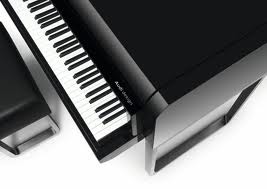
 Daily Piano Sheets is a web site for those who wants to access popular sheet music easily,
letting them download the sheet music for free for trial purposes.
It's completely free to download and try the listed sheet music, but you have to delete the files after 24 hours of trial period.
Don't forget, if you like the piece of music you have just learned playing,
treat the artist with respect, and go buy the original sheet music.
Daily Piano Sheets is a web site for those who wants to access popular sheet music easily,
letting them download the sheet music for free for trial purposes.
It's completely free to download and try the listed sheet music, but you have to delete the files after 24 hours of trial period.
Don't forget, if you like the piece of music you have just learned playing,
treat the artist with respect, and go buy the original sheet music.
Latest Sheet Music
Rachmaninoff
Sergei Vasilievich Rachmaninoff (1 April 1873 - 28 March 1943) was a Russian composer, pianist, and conductor. He was one of the finest pianists of his day and, as a composer, the last great representative of Russian late Romanticism in classical music. Early influences of Tchaikovsky, Rimsky-Korsakov and other Russian composers gave way to a thoroughly personal idiom which included a pronounced lyricism, expressive breadth, structural ingenuity and a tonal palette of rich, distinctive orchestral colors.
Understandably, the piano figures prominently in Rachmaninoff's compositional output, either as a solo instrument or as part of an ensemble. He made it a point, however, to use his own skills as a performer to explore fully the expressive possibilities of the instrument. Even in his earliest works, he revealed a sure grasp of idiomatic piano writing and a striking gift for melody. In some of his early orchestral pieces he showed the first signs of a talent for tone painting, which he would perfect in The Isle of the Dead, and he began to show a similar penchant for vocal writing in two early sets of songs, Opp. 4 and 8. Rachmaninoff's masterpiece, however, is his choral symphony The Bells, in which all of his talents are fused and unified.
Rachmaninoff sometimes felt threatened by the success of modernists such as Scriabin and Prokofiev and wondered whether to cease composing even before he left Russia. His musical philosophy was rooted in the Russian spiritual tradition, where the role of the artist was to create beauty and to speak the truth from the depths of his heart. In his last major interview, in 1941, he admitted his music, like Russian music, was a product of his temperament. He said, on another occasion, "The new kind of music seems to create not from the heart but from the head. Its composers think rather than feel. They have not the capacity to make their works exalt—they meditate, protest, analyze, reason, calculate and brood, but they do not exalt."
Understandably, the piano figures prominently in Rachmaninoff's compositional output, either as a solo instrument or as part of an ensemble. He made it a point, however, to use his own skills as a performer to explore fully the expressive possibilities of the instrument. Even in his earliest works, he revealed a sure grasp of idiomatic piano writing and a striking gift for melody. In some of his early orchestral pieces he showed the first signs of a talent for tone painting, which he would perfect in The Isle of the Dead, and he began to show a similar penchant for vocal writing in two early sets of songs, Opp. 4 and 8. Rachmaninoff's masterpiece, however, is his choral symphony The Bells, in which all of his talents are fused and unified.
Rachmaninoff sometimes felt threatened by the success of modernists such as Scriabin and Prokofiev and wondered whether to cease composing even before he left Russia. His musical philosophy was rooted in the Russian spiritual tradition, where the role of the artist was to create beauty and to speak the truth from the depths of his heart. In his last major interview, in 1941, he admitted his music, like Russian music, was a product of his temperament. He said, on another occasion, "The new kind of music seems to create not from the heart but from the head. Its composers think rather than feel. They have not the capacity to make their works exalt—they meditate, protest, analyze, reason, calculate and brood, but they do not exalt."
yuhki kuramoto
uhki Kuramoto is a Japanese pianist and composer. His given name is Minoru Kitano (北野 實, Kitano Minoru). He writes primarily for the piano, though ...
Alan Menken
Alan Menken (born July 22, 1949 in New Rochelle, New York) is an American Broadway and an eight-time Academy Award winning composer and pianist. Menken has collaborated with several renowned lyricists including Howard Ashman (1950-1991), Tim Rice and Stephen Schwartz.
Danny Elfman
Daniel Robert "Danny" Elfman (born May 29, 1953) is an American musician, best known for composing music for television and movies, and leading the rock band Oingo Boingo as singer/songwriter from 1976 until its breakup in 1995. He is a frequent collaborator with long-time friend Tim Burton, and has scored all but two of his films. He was nominated for four Academy Awards and won a Grammy Award for Tim Burton's Batman and an Emmy Award for his Desperate Housewives theme. Elfman also wrote the theme for the video game Fable. He is also famous for creating The Simpsons main title theme, and his role as Jack Skellington's singing voice in The Nightmare Before Christmas. He is the Uncle in-law to actress Jenna Elfman.
Nobuo Uematsu
Nobuo Uematsu (植松伸夫 Uematsu Nobuo?, born March 21, 1959) is a Japanese video game composer and musician, best known for scoring the majority of titles in the Final Fantasy series. He is regarded as one of the most famous and respected composers in the video game community. Uematsu is a self-taught musician; he began to play the piano at the age of eleven or twelve, with Elton John as his biggest influence.
Uematsu joined Square (later Square Enix) in 1985, where he met Final Fantasy creator Hironobu Sakaguchi. They have worked together on numerous titles, most notably the games in the Final Fantasy series. After nearly 20 years in the company, he left Square Enix in 2004 and founded his own company called Smile Please, as well as the music production company Dog Ear Records. He has since composed music as a freelancer for video games primarily developed by Square Enix and Sakaguchi's development studio Mistwalker.
A handful of soundtracks and arranged albums of Uematsu's game scores have been released. Pieces from his video game works have been performed in concerts worldwide, and numerous Final Fantasy concerts have also been held. He has worked with Grammy Award-winning conductor Arnie Roth on several of these concerts. In 2002, he formed a rock band with colleagues Kenichiro Fukui and Tsuyoshi Sekito called The Black Mages, in which Uematsu plays the keyboard. The band plays arranged rock versions of Uematsu's Final Fantasy compositions.
Uematsu joined Square (later Square Enix) in 1985, where he met Final Fantasy creator Hironobu Sakaguchi. They have worked together on numerous titles, most notably the games in the Final Fantasy series. After nearly 20 years in the company, he left Square Enix in 2004 and founded his own company called Smile Please, as well as the music production company Dog Ear Records. He has since composed music as a freelancer for video games primarily developed by Square Enix and Sakaguchi's development studio Mistwalker.
A handful of soundtracks and arranged albums of Uematsu's game scores have been released. Pieces from his video game works have been performed in concerts worldwide, and numerous Final Fantasy concerts have also been held. He has worked with Grammy Award-winning conductor Arnie Roth on several of these concerts. In 2002, he formed a rock band with colleagues Kenichiro Fukui and Tsuyoshi Sekito called The Black Mages, in which Uematsu plays the keyboard. The band plays arranged rock versions of Uematsu's Final Fantasy compositions.
Joy T. Nilo
Joy T. Nilo (born January 11, 1970) is a Filipino composer who specializes in a cappella choral music. Also an orchestrator, his works range from traditional to modern, ethnic to electronic, serious to popular. He is also a pianist, singer, music conductor and educator.
Leo Wood
Leo Wood American songwriter Leo Wood was an American songwriter and lyricist. Wikipedia Born: September 2, 1882, San Francisco, California, United States Died: August 2, 1929, Teaneck, New Jersey, United States
Bach
Johann Sebastian Bach (31 March 1685 – 28 July 1750) was a German composer and organist whose sacred and secular works for choir, orchestra, and solo instruments drew together the strands of the Baroque period and brought it to its ultimate maturity. Although he introduced no new forms, he enriched the prevailing German style with a robust contrapuntal technique, an unrivalled control of harmonic and motivic organisation in composition for diverse musical forces, and the adaptation of rhythms and textures from abroad, particularly Italy and France.
Revered for their intellectual depth and technical and artistic beauty, Bach's works include the Brandenburg concertos; the Goldberg Variations; the English Suites, French Suites, Partitas, and Well-Tempered Clavier; the Mass in B Minor; the St. Matthew Passion; the St. John Passion; The Musical Offering; The Art of Fugue; the Sonatas and Partitas for violin solo; the Cello Suites; more than 200 surviving cantatas; and a similar number of organ works, including the celebrated Toccata and Fugue in D Minor.
While Bach's fame as an organist was great during his lifetime, he was not particularly well-known as a composer. His adherence to Baroque forms and contrapuntal style was considered "old-fashioned" by his contemporaries, especially late in his career when the musical fashion tended towards Rococo and later Classical styles. A revival of interest and performances of his music began early in the 19th century, and he is now widely considered to be one of the greatest composers in the Western tradition.
Revered for their intellectual depth and technical and artistic beauty, Bach's works include the Brandenburg concertos; the Goldberg Variations; the English Suites, French Suites, Partitas, and Well-Tempered Clavier; the Mass in B Minor; the St. Matthew Passion; the St. John Passion; The Musical Offering; The Art of Fugue; the Sonatas and Partitas for violin solo; the Cello Suites; more than 200 surviving cantatas; and a similar number of organ works, including the celebrated Toccata and Fugue in D Minor.
While Bach's fame as an organist was great during his lifetime, he was not particularly well-known as a composer. His adherence to Baroque forms and contrapuntal style was considered "old-fashioned" by his contemporaries, especially late in his career when the musical fashion tended towards Rococo and later Classical styles. A revival of interest and performances of his music began early in the 19th century, and he is now widely considered to be one of the greatest composers in the Western tradition.
Protest The Hero
Protest the Hero is a Canadian progressive metal band from Whitby, Ontario. Originally named Happy Go Lucky, the band changed their name to Protest the Hero, then released their debut EP, Search for the Truth, in 2002. In 2005, the band released their first album Kezia on Canadian indie label Underground Operations.
Guiseppe Verdi
Giuseppe Fortunino Francesco Verdi (Italian pronunciation: ; 10 October 1813 – 27 January 1901) was an Italian Romantic composer, mainly of opera. He was one of the most influential composers of the 19th century. His works are frequently performed in opera houses throughout the world and, transcending the boundaries of the genre, some of his themes have long since taken root in popular culture - such as "La donna è mobile" from Rigoletto, "Va, pensiero" (The Chorus of the Hebrew Slaves) from Nabucco, "Libiamo ne' lieti calici" (The Drinking Song) from La traviata and the "Grand March" from Aida. Although his work was sometimes criticized for using a generally diatonic rather than a chromatic musical idiom and having a tendency toward melodrama, Verdi’s masterworks dominate the standard repertoire a century and a half after their composition.
Verdi's predecessors who influenced his music were Rossini, Bellini, Giacomo Meyerbeer and, most notably, Gaetano Donizetti and Saverio Mercadante. With the exception of Otello and Aida, he was free of Wagner's influence. Although respectful of Gounod, Verdi was careful not to learn anything from the Frenchman whom many of Verdi's contemporaries regarded as the greatest living composer. Some strains in Aida suggest at least a superficial familiarity with the works of the Russian composer Mikhail Glinka, whom Franz Liszt, after his tour of the Russian Empire as a pianist, popularized in Western Europe.
Throughout his career, Verdi rarely utilised the high C in his tenor arias, citing the fact that the opportunity to sing that particular note in front of an audience distracts the performer before and after the note appears. However, he did provide high Cs to Duprez in Jérusalem and to Tamberlick in the original version of La forza del destino. The high C often heard in the aria Di quella pira does not appear in Verdi's score.
Verdi's predecessors who influenced his music were Rossini, Bellini, Giacomo Meyerbeer and, most notably, Gaetano Donizetti and Saverio Mercadante. With the exception of Otello and Aida, he was free of Wagner's influence. Although respectful of Gounod, Verdi was careful not to learn anything from the Frenchman whom many of Verdi's contemporaries regarded as the greatest living composer. Some strains in Aida suggest at least a superficial familiarity with the works of the Russian composer Mikhail Glinka, whom Franz Liszt, after his tour of the Russian Empire as a pianist, popularized in Western Europe.
Throughout his career, Verdi rarely utilised the high C in his tenor arias, citing the fact that the opportunity to sing that particular note in front of an audience distracts the performer before and after the note appears. However, he did provide high Cs to Duprez in Jérusalem and to Tamberlick in the original version of La forza del destino. The high C often heard in the aria Di quella pira does not appear in Verdi's score.
Yanni
Yanni (born Yiannis Hrysomallis (pronounced Chrysomallis), (Greek: Γιάννης Χρυσομάλλης, classical transcription Giannis Chrysomallis), on November 14, 1954 in Kalamata, Greece) is a self-taught pianist, keyboardist, and composer. After receiving a B.A. in psychology, he would instead seek a life in music though he had no formal training and could not read a note.
He earned Grammy nominations for his 1992 album, Dare to Dream, and the 1993 follow-up, In My Time. His breakthrough success came with the 1994 release of Yanni Live at the Acropolis, deemed to be the second best-selling music video of all time, (behind Michael Jackson's video for Thriller with nine million units). Yanni has since performed live in concert before in excess of two million people in more than 20 countries around the world. He has accumulated more than 35 platinum and gold albums globally, with sales totaling over 20 million copies. Yanni is considered to be one of the top fundraisers of all time for public television. His compositions have been included in all Olympic Games television broadcasts since 1988, and his music has been used extensively in television and televised sporting events. His music is frequently described as "new age", though he prefers the term "contemporary instrumental". The regents of the University of Minnesota conferred upon Yanni the honorary degree of Doctor of Humane Letters.
He earned Grammy nominations for his 1992 album, Dare to Dream, and the 1993 follow-up, In My Time. His breakthrough success came with the 1994 release of Yanni Live at the Acropolis, deemed to be the second best-selling music video of all time, (behind Michael Jackson's video for Thriller with nine million units). Yanni has since performed live in concert before in excess of two million people in more than 20 countries around the world. He has accumulated more than 35 platinum and gold albums globally, with sales totaling over 20 million copies. Yanni is considered to be one of the top fundraisers of all time for public television. His compositions have been included in all Olympic Games television broadcasts since 1988, and his music has been used extensively in television and televised sporting events. His music is frequently described as "new age", though he prefers the term "contemporary instrumental". The regents of the University of Minnesota conferred upon Yanni the honorary degree of Doctor of Humane Letters.
Queen
Queen were an English rock band formed in 1970 in London by guitarist Brian May, lead vocalist Freddie Mercury, and drummer Roger Taylor, with bass guitarist John Deacon completing the lineup the following year. While it is uncertain how many albums the band has sold, estimations range from 130 million to over 300 million albums worldwide.
The band is noted for their musical diversity, multi-layered arrangements, vocal harmonies, and incorporation of audience participation into their live performances. Their 1985 Live Aid performance was voted the best live rock performance of all time in an industry poll.
Queen had moderate success in the early 1970s, with the albums Queen and Queen II, but it was with the release of Sheer Heart Attack in 1974 and A Night at the Opera the following year that the band gained international success. They have released fifteen studio albums, five live albums, and numerous compilation albums. Eighteen of these have reached number one on charts around the world.
Following Mercury's death in 1991 and Deacon's retirement later in the decade, May and Taylor have performed infrequently under the Queen name. Since 2005 they have been collaborating with Paul Rodgers, under the moniker Queen + Paul Rodgers.
The band is noted for their musical diversity, multi-layered arrangements, vocal harmonies, and incorporation of audience participation into their live performances. Their 1985 Live Aid performance was voted the best live rock performance of all time in an industry poll.
Queen had moderate success in the early 1970s, with the albums Queen and Queen II, but it was with the release of Sheer Heart Attack in 1974 and A Night at the Opera the following year that the band gained international success. They have released fifteen studio albums, five live albums, and numerous compilation albums. Eighteen of these have reached number one on charts around the world.
Following Mercury's death in 1991 and Deacon's retirement later in the decade, May and Taylor have performed infrequently under the Queen name. Since 2005 they have been collaborating with Paul Rodgers, under the moniker Queen + Paul Rodgers.
Hellsing
Hellsing (stylized as HELLSING) is a Japanese manga series written and illustrated by Kouta Hirano. It was serialized in Young King OURs from May 1997 to September 2008. The series chronicles the efforts of the mysterious and secret Hellsing Organization as it combats vampires, ghouls, and other supernatural foes who threaten England. The individual chapters were subsequently collected and published in 10 tankōbon volumes by Shōnen Gahōsha. The series was licensed for English language release in North America by Dark Horse Comics. From 2001 to 2009, Hirano released a 6-chapter prequel series, Hellsing: The Dawn, in special editions of Young King OURs.
Gregor Aichinger
Gregor Aichinger (c. 1565 – 21 January 1628) was a German composer.He was organist to the Fugger family of Augsburg in 1584. In 1599 he went for a two-year visit to Rome for musical, rather than religious reasons, although he had taken holy orders before his appointment under the Fuggers. Proske, in the preface to vol. 2 of his Musica Divina, calls him a priest of Regensburg, and is inclined to give him the palm for the devout and ingenuous mastery of his style. Certainly this impression is fully borne out by the beautiful and somewhat quaint works included in that great anthology.
miriam stockley
Miriam Arlene Stockley is a British singer. She was born in Johannesburg, South Africa, and her work is influenced by the African music of her home country.
Rikya Yamashita
Rikiya Yamashita Musical artist Songs Melody of the Wind Ancient City II · 2003 Flower Ancient City II · 2003
Floating Dream Ancient City II · 2003
Floating Dream Ancient City II · 2003
Traditional
Charles Dancla
Jean Baptiste Charles Dancla (19 December 1817 in Bagnères-de-Bigorre – 10 October 1907 in Tunis) was a French violinist and composer.
When Dancla was nine years old the violinist Pierre Rode in Bordeaux heard his music; he was so impressed that he sent a recommendation letter to Pierre Baillot, Luigi Cherubini and Rodolphe Kreutzer. Thus Dancla became pupil to Paris conservatoires with Baillot for violin and with the opera composer Fromental Halévy for composition. He was strongly shaped by Niccolò Paganini, who experienced him in 1830, as well as by Henri Vieuxtemps. From 1835 onward Dancla was solo violinist in that Paris opera, and shortly thereafter he became concert master. In the year 1857 he was made a Professor to Paris conservatoires, where he was a successful teacher for over 35 years.
His two brothers were Arnaud Dancla (1819-1862), Cellist and author of a considerable cello teaching method, and Leopold Dancla (1822-1895), Violinist and composer of chamber music.
When Dancla was nine years old the violinist Pierre Rode in Bordeaux heard his music; he was so impressed that he sent a recommendation letter to Pierre Baillot, Luigi Cherubini and Rodolphe Kreutzer. Thus Dancla became pupil to Paris conservatoires with Baillot for violin and with the opera composer Fromental Halévy for composition. He was strongly shaped by Niccolò Paganini, who experienced him in 1830, as well as by Henri Vieuxtemps. From 1835 onward Dancla was solo violinist in that Paris opera, and shortly thereafter he became concert master. In the year 1857 he was made a Professor to Paris conservatoires, where he was a successful teacher for over 35 years.
His two brothers were Arnaud Dancla (1819-1862), Cellist and author of a considerable cello teaching method, and Leopold Dancla (1822-1895), Violinist and composer of chamber music.
John Williams
John Towner Williams (born February 8, 1932) is an American composer, conductor, and pianist. In a career that spans six decades, Williams has composed many of the most famous film scores in Hollywood history, including Star Wars, Superman, Home Alone, the first three Harry Potter movies and all but two of Steven Spielberg's feature films including the Indiana Jones series, Schindler's List, E.T. the Extra-Terrestrial, Jurassic Park and Jaws. He also composed the soundtrack for the hit 1960s television series Lost in Space as well as the fanfare of the DreamWorks Pictures' logo.
Williams has composed theme music for four Olympic Games, the NBC Nightly News, the rededication of the Statue of Liberty, and numerous television series and concert pieces. He served as the principal conductor of the Boston Pops Orchestra from 1980 to 1993, and is now the orchestra's laureate conductor.
Williams is a five-time winner of the Academy Award. He has also won four Golden Globe Awards, seven BAFTA Awards and 21 Grammy Awards. With 45 Academy Award nominations, Williams is, together with composer Alfred Newman, the second most nominated person after Walt Disney. He was inducted into the Hollywood Bowl Hall of Fame in 2000, and was a recipient of the Kennedy Center Honors in 2004.
Williams has composed theme music for four Olympic Games, the NBC Nightly News, the rededication of the Statue of Liberty, and numerous television series and concert pieces. He served as the principal conductor of the Boston Pops Orchestra from 1980 to 1993, and is now the orchestra's laureate conductor.
Williams is a five-time winner of the Academy Award. He has also won four Golden Globe Awards, seven BAFTA Awards and 21 Grammy Awards. With 45 Academy Award nominations, Williams is, together with composer Alfred Newman, the second most nominated person after Walt Disney. He was inducted into the Hollywood Bowl Hall of Fame in 2000, and was a recipient of the Kennedy Center Honors in 2004.
Brahms
Johannes Brahms (May 7, 1833 â April 3, 1897) was a German composer of the Romantic period. He was born in Hamburg and in his later years he settled in Vienna, Austria.
Brahms maintained a Classical sense of form and order in his works â in contrast to the opulence of the music of many of his contemporaries. Thus many admirers (though not necessarily Brahms himself) saw him as the champion of traditional forms and "pure music," as opposed to the New German embrace of program music.
Brahms venerated Beethoven: in the composer's home, a marble bust of Beethoven looked down on the spot where he composed, and some passages in his works are reminiscent of Beethoven's style. The main theme of the finale of Brahms's First Symphony is reminiscent of the main theme of the finale of Beethoven's Ninth, and when this resemblance was pointed out to Brahms he replied that any ass â jeder Esel â could see that.
Ein deutsches Requiem was partially inspired by his mother's death in 1865, but also incorporates material from a Symphony he started in 1854, but abandoned following Schumann's suicide attempt. He once wrote that the Requiem "belonged to Schumann". The first movement of this abandoned Symphony was re-worked as the first movement of the First Piano Concerto.
Brahms also loved the Classical composers Mozart and Haydn. He collected first editions and autographs of their works, and edited performing editions. He also studied the music of pre-classical composers, including Giovanni Gabrieli, Johann Adolph Hasse, Heinrich Schütz and especially Johann Sebastian Bach. His friends included leading musicologists, and with Friedrich Chrysander he edited an edition of the works of François Couperin. He looked to older music for inspiration in the arts of strict counterpoint; the themes of some of his works are modelled on Baroque sources, such as Bach's The Art of Fugue in the fugal finale of Cello Sonata No. 1, or the same composer's Cantata No. 150 in the passacaglia theme of the Fourth Symphony's finale.
Brahms maintained a Classical sense of form and order in his works â in contrast to the opulence of the music of many of his contemporaries. Thus many admirers (though not necessarily Brahms himself) saw him as the champion of traditional forms and "pure music," as opposed to the New German embrace of program music.
Brahms venerated Beethoven: in the composer's home, a marble bust of Beethoven looked down on the spot where he composed, and some passages in his works are reminiscent of Beethoven's style. The main theme of the finale of Brahms's First Symphony is reminiscent of the main theme of the finale of Beethoven's Ninth, and when this resemblance was pointed out to Brahms he replied that any ass â jeder Esel â could see that.
Ein deutsches Requiem was partially inspired by his mother's death in 1865, but also incorporates material from a Symphony he started in 1854, but abandoned following Schumann's suicide attempt. He once wrote that the Requiem "belonged to Schumann". The first movement of this abandoned Symphony was re-worked as the first movement of the First Piano Concerto.
Brahms also loved the Classical composers Mozart and Haydn. He collected first editions and autographs of their works, and edited performing editions. He also studied the music of pre-classical composers, including Giovanni Gabrieli, Johann Adolph Hasse, Heinrich Schütz and especially Johann Sebastian Bach. His friends included leading musicologists, and with Friedrich Chrysander he edited an edition of the works of François Couperin. He looked to older music for inspiration in the arts of strict counterpoint; the themes of some of his works are modelled on Baroque sources, such as Bach's The Art of Fugue in the fugal finale of Cello Sonata No. 1, or the same composer's Cantata No. 150 in the passacaglia theme of the Fourth Symphony's finale.
Isaac Shepard
Growing up in a musical family, Isaac Shepard began playing piano/keyboards by ear at the age of twelve and very soon thereafter joined the band his father, James, was singing and playing guitar in at the time. As a member of “Dave and the Reverbs,” Isaac played keyboards at various soup kitchens, homeless shelters, social gatherings, church events, and random venues throughout Southern California.
Within a few years, Isaac’s family (father James, mother Debra, and brother Elijah) joined together to form a family band they named “Four Shepards and a Lamb,” and in 1996 they produced a self-titled CD of original contemporary Christian music. In 1998, Isaac released his first solo album, “On Subtle Ground,” featuring original keyboard instrumentals. Over the years, Isaac has played piano for numerous church worship teams and has continued to collaborate with James, adding piano to the rock “Moment By Moment” CD and to the Beatles/Everly Brothers love-songs tribute album called “From Me To You.” In 2005, Isaac produced his first live piano album, “Swept Away,” a collection of relaxing compositions. In 2008, Isaac produced his second solo piano album, called “Deep Joy.”
Within a few years, Isaac’s family (father James, mother Debra, and brother Elijah) joined together to form a family band they named “Four Shepards and a Lamb,” and in 1996 they produced a self-titled CD of original contemporary Christian music. In 1998, Isaac released his first solo album, “On Subtle Ground,” featuring original keyboard instrumentals. Over the years, Isaac has played piano for numerous church worship teams and has continued to collaborate with James, adding piano to the rock “Moment By Moment” CD and to the Beatles/Everly Brothers love-songs tribute album called “From Me To You.” In 2005, Isaac produced his first live piano album, “Swept Away,” a collection of relaxing compositions. In 2008, Isaac produced his second solo piano album, called “Deep Joy.”
Vangelis
Evangelos Odysseas Papathanassiou (Greek: Ευάγγελος Οδυσσέας Παπαθανασίου ; born 29 March 1943), known professionally as Vangelis (Greek: Βαγγέλης ; English pronunciation: /væŋˈɡɛlᵻs/), is a Greek composer of electronic, progressive, ambient, jazz, pop rock, and orchestral music. He is best known for his Academy Award–winning score for the film Chariots of Fire, composing scores for the films Antarctica, Blade Runner, Missing, 1492: Conquest of Paradise, and Alexander, and the use of his music in the PBS documentary Cosmos: A Personal Voyage by Carl Sagan.
After having taking piano lessons from renowned Greek composer Aristotelis Koundouroff, Vangelis began his professional musical career working with several popular bands of the 1960s such as The Forminx and Aphrodite's Child, with the latter's album 666 going on to be recognized as a psychedelic classic. Throughout the 1970s, Vangelis composed music scores for several animal documentaries, including L'Apocalypse Des Animaux, La Fête sauvage and Opéra sauvage; the success of these scores brought him into the film scoring mainstream. In the early 1980s, Vangelis formed a musical partnership with Jon Anderson, the lead singer of progressive rock band Yes, and the duo went on to release several albums together as Jon & Vangelis.
In 1981, he composed the score for the Oscar-winning film Chariots of Fire, for which he won an Academy Award for Best Original Music Score. The soundtrack's single, the film's "Titles" theme, also reached the top of the American Billboard Hot 100 chart and was used as the background music at the London 2012 Olympics winners' medal presentation ceremonies.
Having had a career in music spanning over 50 years and having composed and performed more than 52 albums, Vangelis is one of the most important proponents of electronic music.
After having taking piano lessons from renowned Greek composer Aristotelis Koundouroff, Vangelis began his professional musical career working with several popular bands of the 1960s such as The Forminx and Aphrodite's Child, with the latter's album 666 going on to be recognized as a psychedelic classic. Throughout the 1970s, Vangelis composed music scores for several animal documentaries, including L'Apocalypse Des Animaux, La Fête sauvage and Opéra sauvage; the success of these scores brought him into the film scoring mainstream. In the early 1980s, Vangelis formed a musical partnership with Jon Anderson, the lead singer of progressive rock band Yes, and the duo went on to release several albums together as Jon & Vangelis.
In 1981, he composed the score for the Oscar-winning film Chariots of Fire, for which he won an Academy Award for Best Original Music Score. The soundtrack's single, the film's "Titles" theme, also reached the top of the American Billboard Hot 100 chart and was used as the background music at the London 2012 Olympics winners' medal presentation ceremonies.
Having had a career in music spanning over 50 years and having composed and performed more than 52 albums, Vangelis is one of the most important proponents of electronic music.
Caetano Veloso
Caetano Emanuel Viana Teles Veloso, or known as Caetano Veloso, is a Brazilian composer, singer, guitarist, writer and political activist. He was recognized as one of the best songwriters of the century and considered Bob Dylan of Brazil.
Oscar Levant
Oscar Levant (December 27, 1906 – August 14, 1972) was an American concert pianist, composer, music conductor, author, radio game show panelist, television talk show host, comedian and actor. Though awarded a star on the Hollywood Walk of Fame for recordings featuring his piano performances, he was as famous for his mordant character and witticisms, on the radio and later in movies and television, as for his music.
Felix Mendelssohn Bartholdy
Jakob Ludwig Felix Mendelssohn Bartholdy, born and widely known as Felix Mendelssohn, was a German composer, pianist, organist and conductor of the early Romantic period. Mendelssohn's compositions include symphonies, concertos, piano music and chamber music.
Isham Jones
Isham Edgar Jones (January 31, 1894 – October 19, 1956) was an American bandleader, saxophonist, bassist and songwriter.Jones was born in Coalton, Ohio, United States, to a musical and mining family. His father, Richard Isham Jones (1865–1945), was a violinist. The family moved to Saginaw, Michigan, where Jones grew up and started his first ensemble for church concerts. In 1911 one of Jones's earliest compositions "On the Alamo" was published by Tell Taylor Inc. (Taylor had formed a publishing company the year before when his song "Down by the Old Mill Stream" became a hit.)
Ariel Ramirez
Ariel Ramírez was an Argentine composer, pianist and music director. He was considered "a chief exponent of Argentine folk music" and noted for his "iconic" musical compositions. Ramírez is known primarily for his Misa Criolla. It allowed him to travel around Europe and Latin America to build his reputation
Naomi Tamura
Naomi Tamura is a Japanese pop singer and songwriter who made her solo debut in 1994 with the song Jiyuu no Hashi. She is best known for singing theme songs for popular Anime series such as Yuzurenai Negai for Magic Knight Rayearth and Yuragu Koto Nai Ai for Get Backers.
Aaron Parks
Aaron Parks is a jazz pianist. Date of birth: October 7, 1983 (36 years old), Seattle, Washington, United States
Elvis Presley
Elvis Aaron Presley (January 8, 1935–August 16, 1977, middle name sometimes written Aron)a was an American singer, musician and actor. A cultural icon, he is commonly referred to as the "The King of Rock 'n' Roll" or "The King".
In 1954, Presley began his career as the first performer of rockabilly, an uptempo fusion of country and rhythm and blues with a strong back beat. His novel versions of existing songs, mixing "black" and "white" sounds, made him popular—and controversial—as did his uninhibited stage and television performances. He recorded songs in the rock and roll genre, with tracks like "Hound Dog" and "Jailhouse Rock" later embodying the style. Presley had a versatile voice and had unusually wide success encompassing other genres, including gospel, blues, ballads and pop. To date, he has been inducted into four music halls of fame.
In the 1960s, Presley made the majority of his thirty-one movies—mainly poorly reviewed, but financially successful, musicals. In 1968, he returned with acclaim to live music in a television special, and thereafter performed across the U.S., notably in Las Vegas. Throughout his career, he set records for concert attendance, television ratings and recordings sales. He is one of the best-selling and most influential artists in the history of popular music. Health problems, drug dependency and other factors led to his premature death at age 42.
In 1954, Presley began his career as the first performer of rockabilly, an uptempo fusion of country and rhythm and blues with a strong back beat. His novel versions of existing songs, mixing "black" and "white" sounds, made him popular—and controversial—as did his uninhibited stage and television performances. He recorded songs in the rock and roll genre, with tracks like "Hound Dog" and "Jailhouse Rock" later embodying the style. Presley had a versatile voice and had unusually wide success encompassing other genres, including gospel, blues, ballads and pop. To date, he has been inducted into four music halls of fame.
In the 1960s, Presley made the majority of his thirty-one movies—mainly poorly reviewed, but financially successful, musicals. In 1968, he returned with acclaim to live music in a television special, and thereafter performed across the U.S., notably in Las Vegas. Throughout his career, he set records for concert attendance, television ratings and recordings sales. He is one of the best-selling and most influential artists in the history of popular music. Health problems, drug dependency and other factors led to his premature death at age 42.
Chopin
Frédéric Chopin (1 March 1810 – 17 October 1849) was a Polish composer and virtuoso pianist of the Romantic period. He is widely regarded as the greatest Polish composer, and ranks as one of music's greatest tone poets.
He was born in the village of Żelazowa Wola, in the Duchy of Warsaw, to a Polish mother and French-expatriate father, and in his early life was regarded as a child-prodigy pianist. In November 1830, at the age of 20, Chopin went abroad; following the suppression of the Polish November Uprising of 1830–31, he became one of many expatriates of the Polish "Great Emigration."
In Paris, he made a comfortable living as a composer and piano teacher, while giving few public performances. A Polish patriot,
Chopin's extant compositions were written primarily for the piano as a solo instrument. Though technically demanding, Chopin's style emphasizes nuance and expressive depth rather than virtuosity. Chopin invented musical forms such as the ballade and was responsible for major innovations in forms such as the piano sonata, waltz, nocturne, étude, impromptu and prelude. His works are mainstays of Romanticism in 19th-century classical music.
He was born in the village of Żelazowa Wola, in the Duchy of Warsaw, to a Polish mother and French-expatriate father, and in his early life was regarded as a child-prodigy pianist. In November 1830, at the age of 20, Chopin went abroad; following the suppression of the Polish November Uprising of 1830–31, he became one of many expatriates of the Polish "Great Emigration."
In Paris, he made a comfortable living as a composer and piano teacher, while giving few public performances. A Polish patriot,
Chopin's extant compositions were written primarily for the piano as a solo instrument. Though technically demanding, Chopin's style emphasizes nuance and expressive depth rather than virtuosity. Chopin invented musical forms such as the ballade and was responsible for major innovations in forms such as the piano sonata, waltz, nocturne, étude, impromptu and prelude. His works are mainstays of Romanticism in 19th-century classical music.
Rickard Malmsten
Jazz music, lyrics, and videos from Hong Kong, MX on ReverbNation. ... Hear all of the songs by Rickard Malmsten in our free music discovery app, ..
airto moreira
Airto Guimorvan Moreira (born August 5, 1941) is a Brazilian jazz drummer and percussionist. He is married to jazz singer Flora Purim, and their daughter Diana Moreira is also a singer. Coming to prominence in the late 1960s as a member of the Brazilian ensemble Quarteto Novo, he moved to the United States and worked in jazz fusion with Miles Davis and Return to Forever.
Seiji Yokoyama
Seiji Yokoyama (横山 菁児, Yokoyama Seiji, March 17, 1935 – July 8, 2017) was a prolific Japanese incidental music composer from Hiroshima who was best known to the West for his work on the Space Pirate Captain Harlock and Saint Seiya series. He was a graduate student of Kunitachi College of Music.He made his debut as a composer for the ending theme of The Adventures of Hutch the Honeybee in 1971. He was known for his symphonic sound for many television programs.
P. Mazzucato
P. Mazzucato was an Italian-born American composer, musician, and educator. She wrote Mr. Sampson of Omaha (1888), ...
Alain Goraguer
Alain Goraguer was a French jazz pianist, sideman of Boris Vian and Serge Gainsbourg, arranger and composer. Goraguer was a composer/arranger of music for Serge Gainsbourg, Jean Ferrat, Serge Reggiani and Nana Mouskouri.
Alban Berg
Alban Maria Johanne Berg (February 9, 1885 – December 24, 1935) was an Austrian composer. He was a member of the Second Viennese School with Arnold Schoenberg and Anton Webern, and produced compositions that combined Mahlerian Romanticism with a personal adaptation of Schoenberg's twelve-tone technique.
Harry Gregson-Williams
Harry Gregson-Williams (born 13 December 1961) is a prominent Grammy Award-nominated British composer, orchestrator, conductor, and music producer. He is best known for his film scores, of which he has composed over sixty using electronic music and orchestral pieces. He is also known for his collaborations with director Tony Scott, having scored all his films since the 1998 film Enemy of the State and for composing the music of the Metal Gear games saga. Gregson-Williams is one of the most recognized film score composers and a highly-respected film score composer for his musical style, combining electronic music with orchestral and classic music elements.
Richard Wagner
Wilhelm Richard Wagner (pronounced /ˈvɑːɡnər/, German pronunciation: ; 22 May 1813 – 13 February 1883) was a German composer, conductor, theatre director and essayist, primarily known for his operas (or "music dramas", as they were later called). Wagner's compositions, particularly those of his later period, are notable for their complex texture, rich harmonies and orchestration, and the elaborate use of leitmotifs: musical themes associated with individual characters, places, ideas or plot elements. Unlike most other opera composers, Wagner wrote both the music and libretto for every one of his stage works. Famous extracts from his operas include the "Ride of the Valkyries" and the Bridal Chorus from Lohengrin, popularly known as the wedding march "Here Comes the Bride".
Initially establishing his reputation as a composer of works such as The Flying Dutchman and Tannhäuser which were in the romantic traditions of Weber and Meyerbeer, Wagner transformed operatic thought through his concept of the Gesamtkunstwerk ("total work of art"). This would achieve the synthesis of all the poetic, visual, musical and dramatic arts, and was announced in a series of essays between 1849 and 1852. Wagner realised this concept most fully in the first half of the monumental four-opera cycle Der Ring des Nibelungen. However, his thoughts on the relative importance of music and drama were to change again and he reintroduced some traditional operatic forms into his last few stage works including Die Meistersinger von Nürnberg.
Wagner pioneered advances in musical language, such as extreme chromaticism and quickly shifting tonal centres, which greatly influenced the development of European classical music. His Tristan und Isolde is sometimes described as marking the start of modern music. Wagner's influence spread beyond music into philosophy, literature, the visual arts and theatre. He had his own opera house built, the Bayreuth Festspielhaus, which contained many novel design features. It was here that the Ring and Parsifal received their premieres and where his most important stage works continue to be performed today in an annual festival run by his descendants. Wagner's views on conducting were also highly influential. His extensive writings on music, drama and politics have all attracted extensive comment; not least for their frequently antisemitic content.
Wagner achieved all of this despite a life characterised, until his last decades, by political exile, turbulent love affairs, poverty and repeated flight from his creditors. His pugnacious personality and often outspoken views on music, politics and society made him a controversial figure during his life. He has remained one to this day. The impact of his his ideas can be traced in many of the arts throughout the twentieth century.
Initially establishing his reputation as a composer of works such as The Flying Dutchman and Tannhäuser which were in the romantic traditions of Weber and Meyerbeer, Wagner transformed operatic thought through his concept of the Gesamtkunstwerk ("total work of art"). This would achieve the synthesis of all the poetic, visual, musical and dramatic arts, and was announced in a series of essays between 1849 and 1852. Wagner realised this concept most fully in the first half of the monumental four-opera cycle Der Ring des Nibelungen. However, his thoughts on the relative importance of music and drama were to change again and he reintroduced some traditional operatic forms into his last few stage works including Die Meistersinger von Nürnberg.
Wagner pioneered advances in musical language, such as extreme chromaticism and quickly shifting tonal centres, which greatly influenced the development of European classical music. His Tristan und Isolde is sometimes described as marking the start of modern music. Wagner's influence spread beyond music into philosophy, literature, the visual arts and theatre. He had his own opera house built, the Bayreuth Festspielhaus, which contained many novel design features. It was here that the Ring and Parsifal received their premieres and where his most important stage works continue to be performed today in an annual festival run by his descendants. Wagner's views on conducting were also highly influential. His extensive writings on music, drama and politics have all attracted extensive comment; not least for their frequently antisemitic content.
Wagner achieved all of this despite a life characterised, until his last decades, by political exile, turbulent love affairs, poverty and repeated flight from his creditors. His pugnacious personality and often outspoken views on music, politics and society made him a controversial figure during his life. He has remained one to this day. The impact of his his ideas can be traced in many of the arts throughout the twentieth century.
Jeanine Tesori
Jeanine Tesori is an American composer and musical arranger. She is the most prolific and honored female theatrical composer in history, with five Broadway musicals and five Tony Award nominations.
Coldplay
Coldplay are a rock band formed in London, England in 1997. The group comprises vocalist/pianist/guitarist Chris Martin, lead guitarist Jonny Buckland, bassist Guy Berryman, and drummer/multi-instrumentalist Will Champion. Coldplay have sold 34.6 million albums, and are also known for their hit singles, such as "Yellow", "The Scientist", "Speed of Sound", "Fix You", "Viva la Vida" and the Grammy Award-winning "Clocks".
Coldplay achieved worldwide fame with the release of their single "Yellow", followed by their debut album, Parachutes (2000), which was nominated for the Mercury Prize. Its follow-up, A Rush of Blood to the Head (2002) won multiple awards such as NME's Album of the Year and was later included on Rolling Stone magazine's 500 Greatest Albums of All Time list, ranking at #473. Their next release, X&Y (2005), received a slightly less enthusiastic yet still generally positive reception. The band's fourth studio album, Viva la Vida or Death and All His Friends (2008), was produced by Brian Eno and released again to largely favourable reviews. All of Coldplay's albums have enjoyed great commercial success.
Coldplay's early material was compared to acts such as Jeff Buckley, U2, and Travis. Coldplay have been an active supporter of various social and political causes, such as Oxfam's Make Trade Fair campaign and Amnesty International. The group have also performed at various charity projects such as Band Aid 20, Live 8, and the Teenage Cancer Trust.
Coldplay achieved worldwide fame with the release of their single "Yellow", followed by their debut album, Parachutes (2000), which was nominated for the Mercury Prize. Its follow-up, A Rush of Blood to the Head (2002) won multiple awards such as NME's Album of the Year and was later included on Rolling Stone magazine's 500 Greatest Albums of All Time list, ranking at #473. Their next release, X&Y (2005), received a slightly less enthusiastic yet still generally positive reception. The band's fourth studio album, Viva la Vida or Death and All His Friends (2008), was produced by Brian Eno and released again to largely favourable reviews. All of Coldplay's albums have enjoyed great commercial success.
Coldplay's early material was compared to acts such as Jeff Buckley, U2, and Travis. Coldplay have been an active supporter of various social and political causes, such as Oxfam's Make Trade Fair campaign and Amnesty International. The group have also performed at various charity projects such as Band Aid 20, Live 8, and the Teenage Cancer Trust.
Elvis Costello
Elvis Costello (born Declan Patrick MacManus, 25 August 1954) is an English singer-songwriter. He came to prominence as an early participant in London's pub rock scene in the mid-1970s and later became associated with the punk/New Wave genre. Steeped in word play, the vocabulary of Costello's lyrics is broader than that of most popular songs. His music has drawn on many diverse genres; one critic described him as a "pop encyclopedia", able to "reinvent the past in his own image".
Costello has won multiple awards in his career, including a Grammy Award, and has twice been nominated for the Brit Award for Best British Male. In 2003, Elvis Costello & the Attractions was inducted into the Rock and Roll Hall of Fame. In 2004, Rolling Stone ranked Costello number 80 on their list of the 100 Greatest Artists of All Time.
Costello has won multiple awards in his career, including a Grammy Award, and has twice been nominated for the Brit Award for Best British Male. In 2003, Elvis Costello & the Attractions was inducted into the Rock and Roll Hall of Fame. In 2004, Rolling Stone ranked Costello number 80 on their list of the 100 Greatest Artists of All Time.
Indochine
Indochine (French pronunciation: ) is a 1992 French period drama film set in colonial French Indochina during the 1930s to 1950s. It is the story of Éliane Devries, a French plantation owner, and of her adopted Vietnamese daughter, Camille, with the rising Vietnamese nationalist movement set as a backdrop. The screenplay was written by novelist Érik Orsenna, scriptwriters Louis Gardel, Catherine Cohen, and Régis Wargnier, who also directed the film. The film stars Catherine Deneuve, Vincent Pérez, Linh Dan Pham, Jean Yanne and Dominique Blanc. The film won the Academy Award for Best Foreign Language Film at the 65th Academy Awards.
Eden of the East
Eden of the East (Japanese: 東のエデン, Hepburn: Higashi no Eden) is a Japanese anime television series, which premiered on Fuji TV's noitaminA timeslot on April 9, 2009. Created, directed and written by Kenji Kamiyama, it features character designs by Chika Umino and animation production by Production I.G. Based on an original story by Kamiyama, it is the first original animation series broadcast in noitaminA.A compilation of the TV series, Eden of the East Compilation: Air Communication, had a limited theatrical release on September 26, 2009. Two other theatrical films have also been released. Eden of the East Movie I: The King of Eden (taking place six months after the series) was released in Japan on November 28, 2009 and the second movie, Eden of the East the Movie II: Paradise Lost (taking place hours after The King of Eden), was released on March 13, 2010. The TV series and both films have been licensed for release in North America by Funimation. The series premiered in the US at Anime Expo in 2010 along with a panel discussion with director Kenji Kamiyama, animation director Satoru Nakamura, and producer Tomohiko Ishii.
Ludwig van Beethoven
Ludwig van Beethoven (/ˈlʊdvɪɡ væn ˈbeɪt(h)oʊvən/ (About this soundlisten); German: (About this soundlisten); baptised 17 December 1770 – 26 March 1827) was a German composer and pianist. A crucial figure in the transition between the classical and romantic eras in classical music, he remains one of the most recognized and influential musicians of this period, and is considered to be one of the greatest composers of all time.
Beethoven was born in Bonn, the capital of the Electorate of Cologne, and part of the Holy Roman Empire. He displayed his musical talents at an early age and was vigorously taught by his father Johann van Beethoven, and was later taught by composer and conductor Christian Gottlob Neefe. At age 21, he moved to Vienna and studied composition with Joseph Haydn. Beethoven then gained a reputation as a virtuoso pianist, and was soon courted by Prince Lichnowsky for compositions, which resulted in Opus 1 in 1795.
Beethoven was born in Bonn, the capital of the Electorate of Cologne, and part of the Holy Roman Empire. He displayed his musical talents at an early age and was vigorously taught by his father Johann van Beethoven, and was later taught by composer and conductor Christian Gottlob Neefe. At age 21, he moved to Vienna and studied composition with Joseph Haydn. Beethoven then gained a reputation as a virtuoso pianist, and was soon courted by Prince Lichnowsky for compositions, which resulted in Opus 1 in 1795.
Mark Hayes SATB
Mark Hayes (born March 28, 1953) is an American composer and arranger. His predominant output is of choral music in the Christian sacred music and gospel music genresHayes was born in Ladysmith, Wisconsin. After receiving a bachelor's degree in piano performance with Summa Cum Laude from Baylor University in 1975, he entered a career in composing and arranging music.
Hayes' influence in the sacred choral and piano genres have brought him international recognition.
Hayes' influence in the sacred choral and piano genres have brought him international recognition.
Stevie Wonder
Stevie Wonder (born Stevland Hardaway Judkins on May 13, 1950, name later changed to Stevland Hardaway Morris) is an American singer-songwriter, multi-instrumentalist, and record producer. A prominent figure in popular music during the latter half of the 20th century , Wonder has recorded more than thirty top ten hits, won 26 Grammy Awards (a record for a solo artist), plus one for lifetime achievement, won an Academy Award for Best Song and been inducted into both the Rock and Roll and Songwriters halls of fame. He has also been awarded the Polar Music Prize.
Blind from infancy, Wonder signed with Motown Records as a pre-adolescent at age twelve, and continues to perform and record for the label to this day. He has nine U.S. number-one hits to his name (on the pop Charts, 20 U.S. R&B number one hits), and album sales totaling more than 150 million units. Wonder has recorded several critically acclaimed albums and hit singles, and writes and produces songs for many of his label mates and outside artists as well. Wonder plays the piano, synthesizer, harmonica, congas, drums, bongos, organ, melodica, and clavinet. In his early career, he was best known for his harmonica work, but today he is better known for his keyboard skills and vocals.
Blind from infancy, Wonder signed with Motown Records as a pre-adolescent at age twelve, and continues to perform and record for the label to this day. He has nine U.S. number-one hits to his name (on the pop Charts, 20 U.S. R&B number one hits), and album sales totaling more than 150 million units. Wonder has recorded several critically acclaimed albums and hit singles, and writes and produces songs for many of his label mates and outside artists as well. Wonder plays the piano, synthesizer, harmonica, congas, drums, bongos, organ, melodica, and clavinet. In his early career, he was best known for his harmonica work, but today he is better known for his keyboard skills and vocals.
Astor Piazzolla
Ástor Pantaleón Piazzolla (March 11, 1921 – July 4, 1992) was an Argentine tango composer and bandoneón player. His oeuvre revolutionized the traditional tango into a new style termed nuevo tango, incorporating elements from jazz and classical music. An excellent bandoneonist, he regularly performed his own compositions with different ensembles.
Piazzolla's nuevo tango was distinct from the traditional tango in its incorporation of elements of jazz, its use of extended harmonies and dissonance, its use of counterpoint, and its ventures into extended compositional forms. As Argentine psychoanalyst Carlos Kuri has pointed out, Piazzolla's fusion of tango with this wide range of other recognizable Western musical elements was so successful that it produced a new individual style transcending these influences. It is precisely this success, and individuality, that makes it hard to pin down where particular influences reside in his compositions, but some aspects are clear. The use of the passacaglia technique of a circulating bass line and harmonic sequence, invented and much used in 17th and 18th century baroque music but also central to the idea of jazz "changes", predominates in most of Piazzolla's mature compositions. Another clear reference to the baroque is the often complex and virtuosic counterpoint that sometimes follows strict fugal behavior but more often simply allows each performer in the group to assert his voice. A further technique that emphasises this sense of democracy and freedom among the musicians is improvisation that is borrowed from jazz in concept, but in practice involves a different vocabulary of scales and rhythms that stay within the parameters of the established tango sound-world. Pablo Ziegler has been particularly responsible for developing this aspect of the style both within Piazzolla's groups and since the composer's death.
Piazzolla's nuevo tango was distinct from the traditional tango in its incorporation of elements of jazz, its use of extended harmonies and dissonance, its use of counterpoint, and its ventures into extended compositional forms. As Argentine psychoanalyst Carlos Kuri has pointed out, Piazzolla's fusion of tango with this wide range of other recognizable Western musical elements was so successful that it produced a new individual style transcending these influences. It is precisely this success, and individuality, that makes it hard to pin down where particular influences reside in his compositions, but some aspects are clear. The use of the passacaglia technique of a circulating bass line and harmonic sequence, invented and much used in 17th and 18th century baroque music but also central to the idea of jazz "changes", predominates in most of Piazzolla's mature compositions. Another clear reference to the baroque is the often complex and virtuosic counterpoint that sometimes follows strict fugal behavior but more often simply allows each performer in the group to assert his voice. A further technique that emphasises this sense of democracy and freedom among the musicians is improvisation that is borrowed from jazz in concept, but in practice involves a different vocabulary of scales and rhythms that stay within the parameters of the established tango sound-world. Pablo Ziegler has been particularly responsible for developing this aspect of the style both within Piazzolla's groups and since the composer's death.
Mozart
Wolfgang Amadeus Mozart, full name Johann Chrysostom Wolfgang Amadeus Mozart (27 January 1756 â 5 December 1791) was a prolific and influential composer of the Classical era. His over 600 compositions include works widely acknowledged as pinnacles of symphonic, concertante, chamber, piano, operatic, and choral music. Mozart is among the most enduringly popular of classical composers, and many of his works are part of the standard concert repertoire.
Mozart's music, like Haydn's, stands as an archetypal example of the Classical style. His works spanned the period during which that style transformed from one exemplified by the style galant to one that began to incorporate some of the contrapuntal complexities of the late Baroque, complexities against which the galant style had been a reaction. Mozart's own stylistic development closely paralleled the development of the classical style as a whole. In addition, he was a versatile composer and wrote in almost every major genre, including symphony, opera, the solo concerto, chamber music including string quartet and string quintet, and the piano sonata. While none of these genres were new, the piano concerto was almost single-handedly developed and popularized by Mozart. He also wrote a great deal of religious music, including masses; and he composed many dances, divertimenti, serenades, and other forms of light entertainment.
The central traits of the classical style can be identified in Mozart's music. Clarity, balance, and transparency are hallmarks of his work.
Mozart's music, like Haydn's, stands as an archetypal example of the Classical style. His works spanned the period during which that style transformed from one exemplified by the style galant to one that began to incorporate some of the contrapuntal complexities of the late Baroque, complexities against which the galant style had been a reaction. Mozart's own stylistic development closely paralleled the development of the classical style as a whole. In addition, he was a versatile composer and wrote in almost every major genre, including symphony, opera, the solo concerto, chamber music including string quartet and string quintet, and the piano sonata. While none of these genres were new, the piano concerto was almost single-handedly developed and popularized by Mozart. He also wrote a great deal of religious music, including masses; and he composed many dances, divertimenti, serenades, and other forms of light entertainment.
The central traits of the classical style can be identified in Mozart's music. Clarity, balance, and transparency are hallmarks of his work.
Edith Piaf
Édith Piaf (19 December 1915—10 October 1963) was a French singer and cultural icon who "is almost universally regarded as France's greatest popular singer." Her singing reflected her life, with her specialty being the ballads. Among her famous songs are "La vie en rose" (1946), "Hymne à l'amour" (1949), "Milord" (1959), "Non, je ne regrette rien" (1960), and Padam Padam.
Edith Piaf's signature song "La vie en rose" was written in 1945 and was voted a Grammy Hall of Fame Award in 1998.
The legendary Paris Olympia concert hall is where Piaf achieved lasting fame, giving several series of concerts at the hall, the most famous venue in Paris, between January 1955 and October 1962. Excerpts from five of these concerts (1955, 1956, 1958, 1961, 1962) were issued on record and CD and have never been out of print. The 1961 concerts were promised by Piaf in an effort to save the venue from bankruptcy and where she debuted her song "Non, je ne regrette rien". In April 1963, Piaf recorded her last song, "L'homme de Berlin".
Edith Piaf's signature song "La vie en rose" was written in 1945 and was voted a Grammy Hall of Fame Award in 1998.
The legendary Paris Olympia concert hall is where Piaf achieved lasting fame, giving several series of concerts at the hall, the most famous venue in Paris, between January 1955 and October 1962. Excerpts from five of these concerts (1955, 1956, 1958, 1961, 1962) were issued on record and CD and have never been out of print. The 1961 concerts were promised by Piaf in an effort to save the venue from bankruptcy and where she debuted her song "Non, je ne regrette rien". In April 1963, Piaf recorded her last song, "L'homme de Berlin".
Koh Otani
Kow Otani is a Japanese composer. He is best known for creating the soundtracks for the Heisei Gamera trilogy, Godzilla, Mothra and King Ghidorah: Giant Monsters All-Out Attack, Mobile Suit Gundam Wing, and Shadow of the Colossus.
Pascal Obispo
Pascal Michel Obispo (French pronunciation: ; born 8 January 1965) is a French singer-songwriter.
Pascal Obispo was born in Bergerac, Dordogne, France, and started singing in 1980. He got his first record deal in 1990. The record deal was Le long du fleuve. Some of his most famous songs are "Plus que tout au monde", "Laurelenn", "Tombé pour elle", "L'important c'est d'aimer", "Personne" and "Fan".With his 2007 release of Les Fleurs du Bien (a play on Baudelaire's Les Fleurs du mal) he makes allusions to Rosa Parks, Pablo Picasso and others. He is also well known for his various escapades, his unconservative behavior, his haircut, etc. His name is an anagram of painter Pablo Picasso's name.
Pascal Obispo was born in Bergerac, Dordogne, France, and started singing in 1980. He got his first record deal in 1990. The record deal was Le long du fleuve. Some of his most famous songs are "Plus que tout au monde", "Laurelenn", "Tombé pour elle", "L'important c'est d'aimer", "Personne" and "Fan".With his 2007 release of Les Fleurs du Bien (a play on Baudelaire's Les Fleurs du mal) he makes allusions to Rosa Parks, Pablo Picasso and others. He is also well known for his various escapades, his unconservative behavior, his haircut, etc. His name is an anagram of painter Pablo Picasso's name.