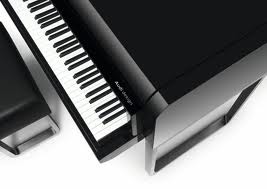
 Daily Piano Sheets is a web site for those who wants to access popular sheet music easily,
letting them download the sheet music for free for trial purposes.
It's completely free to download and try the listed sheet music, but you have to delete the files after 24 hours of trial period.
Don't forget, if you like the piece of music you have just learned playing,
treat the artist with respect, and go buy the original sheet music.
Daily Piano Sheets is a web site for those who wants to access popular sheet music easily,
letting them download the sheet music for free for trial purposes.
It's completely free to download and try the listed sheet music, but you have to delete the files after 24 hours of trial period.
Don't forget, if you like the piece of music you have just learned playing,
treat the artist with respect, and go buy the original sheet music.
Latest Sheet Music
Franz Schubert
Franz Peter Schubert (German pronunciation: ; January 31, 1797 – November 19, 1828) was an Austrian composer. He wrote some 600 Lieder, nine symphonies (including the famous "Unfinished Symphony"), liturgical music, operas, some incidental music, and a large body of chamber and solo piano music. He is particularly noted for his original melodic and harmonic writing.
Schubert was born into a musical family, and received formal musical training through much of his childhood. While Schubert had a close circle of friends and associates who admired his work (amongst them the prominent singer Johann Michael Vogl), wide appreciation of his music during his lifetime was limited at best. He was never able to secure adequate permanent employment, and for most of his career he relied on the support of friends and family. He made some money from published works, and occasionally gave private musical instruction. In the last year of his life he began to receive wider acclaim. He died at the age of 31 of "typhoid fever", a diagnosis which was vague at the time; several scholars suspect the real illness was tertiary syphilis.
Interest in Schubert's work increased dramatically in the decades following his death. Composers like Franz Liszt, Robert Schumann and Felix Mendelssohn discovered, collected, and championed his works in the 19th century, as did musicologist Sir George Grove. Franz Schubert is now widely considered to be one of the greatest composers in the Western tradition.
Schubert was born into a musical family, and received formal musical training through much of his childhood. While Schubert had a close circle of friends and associates who admired his work (amongst them the prominent singer Johann Michael Vogl), wide appreciation of his music during his lifetime was limited at best. He was never able to secure adequate permanent employment, and for most of his career he relied on the support of friends and family. He made some money from published works, and occasionally gave private musical instruction. In the last year of his life he began to receive wider acclaim. He died at the age of 31 of "typhoid fever", a diagnosis which was vague at the time; several scholars suspect the real illness was tertiary syphilis.
Interest in Schubert's work increased dramatically in the decades following his death. Composers like Franz Liszt, Robert Schumann and Felix Mendelssohn discovered, collected, and championed his works in the 19th century, as did musicologist Sir George Grove. Franz Schubert is now widely considered to be one of the greatest composers in the Western tradition.
The Rasmus
The Rasmus are a Finnish rock band that formed in 1994 in Helsinki while the band members were still in upper comprehensive school. The original band members were Lauri Ylönen (lead singer/songwriter), Eero Heinonen (bass), Pauli Rantasalmi (guitar) and Janne Heiskanen (drums). Heiskanen quit the band in 1998 and was soon replaced by Aki Hakala.
Before releasing their fourth studio album Into (2001), they were simply known as Rasmus, but changed their name to The Rasmus in order to avoid being confused with a Swedish DJ of the same name. They gained international fame with their 2003 album Dead Letters which went gold and platinum in several countries, accompanied with the single "In the Shadows" which reached number 1 in a number of countries. Their follow-up album Hide from the Sun which was released in October 2005 also went platinum in Finland.
The band is one of Finland's most successful with more than 3.5 million sold albums worldwide, eight gold awards and five platinum awards. They have released seven studio albums, one compilation album and 21 singles. Some of the band's most famous songs are the singles "Liquid", "F-F-F-Falling", "In the Shadows", "First Day of My Life", "Funeral Song" , "No Fear", "Sail Away", "Livin' in a World Without You", and "Justify". Their most recent album, titled Black Roses, was released in 2008. Immediately it replaced Metallica's latest album Death Magnetic in the Finnish Album Charts and went gold after one week.
Before releasing their fourth studio album Into (2001), they were simply known as Rasmus, but changed their name to The Rasmus in order to avoid being confused with a Swedish DJ of the same name. They gained international fame with their 2003 album Dead Letters which went gold and platinum in several countries, accompanied with the single "In the Shadows" which reached number 1 in a number of countries. Their follow-up album Hide from the Sun which was released in October 2005 also went platinum in Finland.
The band is one of Finland's most successful with more than 3.5 million sold albums worldwide, eight gold awards and five platinum awards. They have released seven studio albums, one compilation album and 21 singles. Some of the band's most famous songs are the singles "Liquid", "F-F-F-Falling", "In the Shadows", "First Day of My Life", "Funeral Song" , "No Fear", "Sail Away", "Livin' in a World Without You", and "Justify". Their most recent album, titled Black Roses, was released in 2008. Immediately it replaced Metallica's latest album Death Magnetic in the Finnish Album Charts and went gold after one week.
Astor Piazzolla
Ástor Pantaleón Piazzolla (March 11, 1921 – July 4, 1992) was an Argentine tango composer and bandoneón player. His oeuvre revolutionized the traditional tango into a new style termed nuevo tango, incorporating elements from jazz and classical music. An excellent bandoneonist, he regularly performed his own compositions with different ensembles.
Piazzolla's nuevo tango was distinct from the traditional tango in its incorporation of elements of jazz, its use of extended harmonies and dissonance, its use of counterpoint, and its ventures into extended compositional forms. As Argentine psychoanalyst Carlos Kuri has pointed out, Piazzolla's fusion of tango with this wide range of other recognizable Western musical elements was so successful that it produced a new individual style transcending these influences. It is precisely this success, and individuality, that makes it hard to pin down where particular influences reside in his compositions, but some aspects are clear. The use of the passacaglia technique of a circulating bass line and harmonic sequence, invented and much used in 17th and 18th century baroque music but also central to the idea of jazz "changes", predominates in most of Piazzolla's mature compositions. Another clear reference to the baroque is the often complex and virtuosic counterpoint that sometimes follows strict fugal behavior but more often simply allows each performer in the group to assert his voice. A further technique that emphasises this sense of democracy and freedom among the musicians is improvisation that is borrowed from jazz in concept, but in practice involves a different vocabulary of scales and rhythms that stay within the parameters of the established tango sound-world. Pablo Ziegler has been particularly responsible for developing this aspect of the style both within Piazzolla's groups and since the composer's death.
Piazzolla's nuevo tango was distinct from the traditional tango in its incorporation of elements of jazz, its use of extended harmonies and dissonance, its use of counterpoint, and its ventures into extended compositional forms. As Argentine psychoanalyst Carlos Kuri has pointed out, Piazzolla's fusion of tango with this wide range of other recognizable Western musical elements was so successful that it produced a new individual style transcending these influences. It is precisely this success, and individuality, that makes it hard to pin down where particular influences reside in his compositions, but some aspects are clear. The use of the passacaglia technique of a circulating bass line and harmonic sequence, invented and much used in 17th and 18th century baroque music but also central to the idea of jazz "changes", predominates in most of Piazzolla's mature compositions. Another clear reference to the baroque is the often complex and virtuosic counterpoint that sometimes follows strict fugal behavior but more often simply allows each performer in the group to assert his voice. A further technique that emphasises this sense of democracy and freedom among the musicians is improvisation that is borrowed from jazz in concept, but in practice involves a different vocabulary of scales and rhythms that stay within the parameters of the established tango sound-world. Pablo Ziegler has been particularly responsible for developing this aspect of the style both within Piazzolla's groups and since the composer's death.
Ernesto Lecuona
Ernesto Lecuona y Casado (Spanish pronunciation: ; August 6, 1895 – November 29, 1963) was a Cuban composer and pianist of worldwide fame. He composed over six hundred pieces, mostly in the Cuban vein, and was a pianist of exceptional skill. His father was Canarian and his mother was Cuban.
Linkin Park
Linkin Park is an American rock band from Agoura Hills, California. Since their formation in 1996, the band has sold more than 50 million albums and won two Grammy Awards. They achieved mainstream success with their debut album, Hybrid Theory, which was certified Diamond by the RIAA in 2005. Their following studio album, Meteora, continued the band's success, topping the Billboard 200’s album charts in 2003, and was followed by extensive touring and charity work around the world.
Recognized for their adaptation of the nu metal and rap rock genre into a radio-friendly yet densely-layered style in Hybrid Theory and Meteora, the band moved away from this and explored a variety of other genres in their latest studio album, Minutes to Midnight. The album topped the Billboard charts and had the third best debut week of any album that year. They are also known for their several collaborations, most notably with rapper Jay-Z in their mash-up album Collision Course, and many other artists on Reanimation.
Recognized for their adaptation of the nu metal and rap rock genre into a radio-friendly yet densely-layered style in Hybrid Theory and Meteora, the band moved away from this and explored a variety of other genres in their latest studio album, Minutes to Midnight. The album topped the Billboard charts and had the third best debut week of any album that year. They are also known for their several collaborations, most notably with rapper Jay-Z in their mash-up album Collision Course, and many other artists on Reanimation.
Dietrich Buxtehude
Dieterich Buxtehude (German: ; Danish: Diderich, pronounced ; c. 1637/39 – 9 May 1707) was a Danish-German organist and composer of the Baroque period. His organ works represent a central part of the standard organ repertoire and are frequently performed at recitals and in church services. He composed in a wide variety of vocal and instrumental idioms, and his style strongly influenced many composers, including Johann Sebastian Bach, his student. Today, Buxtehude is considered one of the most important composers in Germany of the mid-Baroque.
Leslie Wagle
she is a female musician doing new age arrangements and cover music.
Steve Jones
Stephen Philip Jones is an English rock guitarist, singer, actor and radio DJ, best known as a guitarist with the Sex Pistols. Following the split of the Sex Pistols, he formed the Professionals with former bandmate Paul Cook.
Franz Liszt
Franz Liszt (Hungarian: Ferencz Liszt, in modern usage Ferenc Liszt, from 1859 to 1865 officially Franz Ritter von Liszt) (October 22, 1811 – July 31, 1886) was a Hungarian composer, virtuoso pianist and teacher. He was also the father-in-law of Richard Wagner. In 1865 he became abbot in the Roman Catholic Church.
Liszt became renowned throughout Europe during the 19th century for his great skill as a performer. He was said by his contemporaries to have been the most technically advanced pianist of his age and perhaps the greatest pianist of all time. He was also an important and influential composer, a notable piano teacher, a conductor who contributed significantly to the modern development of the art, and a benefactor to other composers and performers, notably Richard Wagner, Hector Berlioz, Camille Saint-Saëns, Edvard Grieg and Alexander Borodin.
As a composer, Liszt was one of the most prominent representatives of the "Neudeutsche Schule" ("New German School"). He left behind a huge and diverse body of work, in which he influenced his forward-looking contemporaries and anticipated some 20th-century ideas and trends. Some of his most notable contributions were the invention of the symphonic poem, developing the concept of thematic transformation as part of his experiments in musical form and making radical departures in harmony.
Liszt became renowned throughout Europe during the 19th century for his great skill as a performer. He was said by his contemporaries to have been the most technically advanced pianist of his age and perhaps the greatest pianist of all time. He was also an important and influential composer, a notable piano teacher, a conductor who contributed significantly to the modern development of the art, and a benefactor to other composers and performers, notably Richard Wagner, Hector Berlioz, Camille Saint-Saëns, Edvard Grieg and Alexander Borodin.
As a composer, Liszt was one of the most prominent representatives of the "Neudeutsche Schule" ("New German School"). He left behind a huge and diverse body of work, in which he influenced his forward-looking contemporaries and anticipated some 20th-century ideas and trends. Some of his most notable contributions were the invention of the symphonic poem, developing the concept of thematic transformation as part of his experiments in musical form and making radical departures in harmony.
Howard Shore
Howard Leslie Shore (born October 18, 1946) is a Canadian composer, notable for his film scores. He has composed the scores for over 40 films, most notably the scores for The Lord of the Rings film trilogy, for which he won three Academy Awards. He is also a consistent collaborator with director David Cronenberg, having scored all but one of his films since 1979. Shore has also worked with Martin Scorsese, Jonathan Demme, David Fincher and many other filmakers.
He has also composed a few concert works including one opera, The Fly, based on the plot (though not his score) of Cronenberg's 1986 film premiered at the Théâtre du Châtelet in Paris on 2 July 2008., a short piece Fanfare for the Wanamaker Organ and the Philadelphia Orchestra, and a short overture for the Swiss 21st Century Symphony Orchestra.
Shore is a three-time winner of the Academy Award, and has also won two Golden Globe Awards and four Grammy Awards. He is the uncle of film composer Ryan Shore.
He has also composed a few concert works including one opera, The Fly, based on the plot (though not his score) of Cronenberg's 1986 film premiered at the Théâtre du Châtelet in Paris on 2 July 2008., a short piece Fanfare for the Wanamaker Organ and the Philadelphia Orchestra, and a short overture for the Swiss 21st Century Symphony Orchestra.
Shore is a three-time winner of the Academy Award, and has also won two Golden Globe Awards and four Grammy Awards. He is the uncle of film composer Ryan Shore.
Chopin
Frédéric Chopin (1 March 1810 – 17 October 1849) was a Polish composer and virtuoso pianist of the Romantic period. He is widely regarded as the greatest Polish composer, and ranks as one of music's greatest tone poets.
He was born in the village of Żelazowa Wola, in the Duchy of Warsaw, to a Polish mother and French-expatriate father, and in his early life was regarded as a child-prodigy pianist. In November 1830, at the age of 20, Chopin went abroad; following the suppression of the Polish November Uprising of 1830–31, he became one of many expatriates of the Polish "Great Emigration."
In Paris, he made a comfortable living as a composer and piano teacher, while giving few public performances. A Polish patriot,
Chopin's extant compositions were written primarily for the piano as a solo instrument. Though technically demanding, Chopin's style emphasizes nuance and expressive depth rather than virtuosity. Chopin invented musical forms such as the ballade and was responsible for major innovations in forms such as the piano sonata, waltz, nocturne, étude, impromptu and prelude. His works are mainstays of Romanticism in 19th-century classical music.
He was born in the village of Żelazowa Wola, in the Duchy of Warsaw, to a Polish mother and French-expatriate father, and in his early life was regarded as a child-prodigy pianist. In November 1830, at the age of 20, Chopin went abroad; following the suppression of the Polish November Uprising of 1830–31, he became one of many expatriates of the Polish "Great Emigration."
In Paris, he made a comfortable living as a composer and piano teacher, while giving few public performances. A Polish patriot,
Chopin's extant compositions were written primarily for the piano as a solo instrument. Though technically demanding, Chopin's style emphasizes nuance and expressive depth rather than virtuosity. Chopin invented musical forms such as the ballade and was responsible for major innovations in forms such as the piano sonata, waltz, nocturne, étude, impromptu and prelude. His works are mainstays of Romanticism in 19th-century classical music.
Enya
Enya (born Eithne Patricia Nà Bhraonáinon May 17, 1961, Gaoth Dobhair, County Donegal, Ireland), sometimes presented in the media as Enya Brennan, is an Irish singer, instrumentalist and composer. She is Ireland's best-selling solo artist and is officially the country's second biggest musical export (after U2). Her works have earned her four Grammy Awards and an Academy Award nomination, and she is also famous for performing in 10 different languages during her lengthy career. Enya is an approximate transcription of how Eithne is pronounced in her native Irish, in the Donegal dialect.
Stephen Schwartz
Stephen Lawrence Schwartz (born March 6, 1948) is an American musical theater lyricist and composer. In a career already spanning over four decades, Schwartz has written such hit musicals as Godspell (1971), Pippin (1972) and Wicked (2003). He has also contributed lyrics for a number of successful films, including Pocahontas (1995), The Hunchback of Notre Dame (1996), The Prince of Egypt (1998; music and lyrics) and Enchanted (2007). Schwartz has won the Drama Desk Award for Outstanding Lyrics, three Grammy Awards, and three Academy Awards and has been nominated for six Tony Awards.
Brian McKnight
Brian McKnight (born June 5, 1969) is a Grammy-nominated American singer, songwriter, arranger, producer, pop and R&B musician. He is a multi-instrumentalist who can play nine instruments: piano, guitar, bass guitar, drums, percussions, trombone, tuba, French horn and trumpet.
McKnight’s vocal style is his own. He does however draw heavily (particularly in his use of melisma) from Stevie Wonder and Michael Sembello. Echoes of Michael McDonald, Kenny Loggins and Take 6 founder Claude V McKnight can also be heard in McKnights voice.
Mcknight also has an uncanny ability to mimic the timbre and style of other singers . He can do a spot on imitation of Nat King Cole, Stevie Wonder, Prince and feels comfortable singing songs written in higher keys.
McKnight’s vocal style is his own. He does however draw heavily (particularly in his use of melisma) from Stevie Wonder and Michael Sembello. Echoes of Michael McDonald, Kenny Loggins and Take 6 founder Claude V McKnight can also be heard in McKnights voice.
Mcknight also has an uncanny ability to mimic the timbre and style of other singers . He can do a spot on imitation of Nat King Cole, Stevie Wonder, Prince and feels comfortable singing songs written in higher keys.
The Legend of Zelda
The Legend of Zelda (Zeruda no Densetsu) is a high fantasy action-adventure video game series created by game designer Shigeru Miyamoto and developed and published by Nintendo. The gameplay consists of a mixture of action, adventure, puzzle solving, role-playing and occasional platforming, stealth and racing elements. The series centers on Link, the main playable character and protagonist. Link is often given the task of rescuing Princess Zelda and the most common setting of the series, Hyrule, from Ganon who is the primary antagonist of the series. However, other settings and antagonists have appeared throughout the games, with Vaati having recently become the series' secondary antagonist. The story commonly involves a relic known as the Triforce, a set of three golden triangles of omnipotence. The protagonist in each game is not always the same iteration of Link, although the same character sometimes appears across multiple games.
The Legend of Zelda series has sold over 52 million copies since the release of the first game, The Legend of Zelda, and continues to be successful worldwide. The series consists of fourteen official games on all of Nintendo's major consoles, as well as several spin-offs. An animated series based on the games aired in 1989, and individual manga adaptions which are officially endorsed and commissioned by Nintendo have been produced in Japan since 1997.
The Legend of Zelda series has sold over 52 million copies since the release of the first game, The Legend of Zelda, and continues to be successful worldwide. The series consists of fourteen official games on all of Nintendo's major consoles, as well as several spin-offs. An animated series based on the games aired in 1989, and individual manga adaptions which are officially endorsed and commissioned by Nintendo have been produced in Japan since 1997.
Miroslav Berta
Miroslav Berta Musical artist Songs Laibacher Mädchen Oberkrainer Walzer und Polkas · 1975 Trompetenpolka Oberkrainer Walzer und Polkas · 1975 Alpenklänge Oberkrainer Walzer und Polkas · 1975
Christian Cruz
christian cruz | composer | guitarist · Pentanagrams (2020) for String Quartet · Three Vignettes (2020) for Woodwind Quintet · Suite Homenajes (2019) for Guitar ...
Cole Porter
Cole Albert Porter (June 9, 1891 – October 15, 1964) was an American composer and songwriter. His works include the musical comedies Kiss Me, Kate, Fifty Million Frenchmen, DuBarry Was a Lady and Anything Goes, as well as songs like "Night and Day", "I Get a Kick out of You", "Well, Did You Evah!" and "I've Got You Under My Skin". He was noted for his sophisticated, bawdy lyrics, clever rhymes and complex forms. Porter was one of the greatest contributors to the Great American Songbook. Cole Porter is one of the few Tin Pan Alley composers to have written both the lyrics and the music for his songs.
Ne-Yo
Shaffer Chimere Smith (October 18, 1982), better known by his stage name Ne-Yo, is an American R&B and pop singer-songwriter, record producer, dancer, actor and occasional rapper.
Ne-yo began music as a rapper and had one hit single called "Boy Can't You See Im Black?" but after that never made it big so decided to call it quits on the rapping and began to turn his attention to singing.
Ne-Yo's debut album, In My Own Words, was released in early 2006 through Def Jam Recordings, and debuted at number one on Billboard 200, selling over 301,000 copies in the first week and certified platinum, selling nearly 2 million copies in the US and 4 million worldwide. During the same week, Ne-Yo's Stargate-produced second single "So Sick" reached number one on the Billboard Hot 100 chart. Ne-Yo is as famous for his songwriting as for his singing, writing such songs as Rihanna's top ten hit "Unfaithful" and number-one hit Take a Bow, Mario's "Let Me Love You", Mario Vazquez's "Gallery", Paula DeAnda's "Walk Away (Remember Me)", and Beyoncé's Billboard Hot 100 ten-week number-one hit "Irreplaceable".
His second album, Because of You, was released on May 1, 2007. The first single from the platinum-selling album was "Because of You". He has also written songs for Whitney Houston, Celine Dion, Britney Spears, Corbin Bleu, and Enrique Iglesias for their upcoming albums. Smith also has stated that he will write songs for Craig David, Usher, Chris Brown, Jennifer Hudson, Leona Lewis, and he recently confirmed that he has been contacted by producer will.i.am to work on Michael Jackson's upcoming album.
Ne-yo began music as a rapper and had one hit single called "Boy Can't You See Im Black?" but after that never made it big so decided to call it quits on the rapping and began to turn his attention to singing.
Ne-Yo's debut album, In My Own Words, was released in early 2006 through Def Jam Recordings, and debuted at number one on Billboard 200, selling over 301,000 copies in the first week and certified platinum, selling nearly 2 million copies in the US and 4 million worldwide. During the same week, Ne-Yo's Stargate-produced second single "So Sick" reached number one on the Billboard Hot 100 chart. Ne-Yo is as famous for his songwriting as for his singing, writing such songs as Rihanna's top ten hit "Unfaithful" and number-one hit Take a Bow, Mario's "Let Me Love You", Mario Vazquez's "Gallery", Paula DeAnda's "Walk Away (Remember Me)", and Beyoncé's Billboard Hot 100 ten-week number-one hit "Irreplaceable".
His second album, Because of You, was released on May 1, 2007. The first single from the platinum-selling album was "Because of You". He has also written songs for Whitney Houston, Celine Dion, Britney Spears, Corbin Bleu, and Enrique Iglesias for their upcoming albums. Smith also has stated that he will write songs for Craig David, Usher, Chris Brown, Jennifer Hudson, Leona Lewis, and he recently confirmed that he has been contacted by producer will.i.am to work on Michael Jackson's upcoming album.
Cartel
Cartel is a five-member American alternative rock band from Conyers, Georgia that formed in 2003. The band is best known for their track "Honestly", from their 2005 album Chroma, and for their appearance on MTV's Band in a Bubble.
The current members of the band include vocalist/guitarist Will Pugh, lead guitarist Joseph Pepper, guitarist Nic Hudson, bassist Jeff Lett, and drummer Kevin Sanders.
The current members of the band include vocalist/guitarist Will Pugh, lead guitarist Joseph Pepper, guitarist Nic Hudson, bassist Jeff Lett, and drummer Kevin Sanders.
Nino Rota
Nino Rota (December 3, 1911, Milan – April 10, 1979, Rome) was a world-renowned Italian composer and academic who is best known for his film scores, notably for the films of Federico Fellini and Luchino Visconti. He also composed the music for two of Franco Zeffirelli's Shakespeare films, and for the first two films of Francis Ford Coppola's Godfather trilogy.
During his long career Rota was an extraordinarily prolific composer, especially of music for the cinema. He wrote more than 150 scores for Italian and international productions from the 1930s until his death in 1979—an average of three scores each year over a 46 year period, and in his most productive period from the late 1940s to the mid-1950s he wrote as many as ten scores every year, and sometimes more, with a remarkable thirteen film scores to his credit in 1954. Alongside this great body film work, he composed ten operas, five ballets and dozens of other orchestral, choral and chamber works, the best known being his string concerto. He also composed the music for many theatre productions by Visconti, Zeffirelli and Eduardo de Filippo as well as maintaining a long teaching career at the Liceo Musicale in Bari, Italy, where he was the director for almost 30 years.
During his long career Rota was an extraordinarily prolific composer, especially of music for the cinema. He wrote more than 150 scores for Italian and international productions from the 1930s until his death in 1979—an average of three scores each year over a 46 year period, and in his most productive period from the late 1940s to the mid-1950s he wrote as many as ten scores every year, and sometimes more, with a remarkable thirteen film scores to his credit in 1954. Alongside this great body film work, he composed ten operas, five ballets and dozens of other orchestral, choral and chamber works, the best known being his string concerto. He also composed the music for many theatre productions by Visconti, Zeffirelli and Eduardo de Filippo as well as maintaining a long teaching career at the Liceo Musicale in Bari, Italy, where he was the director for almost 30 years.
Tchaikovsky
Pyotr Il'yich Tchaikovsky (May 7 1840 â November 6 1893) was a Russian composer of the Romantic era. While not part of the nationalistic music group known as "The Five", Tchaikovsky wrote music which, in the opinion of Harold Schonberg, was distinctly Russian: plangent, introspective, with modally-inflected melody and harmony.
Aesthetically, Tchaikovsky remained open to all aspects of Saint Petersburg musical life. He was impressed by Serov and Balakirev as well as the classical values upheld by the conservatory. Both the progressive and conservative camps in Russian music at the time attempted to win him over. Tchaikovsky charted his compositional course between these two factions, retaining his individuality as a composer as well as his Russian identity. In this he was influenced by the ideals of his teacher Nikolai Rubinstein and Nikolai's brother Anton.
Tchaikovsky's musical cosmopolitanism led him to be favored by many Russian music-lovers over the "Russian" harmonies and styles of Mussorgsky, Borodin and Rimsky-Korsakov.
Nonetheless he frequently adapted Russian traditional melodies and dance forms in his music, which enhanced his success in his home country. The success in St. Petersburg at the premiere of his Third Orchestral Suite may have been due in large part to his concluding the work with a polonaise. He also used a polonaise for the final movement of his Third Symphony.
Aesthetically, Tchaikovsky remained open to all aspects of Saint Petersburg musical life. He was impressed by Serov and Balakirev as well as the classical values upheld by the conservatory. Both the progressive and conservative camps in Russian music at the time attempted to win him over. Tchaikovsky charted his compositional course between these two factions, retaining his individuality as a composer as well as his Russian identity. In this he was influenced by the ideals of his teacher Nikolai Rubinstein and Nikolai's brother Anton.
Tchaikovsky's musical cosmopolitanism led him to be favored by many Russian music-lovers over the "Russian" harmonies and styles of Mussorgsky, Borodin and Rimsky-Korsakov.
Nonetheless he frequently adapted Russian traditional melodies and dance forms in his music, which enhanced his success in his home country. The success in St. Petersburg at the premiere of his Third Orchestral Suite may have been due in large part to his concluding the work with a polonaise. He also used a polonaise for the final movement of his Third Symphony.
Michel Polnareff
Michel Polnareff, born in Nérac (Lot-et-Garonne) on 3 July 1944, is a French singer-songwriter who was very popular from the mid-1960s until the early 1980s. While his commercial success is considerably smaller nowadays, he is still active and critically respected.
Jimmy Webb
Jimmy Layne Webb (born August 15, 1946 in Elk City, Oklahoma) is an American songwriter. His compositions include "Up, Up and Away", "By the Time I Get to Phoenix", "Wichita Lineman", "Galveston" and "MacArthur Park". His songs have been recorded or performed by Glen Campbell, The 5th Dimension, The Supremes, Richard Harris, Frank Sinatra, Elvis Presley, Isaac Hayes, R.E.M., and Chet Atkins, among others. According to BMI, his song "By the Time I Get to Phoenix" was the third most performed song in the fifty years between 1940 to 1990. He is the only artist to have ever received Grammy Awards for music, lyrics, and orchestration.
Harry Bannink
Harry Bannink was a Dutch composer, arranger and pianist. He wrote over 3,000 songs. Bannink studied at the Royal Conservatory in The Hague, receiving his degree in 1946. He started his musical career in the late fifties, when he joined a small dance-orchestra as pianist.
Traditional
Scott Joplin
Scott Joplin (between June 1867 and January 1868 – April 1, 1917) was an American musician and composer of ragtime music. He remains the best-known ragtime figure and is regarded as one of the three most important composers of classic ragtime, along with James Scott and Joseph Lamb, and also a precursor to Stride Piano. Decades after his death, his music enjoyed a considerable surge of popularity and critical respect in the 1970s, especially for his most famous composition, "The Entertainer."
Even at the time of publication, Joplin's publisher John Stark was claiming that the rags had obtained classical status, and "lifted ragtime from its low estate and lined it up with Beethoven and Bach".
Even at the time of publication, Joplin's publisher John Stark was claiming that the rags had obtained classical status, and "lifted ragtime from its low estate and lined it up with Beethoven and Bach".
Duke Ellington
Edward Kennedy "Duke" Ellington (April 29, 1899 â May 24, 1974) was an American composer, pianist, and bandleader.
Recognized during his life as one of the most influential figures in jazz, if not in all American music, Ellington's reputation has increased since his death, including a special award citation from the Pulitzer Prize Board.
Ellington called his style and sound "American Music" rather than jazz, and liked to describe those who impressed him as "beyond category", including many of the musicians who served with his orchestra, some of whom were themselves considered among the giants of jazz and remained with Ellington's orchestra for decades. While many were noteworthy in their own right, it was Ellington that melded them into one of the most well-known orchestral units in the history of jazz. He often composed specifically for the style and skills of these individuals, such as "Jeep's Blues" for Johnny Hodges, "Concerto for Cootie" ("Do Nothing Till You Hear from Me") for Cootie Williams and "The Mooche" for Tricky Sam Nanton. He also recorded songs written by his bandsmen, such as Juan Tizol's "Caravan" and "Perdido" which brought the "Spanish Tinge" to big-band jazz. After 1941, he frequently collaborated with composer-arranger Billy Strayhorn, who he called his alter-ego.
One of the twentieth century's best-known African-American celebrities, Ellington recorded for many American record companies, and appeared in several films. Ellington and his orchestra toured the United States and Europe regularly before and after World War II. Ellington led his band from 1923 until his death in 1974. His son Mercer Ellington took over the band until his death from cancer in 1996. Paul Ellington, Mercer's youngest son, took over the Orchestra from there and after his mother's passing took over the Estate of Duke and Mercer Ellington.
Recognized during his life as one of the most influential figures in jazz, if not in all American music, Ellington's reputation has increased since his death, including a special award citation from the Pulitzer Prize Board.
Ellington called his style and sound "American Music" rather than jazz, and liked to describe those who impressed him as "beyond category", including many of the musicians who served with his orchestra, some of whom were themselves considered among the giants of jazz and remained with Ellington's orchestra for decades. While many were noteworthy in their own right, it was Ellington that melded them into one of the most well-known orchestral units in the history of jazz. He often composed specifically for the style and skills of these individuals, such as "Jeep's Blues" for Johnny Hodges, "Concerto for Cootie" ("Do Nothing Till You Hear from Me") for Cootie Williams and "The Mooche" for Tricky Sam Nanton. He also recorded songs written by his bandsmen, such as Juan Tizol's "Caravan" and "Perdido" which brought the "Spanish Tinge" to big-band jazz. After 1941, he frequently collaborated with composer-arranger Billy Strayhorn, who he called his alter-ego.
One of the twentieth century's best-known African-American celebrities, Ellington recorded for many American record companies, and appeared in several films. Ellington and his orchestra toured the United States and Europe regularly before and after World War II. Ellington led his band from 1923 until his death in 1974. His son Mercer Ellington took over the band until his death from cancer in 1996. Paul Ellington, Mercer's youngest son, took over the Orchestra from there and after his mother's passing took over the Estate of Duke and Mercer Ellington.
Taylor Swift
Taylor Alison Swift (born December 13, 1989) is an American country-pop singer-songwriter. In 2006, she released her debut single "Tim McGraw", which peaked at number six on the Billboard country charts. Later in October 2006, she released her self-titled debut album, which produced five hit singles on the Billboard Hot Country Songs charts and was certified 3× Multi-Platinum by the RIAA. The New York Times described Swift as "one of pop's finest songwriters, country’s foremost pragmatist and more in touch with her inner life than most adults".
According to Nielsen SoundScan, Swift was the biggest selling artist of 2008 in America with combined sales of more than four million albums. Swift's Fearless and her self-titled album finished 2008 at number three and number six respectively, with sales of 2.1 and 1.5 million. She was the first artist in the history of Nielsen SoundScan to have two different albums in the Top 10 on the year end album chart. Fearless has topped the Billboard 200 in 11 non-consecutive weeks. No album has spent more time at number one since 1999-2000. It also was the first album by a female artist in country music history to log eight weeks at #1 on The Billboard 200. In mid-January 2009, Swift became the first country artist to top the 2 million mark in paid downloads with three different songs. As of the week ending February 8, 2009, Swift's single "Love Story" became the country song with most paid downloads in history and the first country song to top the Mainstream Top 40 chart. According to the 2009 issue of Forbes, Swift is ranked as the 69th most powerful celebrity with over $18 million dollars in earnings this year.
According to Nielsen SoundScan, Swift was the biggest selling artist of 2008 in America with combined sales of more than four million albums. Swift's Fearless and her self-titled album finished 2008 at number three and number six respectively, with sales of 2.1 and 1.5 million. She was the first artist in the history of Nielsen SoundScan to have two different albums in the Top 10 on the year end album chart. Fearless has topped the Billboard 200 in 11 non-consecutive weeks. No album has spent more time at number one since 1999-2000. It also was the first album by a female artist in country music history to log eight weeks at #1 on The Billboard 200. In mid-January 2009, Swift became the first country artist to top the 2 million mark in paid downloads with three different songs. As of the week ending February 8, 2009, Swift's single "Love Story" became the country song with most paid downloads in history and the first country song to top the Mainstream Top 40 chart. According to the 2009 issue of Forbes, Swift is ranked as the 69th most powerful celebrity with over $18 million dollars in earnings this year.
Gustav Schreck
Gustav Ernst Schreck (8 September 1849, Zeulenroda-Triebes – 22 January 1918, Leipzig) was a German composer and music educator. He was the cantor of the Thomanerchor from 1893 to 1918.
Junichi Masuda
Junichi Masuda (増田 順一 Masuda Jun'ichi, born January 12, 1968) is a Japanese video game composer, director, designer, producer, and programmer best known for his work in the Pokémon franchise. He is a member of the Game Freak board of directors, and has been employed at the company since 1989.
With the development of new Pokémon games, Masuda took new roles in future projects. He began to produce and direct games, starting with Pokémon Ruby and Sapphire, and became responsible for approving new character models. His style seeks to keep games accessible while still adding increasing levels of complexity. His work sticks to older mainstays of the series, including a focus on handheld game consoles and 2D graphics. His music draws inspiration from the work of modern celebrated composers like Dmitri Shostakovich, though he used the Super Mario series as a model of good video game composition.
With the development of new Pokémon games, Masuda took new roles in future projects. He began to produce and direct games, starting with Pokémon Ruby and Sapphire, and became responsible for approving new character models. His style seeks to keep games accessible while still adding increasing levels of complexity. His work sticks to older mainstays of the series, including a focus on handheld game consoles and 2D graphics. His music draws inspiration from the work of modern celebrated composers like Dmitri Shostakovich, though he used the Super Mario series as a model of good video game composition.
Blues Brothers
The Blues Brothers are an American blues and soul revivalist band founded in 1978 by comedians Dan Aykroyd and John Belushi as part of a musical sketch on Saturday Night Live. Belushi and Aykroyd fronted the band, in character, respectively, as lead vocalist 'Joliet' Jake Blues and harmonica player/vocalist Elwood Blues. The band was composed of well-known musicians, and debuted as the musical guest in a 1978 episode of Saturday Night Live, opening the show performing "Hey Bartender", and later "Soul Man".
Scott Alan
cott Alan is an American songwriter who has released eight albums, beginning with his debut album Dreaming Wide Awake.[2
Frank Loesser
Frank Henry Loesser (/ˈlɛsər/; June 29, 1910 – July 28, 1969) was an American songwriter who wrote the music and lyrics for the Broadway musicals Guys and Dolls, How to Succeed in Business Without Really Trying, and others. He won separate Tony Awards for the music and lyrics in both shows as well as shared the Pulitzer Prize for Drama for the latter. He also wrote songs for over 60 Hollywood films and for Tin Pan Alley, many of which have become standards, and was nominated for five Academy Awards for best song, winning once for "Baby, It's Cold Outside".
Harold Kloser
Harald Kloser (born July 9, 1956) is an Austrian film composer, producer and screenwriter. Since his critical and commercial breakthrough in 2005, in which he won the BMI Film Music Award for both of his scores for Alien vs. Predator and The Day After Tomorrow, he has become a regular collaborator of the latter's director, Roland Emmerich, having composed music for every one of the director's films since 2004, excluding Stonewall (2015). Out of those films, all but Anonymous (2011) have been collaborations with fellow composer Thomas Wander.Besides composing original scores, Kloser has also produced and co-written several films, among them 10,000 BC (2008) and 2012 (2009).
Frederick Loewe
Frederick Loewe, was an Austrian-American composer. He collaborated with lyricist Alan Jay Lerner on a series of Broadway musicals, including My Fair Lady and Camelot, both of which were made into films.
Bach
Johann Sebastian Bach (31 March 1685 – 28 July 1750) was a German composer and organist whose sacred and secular works for choir, orchestra, and solo instruments drew together the strands of the Baroque period and brought it to its ultimate maturity. Although he introduced no new forms, he enriched the prevailing German style with a robust contrapuntal technique, an unrivalled control of harmonic and motivic organisation in composition for diverse musical forces, and the adaptation of rhythms and textures from abroad, particularly Italy and France.
Revered for their intellectual depth and technical and artistic beauty, Bach's works include the Brandenburg concertos; the Goldberg Variations; the English Suites, French Suites, Partitas, and Well-Tempered Clavier; the Mass in B Minor; the St. Matthew Passion; the St. John Passion; The Musical Offering; The Art of Fugue; the Sonatas and Partitas for violin solo; the Cello Suites; more than 200 surviving cantatas; and a similar number of organ works, including the celebrated Toccata and Fugue in D Minor.
While Bach's fame as an organist was great during his lifetime, he was not particularly well-known as a composer. His adherence to Baroque forms and contrapuntal style was considered "old-fashioned" by his contemporaries, especially late in his career when the musical fashion tended towards Rococo and later Classical styles. A revival of interest and performances of his music began early in the 19th century, and he is now widely considered to be one of the greatest composers in the Western tradition.
Revered for their intellectual depth and technical and artistic beauty, Bach's works include the Brandenburg concertos; the Goldberg Variations; the English Suites, French Suites, Partitas, and Well-Tempered Clavier; the Mass in B Minor; the St. Matthew Passion; the St. John Passion; The Musical Offering; The Art of Fugue; the Sonatas and Partitas for violin solo; the Cello Suites; more than 200 surviving cantatas; and a similar number of organ works, including the celebrated Toccata and Fugue in D Minor.
While Bach's fame as an organist was great during his lifetime, he was not particularly well-known as a composer. His adherence to Baroque forms and contrapuntal style was considered "old-fashioned" by his contemporaries, especially late in his career when the musical fashion tended towards Rococo and later Classical styles. A revival of interest and performances of his music began early in the 19th century, and he is now widely considered to be one of the greatest composers in the Western tradition.
Jason Robert Brown
Jason Robert Brown (born 1970 in Ossining, New York) is an American musical theater composer and lyricist. Often cited as one of the "New School" of theatrical composers (a list that includes Michael John LaChiusa, Adam Guettel, Andrew Lippa, and Jeanine Tesori, among others), Brown's music sensibility fuses pop-rock stylings with theatrical lyrics. An accomplished pianist, Brown has often served as music director, conductor, orchestrator and pianist for his own productions.
Kristin Chenoweth
Kristin Dawn Chenoweth is an American singer, writer and actress.
Date of birth: July 24, 1968 (51 years old), Broken Arrow, Oklahoma, United States
Awards: Tony Award for Best Supporting Actress, MORE
Education: University of North Carolina, Oklahoma City University, Broken Arrow High School
Date of birth: July 24, 1968 (51 years old), Broken Arrow, Oklahoma, United States
Awards: Tony Award for Best Supporting Actress, MORE
Education: University of North Carolina, Oklahoma City University, Broken Arrow High School
Koichi Sugiyama
Koichi Sugiyama is a Japanese composer, conductor, and orchestrator. He is also a council member of the Japanese Society for Rights of Authors, Composers, and Publishers, board member of the Japan Institute for National Fundamentals, and honorary chairman of the Japanese Backgammon Society.
2PM
2PM is a South Korean boy band, originally a seven-member group, but currently consisting of six members due to sudden withdrawal of leader Jaebeom following an Internet controversy in September 2009. They are managed by JYP Entertainment. The current members are Junsu, Junho, Nichkhun, Taecyeon, Wooyoung and Chansung. 2PM is one of the two subgroups branched out from the eleven-member (before Jaebeom's departure) boy band One Day, the other being 2AM. They debuted with the song "10 Jeom Manjeome 10 Jeom" (10점 만점에 10점, lit. 10 Points Out of 10 Points), which showcased their acrobatic and b-boy dance styles. They achieved their first #1 song with "Again & Again".
Robert Lowry
Robert Lowry (March 12, 1826 – 25 November 1899) was an American preacher who became a popular writer of gospel music in the mid- to late-19th century. His best-known hymns include "Shall We Gather at the River", "Christ Arose!", "How Can I Keep from Singing?" and "Nothing But The Blood Of Jesus".
Mozart
Wolfgang Amadeus Mozart, full name Johann Chrysostom Wolfgang Amadeus Mozart (27 January 1756 â 5 December 1791) was a prolific and influential composer of the Classical era. His over 600 compositions include works widely acknowledged as pinnacles of symphonic, concertante, chamber, piano, operatic, and choral music. Mozart is among the most enduringly popular of classical composers, and many of his works are part of the standard concert repertoire.
Mozart's music, like Haydn's, stands as an archetypal example of the Classical style. His works spanned the period during which that style transformed from one exemplified by the style galant to one that began to incorporate some of the contrapuntal complexities of the late Baroque, complexities against which the galant style had been a reaction. Mozart's own stylistic development closely paralleled the development of the classical style as a whole. In addition, he was a versatile composer and wrote in almost every major genre, including symphony, opera, the solo concerto, chamber music including string quartet and string quintet, and the piano sonata. While none of these genres were new, the piano concerto was almost single-handedly developed and popularized by Mozart. He also wrote a great deal of religious music, including masses; and he composed many dances, divertimenti, serenades, and other forms of light entertainment.
The central traits of the classical style can be identified in Mozart's music. Clarity, balance, and transparency are hallmarks of his work.
Mozart's music, like Haydn's, stands as an archetypal example of the Classical style. His works spanned the period during which that style transformed from one exemplified by the style galant to one that began to incorporate some of the contrapuntal complexities of the late Baroque, complexities against which the galant style had been a reaction. Mozart's own stylistic development closely paralleled the development of the classical style as a whole. In addition, he was a versatile composer and wrote in almost every major genre, including symphony, opera, the solo concerto, chamber music including string quartet and string quintet, and the piano sonata. While none of these genres were new, the piano concerto was almost single-handedly developed and popularized by Mozart. He also wrote a great deal of religious music, including masses; and he composed many dances, divertimenti, serenades, and other forms of light entertainment.
The central traits of the classical style can be identified in Mozart's music. Clarity, balance, and transparency are hallmarks of his work.
J. Exaudet
André-Joseph Exaudet (1710–1762) was a French violinist and composer, best known for composing the influential 1751 minuet bearing his name.
William Copper
William Cooper Singer Albums: God's Will Music group: Black Market Militia Songs Holy Mountain God's Will · 2015
True-N-Livin' Nightmares God's Will · 2015 Secrets of Oz God's Will · 2015 MC Supremacy God's Will · 2015.
True-N-Livin' Nightmares God's Will · 2015 Secrets of Oz God's Will · 2015 MC Supremacy God's Will · 2015.
Sergey Rahmaninov
Sergei Vasilievich Rachmaninoff, Russian composer, conductor, pianist. He is one of the greatest pianists and composers of the 20th century. He was the last great composer of Russian romanticism. After the October Revolution in his country, he settled in the USA and became a US citizen
Scarlatti
Giuseppe Domenico Scarlatti was an Italian composer. He is classified primarily as a Baroque composer chronologically, although his music was influential in the development of the Classical style and he was one of the few Baroque composers to transition into the classical period.
Chick Corea
Armando Anthony "Chick" Corea (born June 12, 1941) is a multiple Grammy Award-winning American jazz pianist, keyboardist, drummer, and composer.
He is known for his work during the 1970s in the genre of jazz fusion. He participated in the birth of the electric fusion movement as a member of Miles Davis' band in the 1960s, and in the 1970s formed Return to Forever.
He continued to pursue other collaborations and explore various musical styles throughout the 1980s and 1990s. He is also known for promoting Scientology.
He is known for his work during the 1970s in the genre of jazz fusion. He participated in the birth of the electric fusion movement as a member of Miles Davis' band in the 1960s, and in the 1970s formed Return to Forever.
He continued to pursue other collaborations and explore various musical styles throughout the 1980s and 1990s. He is also known for promoting Scientology.
Tony Britten
Tony Britten is an English composer, best known for writing the music for the UEFA Champions League Anthem.
Koji Kondo
Koji Kondo (近藤浩治 Kondō Kōji?, born August 13, 1960) is a Japanese video game composer and sound director who has been employed at Nintendo since 1984. He is best known for scoring numerous titles in the Mario and The Legend of Zelda series.
Stephen Foster
Stephen Collins Foster (July 4, 1826 – January 13, 1864), known as the "father of American music," was the pre-eminent songwriter in the United States of the 19th century. His songs, such as "Oh! Susanna", "Camptown Races", "Old Folks at Home" ("Swanee River"), "Hard Times Come Again No More", "My Old Kentucky Home", "Old Black Joe", and "Beautiful Dreamer", remain popular over 150 years after their composition.
Stephen Foster was inducted into the Songwriters Hall of Fame in 1970.
"My Old Kentucky Home" is the official state song of Kentucky, adopted by the General Assembly on March 19, 1928. "Old Folks at Home" is the official state song of Florida, designated in 1935.
The melody of Foster's "Old Dog Tray" is incorporated into Puccini's opera La Fanciulla del West (as the aria Che faranno).
Eighteen of Foster's compositions were recorded and released on the Beautiful Dreamer: The Songs of Stephen Foster collection. Among the artists that are featured on the album are John Prine, Alison Krauss, Yo Yo Ma, Roger McGuinn, Mavis Staples and Suzy Bogguss. The album won the Grammy for Best Traditional Folk Album in 2005.
Douglas Jimerson, a tenor from Baltimore who has released CD's of music from the Civil War era, released Stephen Foster's America in 1998.
American singer-songwriter Chris Stuart penned and recorded "Dear Friends and Gentle Hearts," a mournful song about Foster's sad fate.
American classical composer Charles Ives freely quoted a wide variety of Foster's songs in many of his own works.
A Squirrel Nut Zippers song titled "The Ghost of Stephen Foster" features references to his most famous works, including "Camptown Races".
Stephen Foster was inducted into the Songwriters Hall of Fame in 1970.
"My Old Kentucky Home" is the official state song of Kentucky, adopted by the General Assembly on March 19, 1928. "Old Folks at Home" is the official state song of Florida, designated in 1935.
The melody of Foster's "Old Dog Tray" is incorporated into Puccini's opera La Fanciulla del West (as the aria Che faranno).
Eighteen of Foster's compositions were recorded and released on the Beautiful Dreamer: The Songs of Stephen Foster collection. Among the artists that are featured on the album are John Prine, Alison Krauss, Yo Yo Ma, Roger McGuinn, Mavis Staples and Suzy Bogguss. The album won the Grammy for Best Traditional Folk Album in 2005.
Douglas Jimerson, a tenor from Baltimore who has released CD's of music from the Civil War era, released Stephen Foster's America in 1998.
American singer-songwriter Chris Stuart penned and recorded "Dear Friends and Gentle Hearts," a mournful song about Foster's sad fate.
American classical composer Charles Ives freely quoted a wide variety of Foster's songs in many of his own works.
A Squirrel Nut Zippers song titled "The Ghost of Stephen Foster" features references to his most famous works, including "Camptown Races".
Julius Zarebski
Juliusz Zarębski (3 March 1854 – 15 September 1885) was a Polish composer and pianist. Some of his manuscripts have been found in the National Library of Poland (BN).Juliusz Zarębski was born on March 3, 1854 in Zhytomyr, now Ukraine (then former lands of the Polish–Lithuanian Commonwealth and the Polish Kingdom). He would die in the same city in 1885.His mother was his first piano teacher. In 1870, he completed his education at the gymnasium with honors and moved to Vienna to study composition with Franz Krenn and piano with Josef Dachs. Two years later, he graduated with two gold medals, even though his curriculum indicated a musical training of six years. The following year he moved to St. Petersburg and studied there for three more years, passed his examination and obtained his diploma of "free artist." A year later, he moved to Rome and stayed there until 1875. In Rome, he studied piano with Franz Liszt, his friend for some time. The Hungarian composer, who would orchestrate his Danses Galiciennes in 1881, greatly helped Zarębski, appearing with him in concerts and using his contacts to publicize the works of the Polish composer.
Emily Dickinson
Emily Elizabeth Dickinson (December 10, 1830 – May 15, 1886) was an American poet. Little known during her life, she has since been regarded as one of the most important figures in American poetry.Dickinson was born in Amherst, Massachusetts into a prominent family with strong ties to its community. After studying at the Amherst Academy for seven years in her youth, she briefly attended the Mount Holyoke Female Seminary before returning to her family's house in Amherst.